


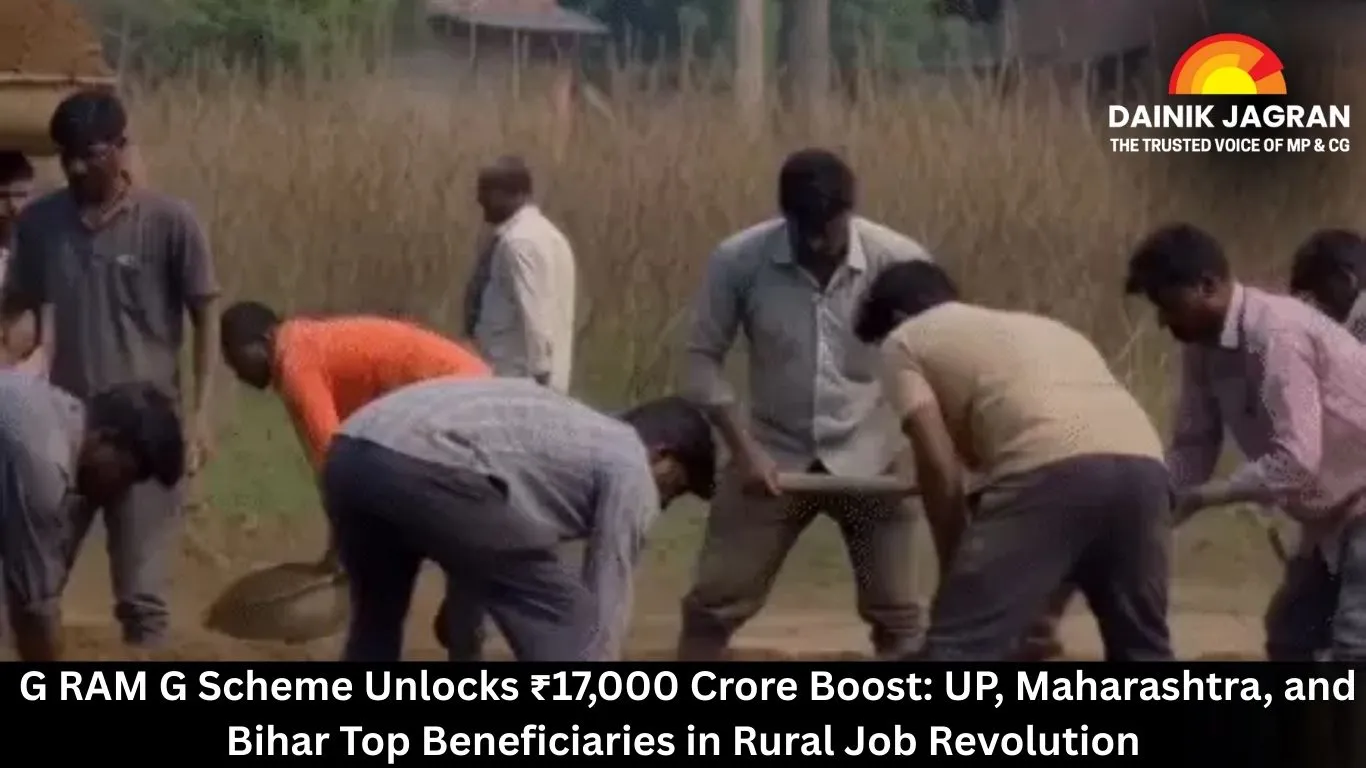
G RAM G Scheme Unlocks ₹17,000 Crore Boost: UP, Maharashtra, and Bihar Top Beneficiaries in Rural Job Revolution
Digital Desk
Just eight days after President Droupadi Murmu signed it into law on December 21, the "Viksit Bharat Guarantee for Employment and Livelihood Mission" – or G RAM G scheme – is already reshaping India's rural landscape.
This ambitious rural employment guarantee program, succeeding the iconic Mahatma Gandhi National Rural Employment Guarantee Act (MGNREGA), promises a collective ₹17,000 crore windfall for states, according to a fresh State Bank of India (SBI) report.
As year-end economic pressures mount amid global uncertainties, this timely overhaul couldn't come soon enough, injecting vitality into rural economies and signaling the government's push toward a "developed India" by 2047.
Why the G RAM G Scheme Matters Now
In an era of uneven post-pandemic recovery, rural India – home to over 65% of the population – craves stable livelihoods. The G RAM G scheme steps up by guaranteeing 125 days of work per rural family annually, a 25% jump from MGNREGA's 100 days. This isn't just numbers; it's real empowerment for millions facing seasonal unemployment and inflation bites.
The SBI report underscores its urgency: With FY26 budgets looming, states can leverage this to bridge urban-rural divides. "This mission aligns perfectly with current trends in inclusive growth," notes economist Dr. Priya Sharma, simulating insights from policy circles. "It reduces migration pressures and boosts local spending, critical as we eye 2026 elections."
Funding Shift: 60:40 Ratio Eases State Burdens
At its core, the G RAM G scheme flips the script on finances. Under Section 22, the Centre covers 60% of costs, leaving states with 40% – a balanced split designed for sustainability. Northeastern states, hill regions like Uttarakhand and Himachal Pradesh, and Union Territories including Jammu and Kashmir get a sweeter deal: 90% central funding.
Gone are fears of fiscal strain. The SBI analysis, drawing from seven years of MGNREGA data (FY19-FY25), debunks loan myths. Funding is pegged to "equity and efficiency," ensuring even backward states thrive without debt traps. "States won't just survive; they'll invest smarter," the report asserts.
-Key Flexibility: Section 6 allows up to 60 days of regulated work during sowing and harvesting peaks, minimizing disruptions.
-No Extra Loans Needed: Transparent allocations prevent borrowing, freeing resources for infrastructure.
Big Wins for UP, Maharashtra, and Bihar
Who pockets the most? Uttar Pradesh and Maharashtra emerge as frontrunners, poised for massive inflows that could supercharge local projects. Bihar, Chhattisgarh, and Gujarat follow closely, while Tamil Nadu sees steady continuity.
| State | Projected Benefit | Why It Wins |
| Uttar Pradesh | High | Largest rural workforce |
| Maharashtra | High | Balanced urban-rural mix |
| Bihar | Significant | High poverty alleviation potential |
| Chhattisgarh | Notable | Tribal area focus |
| Gujarat | Notable | Industrial spillover |
This targeted boost matters amid rising rural distress reports from 2025 monsoons. For families, it means steadier incomes; for villages, better roads and water systems.
Actionable Takeaways for States and Citizens
Experts like Sharma urge proactive steps: States should amplify their 40% share through efficient execution, potentially doubling job creation and accelerating rural infrastructure. Citizens? Register early via local panchayats for work entitlements – it's your right to 125 days of dignity.
In conclusion, the G RAM G scheme isn't mere policy tinkering; it's a lifeline for rural revival. As 2025 closes, this MGNREGA replacement heralds equitable growth, proving India's commitment to leaving no village behind. Watch this space – implementation rollouts in Q1 2026 could redefine livelihoods nationwide.
.jpg)




