


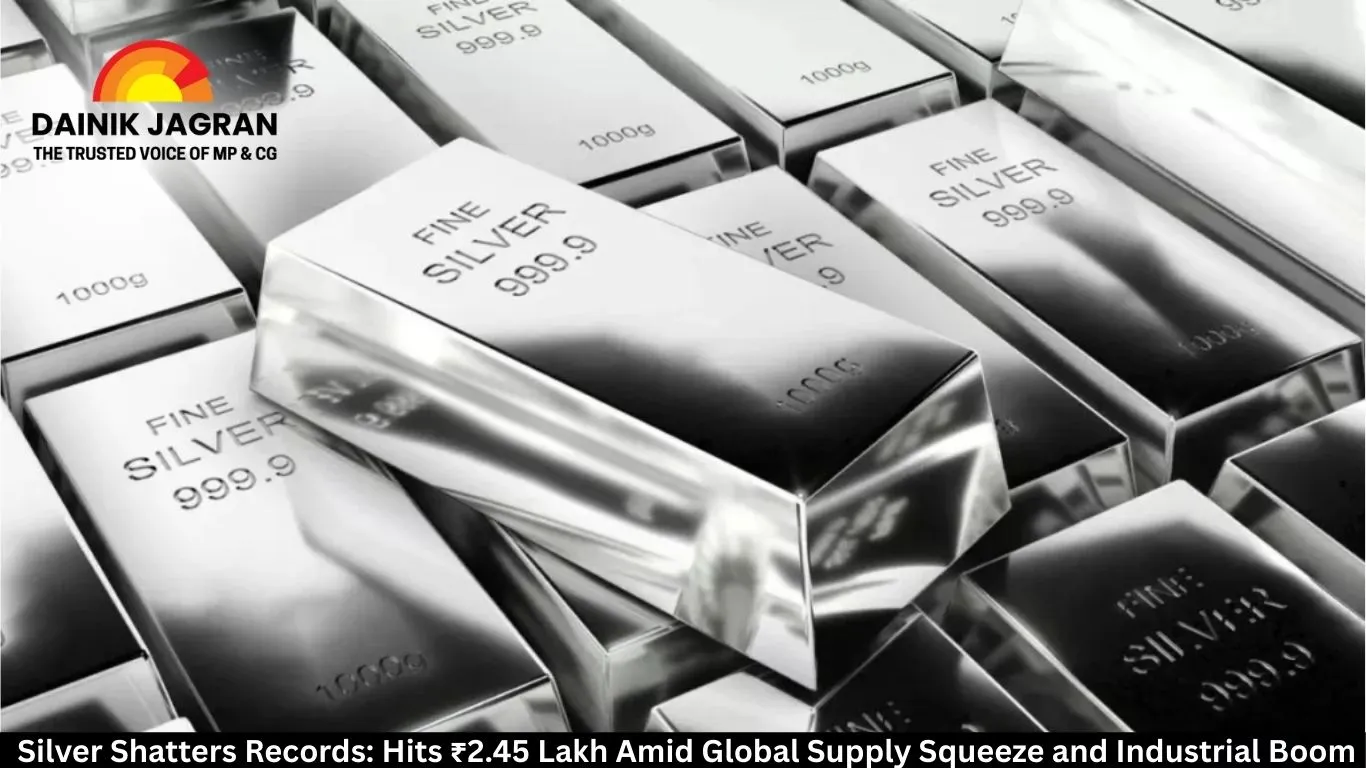
Silver Shatters Records: Hits ₹2.45 Lakh Amid Global Supply Squeeze and Industrial Boom
Digital Desk
In a landmark surge, silver prices in India have shattered records, reaching an unprecedented ₹2,44,788 per kilogram on Tuesday, January 6, 2026. This dramatic single-day jump of ₹7,725 marks the latest peak in a historic rally that saw the metal's value skyrocket by 167% over the course of 2025. The surge is not isolated to India; it reflects a profound structural crisis in the global silver market, where soaring industrial demand is colliding with severe physical shortages. As investors and industry alike scramble for the precious metal, experts warn the price explosion may be in its early stages, driven by forces far beyond traditional financial markets.
A Historic Rally in Context
The current silver price all-time high is part of an extraordinary year for precious metals. In 2025, gold prices also soared, rising by 75% in India. This rally was fueled by a potent mix of geopolitical uncertainty, a weaker US dollar, and aggressive buying from both investors and central banks seeking portfolio diversification. However, silver has significantly outpaced its yellow counterpart, a dynamic that underscores its unique dual identity as both a monetary safe-haven and an industrial commodity.
The global context is striking. Silver's price surge past $60 per ounce broke a multi-decade psychological barrier. According to analysis, the market is experiencing not a typical boom-and-bust cycle, but a "fundamental repricing" driven by years of structural supply deficits and inelastic demand.
The Twin Engines Driving Prices Higher
Two powerful, interconnected forces are propelling the silver price forecast 2026 into bullish territory:
1. Unstoppable Industrial Demand: The green energy revolution has fundamentally transformed silver from a jewelry and investment metal into an industrial necessity. It is a critical component in solar panels, electric vehicles (EVs), 5G infrastructure, and advanced electronics. A standard EV uses about 25-50 grams of silver, and future solid-state batteries could require over a kilogram per vehicle. Most critically, the solar industry alone now consumes over 20% of global supply, with demand projected to grow relentlessly. Research suggests that by 2030, total global demand could outstrip supply by 30-38%.
2. A Deepening Physical Supply Crisis: On the other side of the equation, supply is severely constrained. Roughly 70% of silver is mined as a byproduct of zinc, lead, and copper operations, meaning its production cannot quickly ramp up in response to higher prices. Mine production has been declining for a decade. This has led to a visible physical squeeze: vaults in financial hubs like London have been emptying, and massive premiums for actual metal have emerged in key markets like China (12-13%) and Japan (up to 60%). As one expert noted, the strain became so acute that at times, "people were having to transport silver by plane rather than on cargo ships to meet delivery demand".
What Experts See for 2026 and Beyond
The consensus among analysts is that the drivers are structural, suggesting high prices are here to stay.
Continued Strength: Firms like J.P. Morgan maintain a bullish outlook for precious metals, with a long-term target for gold reaching $5,000 per ounce, which would pull silver higher. For silver specifically, analysts point to the convergence of industrial demand, monetary debasement, and supply constraints as creating a "compelling case for higher prices".
The Gold-Silver Ratio: This ratio, which measures how many ounces of silver it takes to buy one ounce of gold, is a key metric watched by precious metals investors. After spiking to historic highs above 100:1, it has compressed. Many analysts believe it could move toward its historical average near 60:1 or even lower, implying significant potential upside for silver if gold prices remain firm.
A Warning on "Paper" Silver: Experts caution that the extreme physical tightness exposes risks in paper silver investments like ETFs. These instruments depend on a complex chain of custody and could face issues with redemption or trade at distorted prices if the underlying metal becomes unobtainable. This underscores a growing divide between paper market prices and the reality of physical possession.
What It Means for You
For consumers, higher silver prices will inevitably translate into increased costs for jewelry, silverware, and electronics. For investors and savers, the landscape requires careful navigation:
Understand the Volatility: Silver is known as the "Devil's metal" for its sharp price swings. While the long-term trend appears upward, significant short-term corrections are likely.
Consider Physical Ownership: Given the noted stresses in the paper market, those seeking exposure might consider the security of direct physical ownership through reputable dealers to avoid counterparty risk.
View as a Long-Term Diversifier: Experts recommend treating precious metals not as a short-term bet, but as a strategic, long-term portfolio diversifier for wealth preservation.
The silver market has entered a new paradigm. Its fate is now inextricably linked to the global pursuit of solar energy, electric transport, and digital infrastructure. As the world's vaults empty and industries compete for every ounce, the record price of ₹2.45 lakh per kg may not be a peak, but a milestone on a much longer journey.
.jpg)




