Ajay Gupta’s ‘Saksham Yatra 2026’ Brings Grassroots Entrepreneurs Into Public Conversation 

Digital Desk

Ajay Gupta’s ‘Saksham Yatra 2026’ Brings Grassroots Entrepreneurs Into Public Conversation 

There is a version of the Indian startup story that is told frequently and told quite well. It involves large cities, elite institutions, massive venture capital, and founders who knew, from relatively early on, that the vast infrastructure to back them existed. It is a real story, but the version is incomplete.

The founders the Indian startup story tends to leave out are not difficult to find either, since they are building in smaller cities and underserved districts and working on problems that do not easily attract early capital, such as early childhood education, assistive technology, rehabilitation, or disability inclusion. They are, in many cases, first-generation entrepreneurs without networks that open doors, and without names that lend credibility to investors accustomed to a particular kind of founder. The ecosystem has thus grown around grassroots entrepreneurs without always growing to include them.

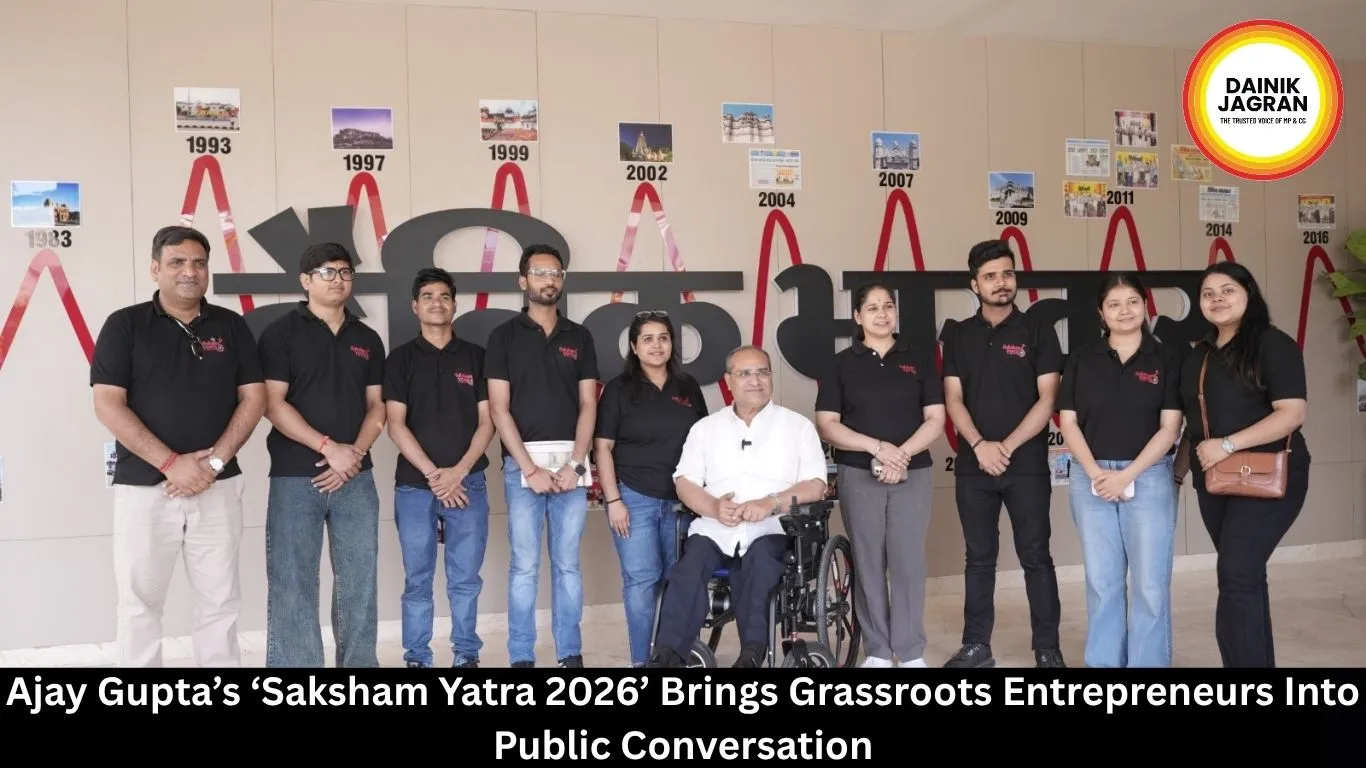
This is the problem that initiatives like Saksham Yatra are designed to bridge. Conceived by Ajay Gupta, founder of the Hum Honge Kamyab Foundation, the initiative travelled across four cities, namely Ayodhya, Lucknow, Agra, and Jaipur, over nine days in April (4th–12th). Its operational arm, Kamyab Grants, offered equity-free funding to early-stage startups working specifically in education and disability inclusion sectors. The choice is deliberate, as both sectors carry significant public need. Neither reliably attracts the kind of early-stage institutional capital that allows a startup founder to move from a prototype to a fully functioning venture.

The applications that came in reflect something about who is actually building in these spaces. Over 300 startups are said to have applied, from more than 25 states in India. Among them were IIT and ISB graduates, but also first-generation, first-in-family entrepreneurs, for whom the startup ecosystem is a relatively new invitation, and for whom the absence of equity-free funding is a major structural barrier. More than 50 of the ventures were building solutions for persons with disabilities, and over 180 were working on challenges in early education. Moreover, one in four shortlisted founders for Kamyab Grants was a woman.

These numbers deserve some attention, because they complicate a comfortable assumption, which is that the Indian startup ecosystem’s inclusivity problem is primarily one of awareness and that founders simply need to be told that opportunities exist. The volume and diversity of applications suggest that founders are present, and the appetite to build is present. What is less consistently present is the infrastructure to support them at the stage when support matters most.

Equity-free capital is one part of that infrastructure. It removes a condition, i.e. the surrendering of ownership, that can be particularly consequential for early-stage founders who have little margin for error and no guarantee of a second chance. For a founder building an assistive communication tool or an affordable tutoring platform for first-generation learners, giving away equity at the beginning of the journey can determine what the venture becomes or whether it survives at all.

The initiative’s itinerary across the nine days was not limited to pitch sessions. It included a meeting with the State Commissioner for Persons with Disabilities in Uttar Pradesh, a visit to Babasaheb Bhimrao Ambedkar University in Lucknow, and time spent at Bhagwan Mahaveer Viklang Sahayata Samiti in Jaipur (the organisation behind the Jaipur Foot). There was also a visit to the Akshaya Patra Foundation in Vrindavan, which runs one of the world’s largest school meal programmes.

The inclusion of these visits points out that grassroots entrepreneurship in sectors like disability and education does not exist in a vacuum. It exists alongside and often in direct conversation with institutions and organisations that have been working on the same problems for decades, frequently with fewer resources and less visibility. An initiative that treats those conversations as peripheral to entrepreneurship misunderstands what building in these sectors actually requires.

India has, in recent years, developed considerable sophistication in talking about startup ecosystems. Also, the language of disruptive innovation and scale has become fluent and widely shared. However, what has followed more slowly is a reckoning with the fact that ecosystems, like most things, tend to concentrate. Capital flows towards founders it already recognises. Attention follows the deals that have already been made. The result is, thus, not a failure of intent so much as a failure of structure; and structure, unlike intent, requires deliberate effort to change.

Initiatives that travel to where founders are, rather than waiting for founders to arrive, are one response to that structural problem. Yet, they are not, on their own, sufficient. The deeper work of building mentorship networks and developing sector-specific expertise in overlooked industries is slower than a nine-day journey across four cities. Nonetheless, the journey is, perhaps, a way of insisting that the work is worth doing and that the founders waiting at the edges of the ecosystem are not a peripheral concern.


--------

🚨 Beat the News Rush – Join Now!

Get breaking alerts, hot exclusives, and game-changing stories instantly on your phone. No delays, no fluff – just the edge you need. ⚡

Tap to join: 

🟢 WhatsApp Channel: Dainik Jagran MP CG

Crave more?

🅕 Facebook: Dainik Jagran MP CG English

🅧 Twitter (X): Dainik Jagran MP CG

🅘 Instagram: Dainik Jagran MP CG

Share the fire – keep your crew ahead! 🗞️🔥

english.dainikjagranmpcg.com
14 May 2026 By Abhishek Joshi

Ajay Gupta’s ‘Saksham Yatra 2026’ Brings Grassroots Entrepreneurs Into Public Conversation 

Digital Desk

The founders the Indian startup story tends to leave out are not difficult to find either, since they are building in smaller cities and underserved districts and working on problems that do not easily attract early capital, such as early childhood education, assistive technology, rehabilitation, or disability inclusion. They are, in many cases, first-generation entrepreneurs without networks that open doors, and without names that lend credibility to investors accustomed to a particular kind of founder. The ecosystem has thus grown around grassroots entrepreneurs without always growing to include them.

This is the problem that initiatives like Saksham Yatra are designed to bridge. Conceived by Ajay Gupta, founder of the Hum Honge Kamyab Foundation, the initiative travelled across four cities, namely Ayodhya, Lucknow, Agra, and Jaipur, over nine days in April (4th–12th). Its operational arm, Kamyab Grants, offered equity-free funding to early-stage startups working specifically in education and disability inclusion sectors. The choice is deliberate, as both sectors carry significant public need. Neither reliably attracts the kind of early-stage institutional capital that allows a startup founder to move from a prototype to a fully functioning venture.

The applications that came in reflect something about who is actually building in these spaces. Over 300 startups are said to have applied, from more than 25 states in India. Among them were IIT and ISB graduates, but also first-generation, first-in-family entrepreneurs, for whom the startup ecosystem is a relatively new invitation, and for whom the absence of equity-free funding is a major structural barrier. More than 50 of the ventures were building solutions for persons with disabilities, and over 180 were working on challenges in early education. Moreover, one in four shortlisted founders for Kamyab Grants was a woman.

These numbers deserve some attention, because they complicate a comfortable assumption, which is that the Indian startup ecosystem’s inclusivity problem is primarily one of awareness and that founders simply need to be told that opportunities exist. The volume and diversity of applications suggest that founders are present, and the appetite to build is present. What is less consistently present is the infrastructure to support them at the stage when support matters most.

Equity-free capital is one part of that infrastructure. It removes a condition, i.e. the surrendering of ownership, that can be particularly consequential for early-stage founders who have little margin for error and no guarantee of a second chance. For a founder building an assistive communication tool or an affordable tutoring platform for first-generation learners, giving away equity at the beginning of the journey can determine what the venture becomes or whether it survives at all.

The initiative’s itinerary across the nine days was not limited to pitch sessions. It included a meeting with the State Commissioner for Persons with Disabilities in Uttar Pradesh, a visit to Babasaheb Bhimrao Ambedkar University in Lucknow, and time spent at Bhagwan Mahaveer Viklang Sahayata Samiti in Jaipur (the organisation behind the Jaipur Foot). There was also a visit to the Akshaya Patra Foundation in Vrindavan, which runs one of the world’s largest school meal programmes.

The inclusion of these visits points out that grassroots entrepreneurship in sectors like disability and education does not exist in a vacuum. It exists alongside and often in direct conversation with institutions and organisations that have been working on the same problems for decades, frequently with fewer resources and less visibility. An initiative that treats those conversations as peripheral to entrepreneurship misunderstands what building in these sectors actually requires.

India has, in recent years, developed considerable sophistication in talking about startup ecosystems. Also, the language of disruptive innovation and scale has become fluent and widely shared. However, what has followed more slowly is a reckoning with the fact that ecosystems, like most things, tend to concentrate. Capital flows towards founders it already recognises. Attention follows the deals that have already been made. The result is, thus, not a failure of intent so much as a failure of structure; and structure, unlike intent, requires deliberate effort to change.

Initiatives that travel to where founders are, rather than waiting for founders to arrive, are one response to that structural problem. Yet, they are not, on their own, sufficient. The deeper work of building mentorship networks and developing sector-specific expertise in overlooked industries is slower than a nine-day journey across four cities. Nonetheless, the journey is, perhaps, a way of insisting that the work is worth doing and that the founders waiting at the edges of the ecosystem are not a peripheral concern.

https://english.dainikjagranmpcg.com/business/ajay-gupta%E2%80%99s-%E2%80%98saksham-yatra-2026%E2%80%99-brings-grassroots-entrepreneurs-into-public/article-18313
Tags:

Latest News

Trump Confirms Crew Safe After US Helicopter Crash Near Hormuz Trump Confirms Crew Safe After US Helicopter Crash Near Hormuz
US President Trump says helicopter crew safe after Apache crash near Strait of Hormuz amid West Asia tensions. Israel vows...
50 UK MPs urge action over PoK unrest, 11 dead
Trump approval near record low; 70% disapprove
War Impact: Iranians Buy Bread on EMI as Food Prices Surge
Twin Earthquakes Hit Iran and Cuba, Tremors Felt Across Region
148 Indians Stuck in Bangladesh Jails After Serving Sentences
Southwest Monsoon Reaches 13 States in 5 Days