


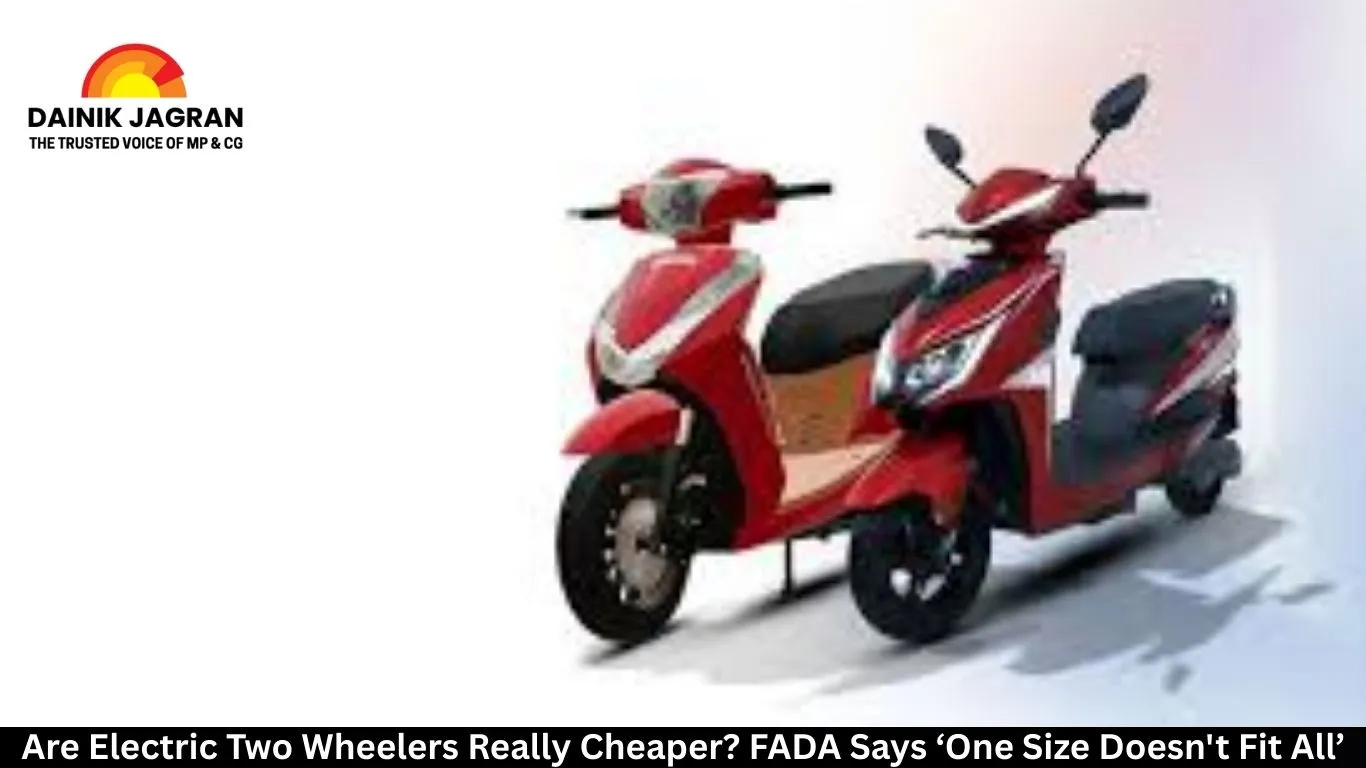
Are Electric Two Wheelers Really Cheaper? FADA Says ‘One Size Doesn't Fit All’
Digital Desk
The Indian streets are undergoing a silent revolution. As you navigate through morning traffic, the familiar roar of internal combustion engines is increasingly interrupted by the quiet hum of Electric Two Wheelers. But as the initial hype settles into a more mature market in 2026, a critical question remains for every middle-class commuter: Are these green machines truly lighter on the wallet?
According to the latest insights from the Federation of Automobile Dealers Association (Fada), the answer isn’t a simple "yes." Instead, they warn that when it comes to the debate of electric scooters vs. petrol scooters, "one size doesn’t fit all."
The 2026 Price Reality: Subsidy vs. Savings
In early 2026, the financial landscape for vehicle buyers has shifted significantly. While the government’s PM E-DRIVE scheme continues to support the transition, subsidies have been tapered down compared to the aggressive FAME-II era.
For instance, the iconic Honda Activa—a staple of Indian households—now presents a stark choice. The standard petrol-driven Activa 110 is priced at approximately ₹75,433 (ex-showroom), whereas its electric sibling, the Activa e, carries a premium price tag of roughly ₹1.19 lakh.
With a price gap of nearly ₹44,000, the "cheaper" option depends entirely on your odometer.
FADA’s Verdict: When to Go Electric
FADA suggests that Electric Two Wheelers become the more economical choice only if you meet specific "usage thresholds." Here is the breakdown:
-
Daily Commute: If you travel more than 40-50 km daily, the low running cost of electricity (roughly ₹0.20 per km) vs. petrol (approx. ₹2.50 per km) will bridge the price gap in about 2.5 years.
-
Maintenance: EVs have fewer moving parts. No oil changes or spark plug replacements mean you save roughly ₹3,000–₹5,000 annually on servicing.
-
The "Short-Trip" Trap: If you only use your scooter for quick grocery runs or travel less than 15 km a day, the higher upfront cost of an EV may never be recovered through fuel savings.
The GST Factor: A Surprising Twist
Interestingly, the government has moved to support the traditional sector as well. While Electric Two Wheelers enjoy a low 5% GST, the tax on petrol-driven commuter vehicles (up to 350cc) was recently slashed from 28% to 18%. This move has made fossil-fuel vehicles more affordable than they were two years ago, complicating the decision for budget-conscious buyers.
Reliability and Infrastructure
The shift hasn't been without speed bumps. Popular brands like Ola Electric have faced scrutiny over service delays and quality issues. However, as of 2026, the industry has seen a massive investment in "Hyper-service" centers and fast-charging networks. Reliability is improving, but "range anxiety" still lingers for those in Tier-3 cities where charging infrastructure remains sparse.
Conclusion: Which One Is Best for You?
The decision to go "green" is now as much about mathematics as it is about the environment. If you are a high-mileage rider looking for long-term savings, the electric scooters vs. petrol scooters battle is won by the battery. However, for those with limited daily usage and a strict upfront budget, the petrol engine remains a formidable and now more tax-friendly competitor.
.jpg)




