


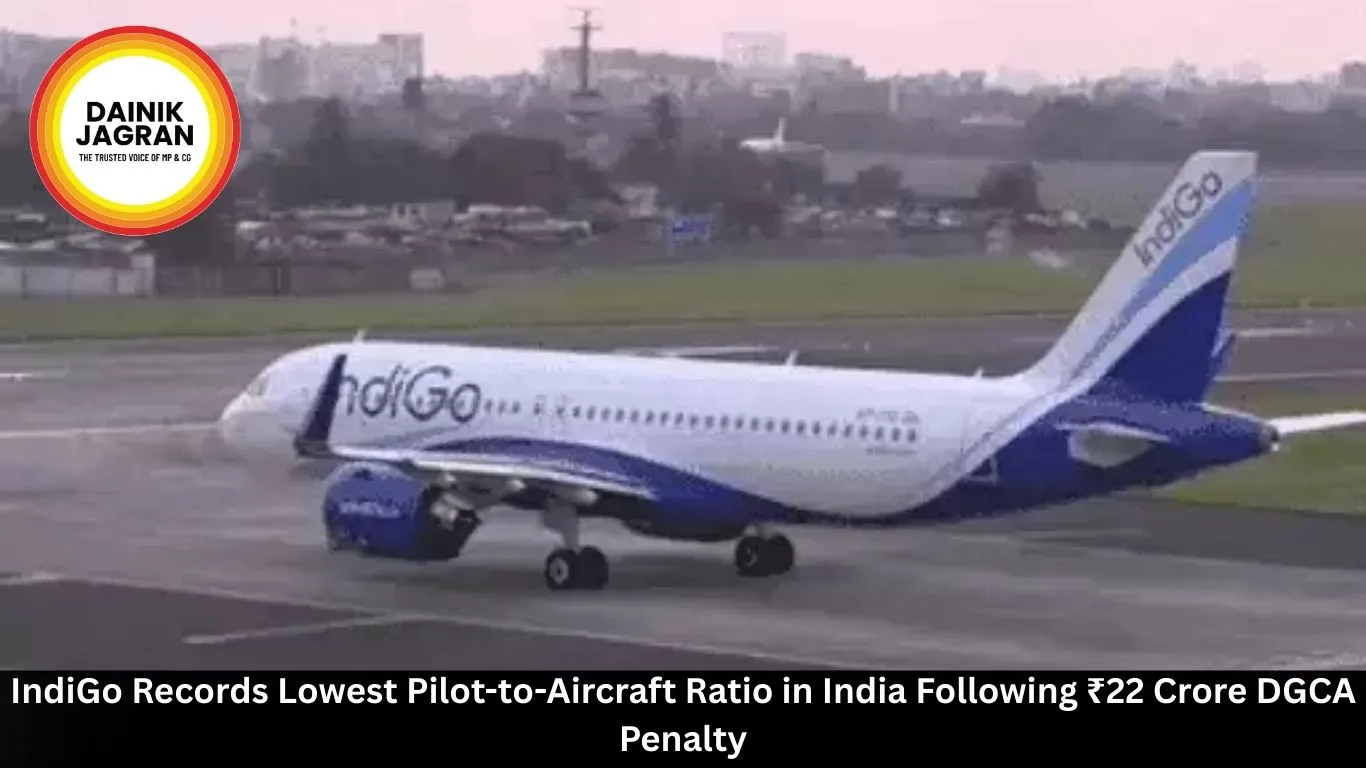
IndiGo Records Lowest Pilot-to-Aircraft Ratio in India Following ₹22 Crore DGCA Penalty
Digital Desk
The Indian aviation sector is facing a period of intense transition and scrutiny. In a recent disclosure to Parliament, the Ministry of Civil Aviation revealed that IndiGo, the country’s largest domestic carrier, currently maintains an IndiGo pilot-to-aircraft ratio of just 7.6.
This figure represents an average of approximately eight pilots per aircraft—the lowest among all major domestic airlines in India. This data comes on the heels of significant operational turbulence, including massive flight disruptions and the high-profile resignation of the airline's leadership.
Understanding the Numbers: How IndiGo Compares
An aircraft's daily schedule involves multiple rotations, necessitating a robust pool of pilots to account for mandatory rest periods and safety regulations. While IndiGo operates with a ratio of 7.6, its competitors maintain significantly higher buffers:
-
SpiceJet: 9.4 pilots per aircraft (Highest in India)
-
Akasa Air: 9.33 pilots per aircraft
-
Air India: 9.1 pilots per aircraft
-
Air India Express: 8.8 pilots per aircraft
Despite having the lowest ratio, IndiGo still commands the largest workforce with 5,200 pilots, including 970 women. However, the lean ratio suggests that the airline's rapid fleet expansion may be outpacing its crew recruitment and retention efforts.
The Fallout: DGCA Penalty and Operational Disruptions
The lean staffing model has not been without its consequences. In December 2025, IndiGo faced severe operational breakdowns that affected approximately 3 lakh passengers. The chaos prompted the Directorate General of Civil Aviation (DGCA) to take stern action.
The DGCA penalty of ₹22.20 crore was imposed following these disruptions, signaling a "zero-tolerance" approach toward mismanagement that compromises passenger convenience and scheduling integrity.
End of an Era: Pieter Elbers Resigns
Adding to the airline's challenges, Pieter Elbers, who took the helm as CEO in 2022, officially resigned on March 10. Under his tenure, IndiGo maintained its market dominance, but the recent operational hurdles and the record-low IndiGo pilot-to-aircraft ratio have created a complex legacy for his successor.
The industry is now watching closely to see how the "low-cost, high-efficiency" model will evolve to prevent further regulatory friction.
National Updates: Toll Collections and Global Tensions
While aviation dominated the headlines, other sectors reported significant shifts:
Highway Toll Revenue Surges 120%
Road Transport and Highways Minister Nitin Gadkari informed the Lok Sabha that toll collection on national highways has crossed ₹61,000 crore for the 2024–25 financial year. This represents a staggering 120% increase over the last five years, driven largely by inflation-linked rate adjustments and increased connectivity.
Advisory for Indians in Iran
On the geopolitical front, the Ministry of External Affairs has issued a cautious advisory for the 9,000 Indian citizens currently in Iran. Following the escalation of tensions in West Asia—specifically the military strikes on February 28—a special control room has been established in New Delhi to assist those wishing to return home.
Conclusion
For IndiGo, the road ahead involves balancing its massive market share with the logistical reality of pilot management. As the airline moves past the Pieter Elbers resignation, the focus must shift toward stabilizing its crew ratios to avoid further DGCA penalties.
.jpg)




