


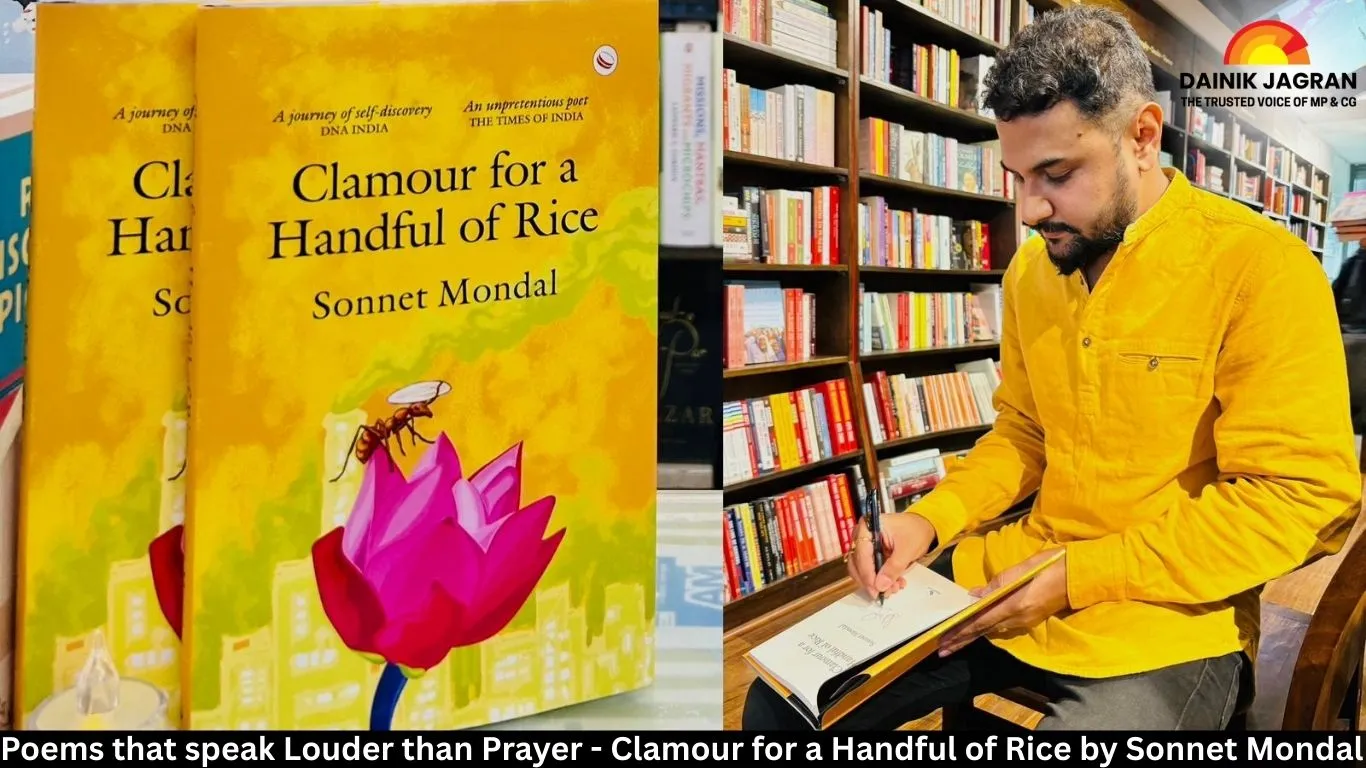
Poems that speak Louder than Prayer - Clamour for a Handful of Rice by Sonnet Mondal
Ananya S.
Yet Mondal insists on speaking anyway, carving poetry out of scarcity, turning deprivation into testimony.
At the heart of the collection is hunger—not only the physical gnawing of an empty stomach, but a deeper moral hunger: for peace, for justice, for the right to exist without terror. When Mondal writes, “If you ask the hungry / a handful of rice and curry / is the greatest relief,” the line lands with devastating clarity. There is no ornament here, no lyrical escape.
The poem reminds us how little it takes to survive—and how often even that little is denied.
What makes this collection particularly affecting is its refusal to isolate suffering within borders. Mondal’s poems travel—across countries, conflicts, and consciences.
The victims of war and displacement are not rendered as statistics or symbols; they breathe, grieve, and remember. In one searing image, he writes, “Today the rice bowls are filled with bullet shells.” The domestic and the violent collide, exposing how war invades even the most intimate rituals of living.
Mondal’s voice is restrained yet charged. He does not shout; instead, he accumulates pressure. Many poems feel like held breaths—quiet, tense, and heavy with what remains unsaid. This restraint makes the moments of direct accusation even more powerful, especially when the poet turns the gaze inward. He questions the role of the writer, the comfort of spectatorship, and the uneasy position of those who can afford to write about suffering from a safe distance.
Despite its bleak landscapes, Clamour for a Handful of Rice is not devoid of humanity. There are fleeting gestures of resilience—children walking through ruined streets, birds returning to broken homes, hands still reaching out despite repeated loss. These moments do not soften the horror; instead, they make it unbearable and unforgettable.
This is not a collection meant to console. It is meant to unsettle, to stay with the reader like an ache that refuses to fade. Mondal’s poems remind us that hunger is never only about food—it is about whose lives are deemed worthy of being fed, protected, and remembered.
Clamour for a Handful of Rice stands as a necessary, unflinching book—one that insists poetry still has a moral spine, and that silence, in times like these, is never neutral.




.jpg)




