

Iran Civilisation Debate After Trump Stone Age Remark
Digital Desk
Iran civilisation debate intensifies after Trump’s ‘Stone Age’ threat, highlighting ancient heritage amid rising West Asia tensions and global concern.
Iran Rebukes Trump ‘Stone Age’ Remark Amid Rising Tensions
Iran responds strongly to Trump’s ‘Stone Age’ threat, highlighting its ancient civilisation amid escalating West Asia conflict and global concern
Sharp Diplomatic Exchange
Tensions in West Asia escalated sharply after Donald Trump warned of intensifying military action against Iran, prompting a strong rebuttal from Permanent Mission of Iran to the United Nations. The Iranian side dismissed the remarks as “ignorant” and warned that such rhetoric signals dangerous intent amid an already volatile regional situation.
The exchange comes at a time when global attention remains fixed on the ongoing conflict in West Asia, raising concerns about further destabilisation.
Trump’s Warning Statement
Addressing supporters, Trump indicated that the United States could escalate military operations over the next few weeks. He stated that Iran would be “hit extremely hard” and threatened to push it “back to the stone ages”.
The remarks, widely circulated across international media, have drawn criticism from multiple quarters, with analysts cautioning against inflammatory language during sensitive geopolitical developments.
Iran’s Strong Rebuttal
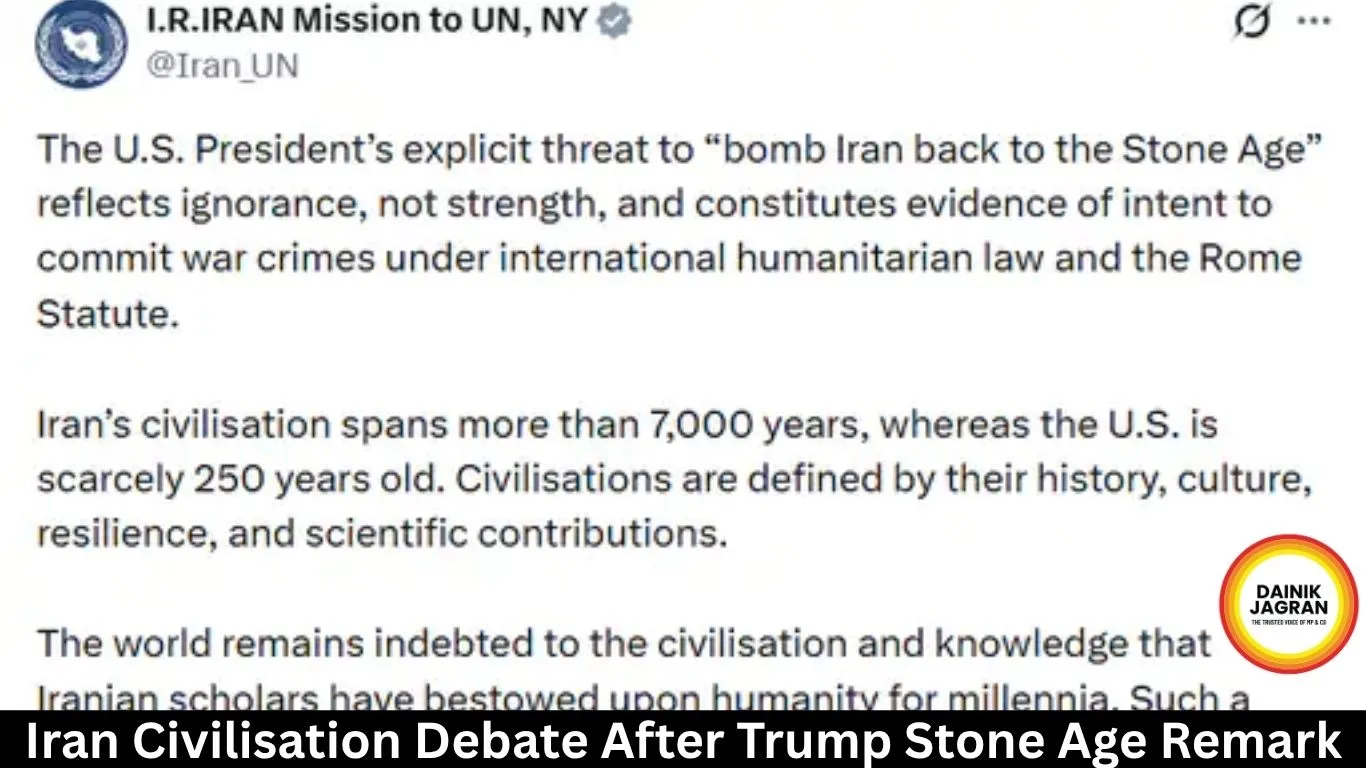
Responding swiftly, Iran’s UN mission issued a statement rejecting the comments. It described the threat as evidence of “ignorance” and alleged that such statements reflect an intent that could amount to war crimes under international norms.
The statement underscored Iran’s long civilisational history, asserting that cultural identity and heritage cannot be erased through military force.
Ancient Civilisation Context
Iran highlighted that its civilisation dates back over 7,000 years, with evidence of organised settlements emerging around 3000 BCE. Archaeological sites such as Susa and Sialk indicate early urban development in the region.
In contrast, the United States formally came into existence in 1776 following independence from Britain. Iranian officials used this comparison to emphasise the depth and continuity of their historical legacy.
Cultural and Scientific Legacy
Iran’s historical contributions span science, literature, and governance. Scholars such as Al-Khwarizmi played a pivotal role in the development of algebra and algorithms, concepts central to modern computing.
Similarly, Ibn Sina made lasting contributions to medicine, with his works influencing European medical practice for centuries.
Ancient institutions like the Academy of Jundishapur are often cited as among the earliest centres of higher learning, combining diverse fields such as medicine, philosophy, and science.
Impact on Global Discourse
The exchange has added a cultural dimension to an already complex geopolitical conflict. Experts note that invoking civilisational identity in diplomatic rhetoric can deepen divisions and make negotiations more difficult.
At the same time, the episode has triggered renewed global interest in Iran’s historical contributions, from engineering innovations like qanat irrigation systems to literary works by poets such as Rumi.
Observers say such narratives are increasingly shaping how nations present themselves on the global stage, especially during conflicts.
Regional Stability Concerns
The sharp rhetoric has raised concerns among international stakeholders about the possibility of further escalation. Diplomatic channels remain active, but there are fears that continued verbal confrontations could translate into military action.
According to officials and strategic analysts, the situation requires careful handling to avoid unintended consequences that could impact not just West Asia but global stability.
What Lies Ahead
With tensions showing little sign of easing, attention now turns to whether diplomatic interventions can prevent further escalation. The coming weeks are expected to be critical as both sides weigh their options.
The Iran-US exchange also underscores a broader reality: while military threats dominate headlines, civilisational identity and historical legacy continue to influence modern geopolitics. As this Latest News Today reflects, the Iran civilisation debate has become central to the narrative shaping this ongoing crisis.
--------
🚨 Beat the News Rush – Join Now!
Get breaking alerts, hot exclusives, and game-changing stories instantly on your phone. No delays, no fluff – just the edge you need. ⚡
Tap to join:
🟢 WhatsApp Channel: Dainik Jagran MP CG
Crave more?
🅕 Facebook: Dainik Jagran MP CG English
🅧 Twitter (X): Dainik Jagran MP CG
🅘 Instagram: Dainik Jagran MP CG
Share the fire – keep your crew ahead! 🗞️🔥
Iran Civilisation Debate After Trump Stone Age Remark
Digital Desk
Iran Rebukes Trump ‘Stone Age’ Remark Amid Rising Tensions
Iran responds strongly to Trump’s ‘Stone Age’ threat, highlighting its ancient civilisation amid escalating West Asia conflict and global concern
Sharp Diplomatic Exchange
Tensions in West Asia escalated sharply after Donald Trump warned of intensifying military action against Iran, prompting a strong rebuttal from Permanent Mission of Iran to the United Nations. The Iranian side dismissed the remarks as “ignorant” and warned that such rhetoric signals dangerous intent amid an already volatile regional situation.
The exchange comes at a time when global attention remains fixed on the ongoing conflict in West Asia, raising concerns about further destabilisation.
Trump’s Warning Statement
Addressing supporters, Trump indicated that the United States could escalate military operations over the next few weeks. He stated that Iran would be “hit extremely hard” and threatened to push it “back to the stone ages”.
The remarks, widely circulated across international media, have drawn criticism from multiple quarters, with analysts cautioning against inflammatory language during sensitive geopolitical developments.
Iran’s Strong Rebuttal
Responding swiftly, Iran’s UN mission issued a statement rejecting the comments. It described the threat as evidence of “ignorance” and alleged that such statements reflect an intent that could amount to war crimes under international norms.
The statement underscored Iran’s long civilisational history, asserting that cultural identity and heritage cannot be erased through military force.
Ancient Civilisation Context
Iran highlighted that its civilisation dates back over 7,000 years, with evidence of organised settlements emerging around 3000 BCE. Archaeological sites such as Susa and Sialk indicate early urban development in the region.
In contrast, the United States formally came into existence in 1776 following independence from Britain. Iranian officials used this comparison to emphasise the depth and continuity of their historical legacy.
Cultural and Scientific Legacy
Iran’s historical contributions span science, literature, and governance. Scholars such as Al-Khwarizmi played a pivotal role in the development of algebra and algorithms, concepts central to modern computing.
Similarly, Ibn Sina made lasting contributions to medicine, with his works influencing European medical practice for centuries.
Ancient institutions like the Academy of Jundishapur are often cited as among the earliest centres of higher learning, combining diverse fields such as medicine, philosophy, and science.
Impact on Global Discourse
The exchange has added a cultural dimension to an already complex geopolitical conflict. Experts note that invoking civilisational identity in diplomatic rhetoric can deepen divisions and make negotiations more difficult.
At the same time, the episode has triggered renewed global interest in Iran’s historical contributions, from engineering innovations like qanat irrigation systems to literary works by poets such as Rumi.
Observers say such narratives are increasingly shaping how nations present themselves on the global stage, especially during conflicts.
Regional Stability Concerns
The sharp rhetoric has raised concerns among international stakeholders about the possibility of further escalation. Diplomatic channels remain active, but there are fears that continued verbal confrontations could translate into military action.
According to officials and strategic analysts, the situation requires careful handling to avoid unintended consequences that could impact not just West Asia but global stability.
What Lies Ahead
With tensions showing little sign of easing, attention now turns to whether diplomatic interventions can prevent further escalation. The coming weeks are expected to be critical as both sides weigh their options.
The Iran-US exchange also underscores a broader reality: while military threats dominate headlines, civilisational identity and historical legacy continue to influence modern geopolitics. As this Latest News Today reflects, the Iran civilisation debate has become central to the narrative shaping this ongoing crisis.


