

The visit coincides with heightened US pressure on India to reduce its dependence on Russian crude, even as bilateral trade has reached historic highs. International outlets noted that the summit is expected to finalize key agreements across defence, energy, labour mobility, and technology cooperation.
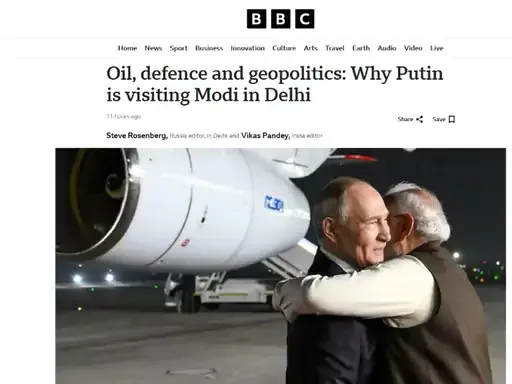
BBC reported that the timing of the visit is crucial, given sustained Western attempts to isolate Moscow over the war in Ukraine. The broadcaster highlighted discussions on defence procurement and India’s continued purchase of discounted Russian oil, which remains central to the bilateral relationship.
Ukraine’s Kyiv Independent framed the visit as a diplomatic test for India, underscoring New Delhi’s challenge of balancing long-standing ties with Moscow while maintaining relations with Kyiv, Washington, and European capitals. The outlet pointed to India’s consistent neutrality on the Ukraine conflict, rooted in decades of strategic proximity to Russia.
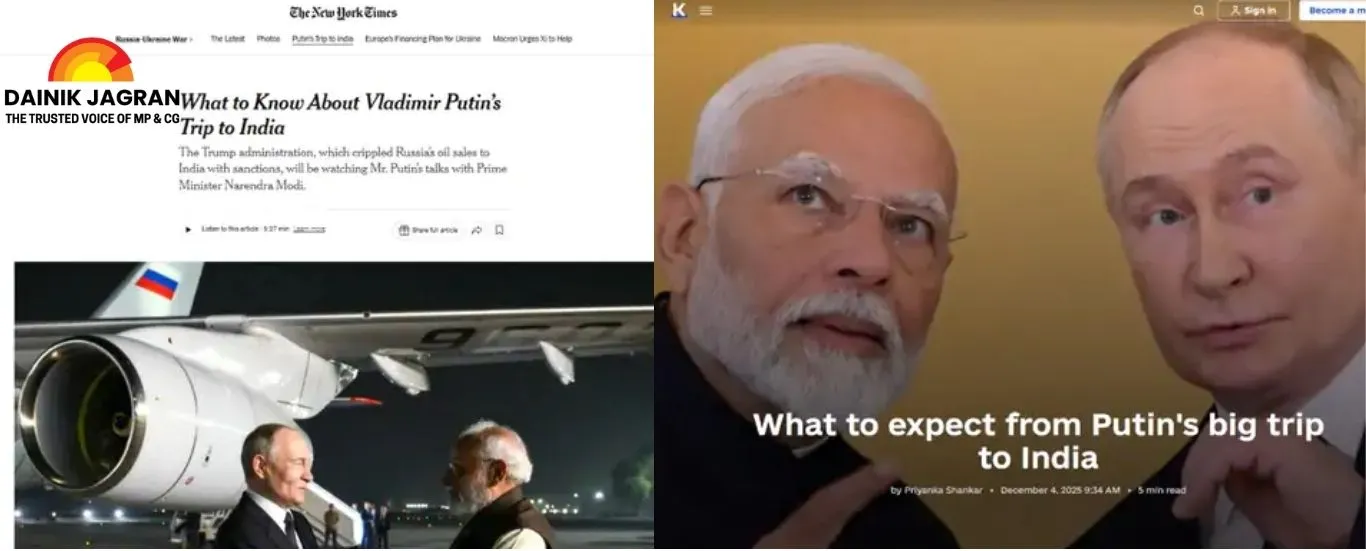
In the US, The New York Times focused on Modi’s personal reception of Putin, calling it a reflection of India’s intent to maintain robust ties despite Western scrutiny. The newspaper noted that labour migration arrangements and defence technology discussions would dominate the summit talks.
Pakistan’s Dawn emphasized the strategic weight of defence cooperation, including ongoing S-400 supplies and potential collaboration on next-generation fighter aircraft. It also noted complications arising from US sanctions on Russian transactions.
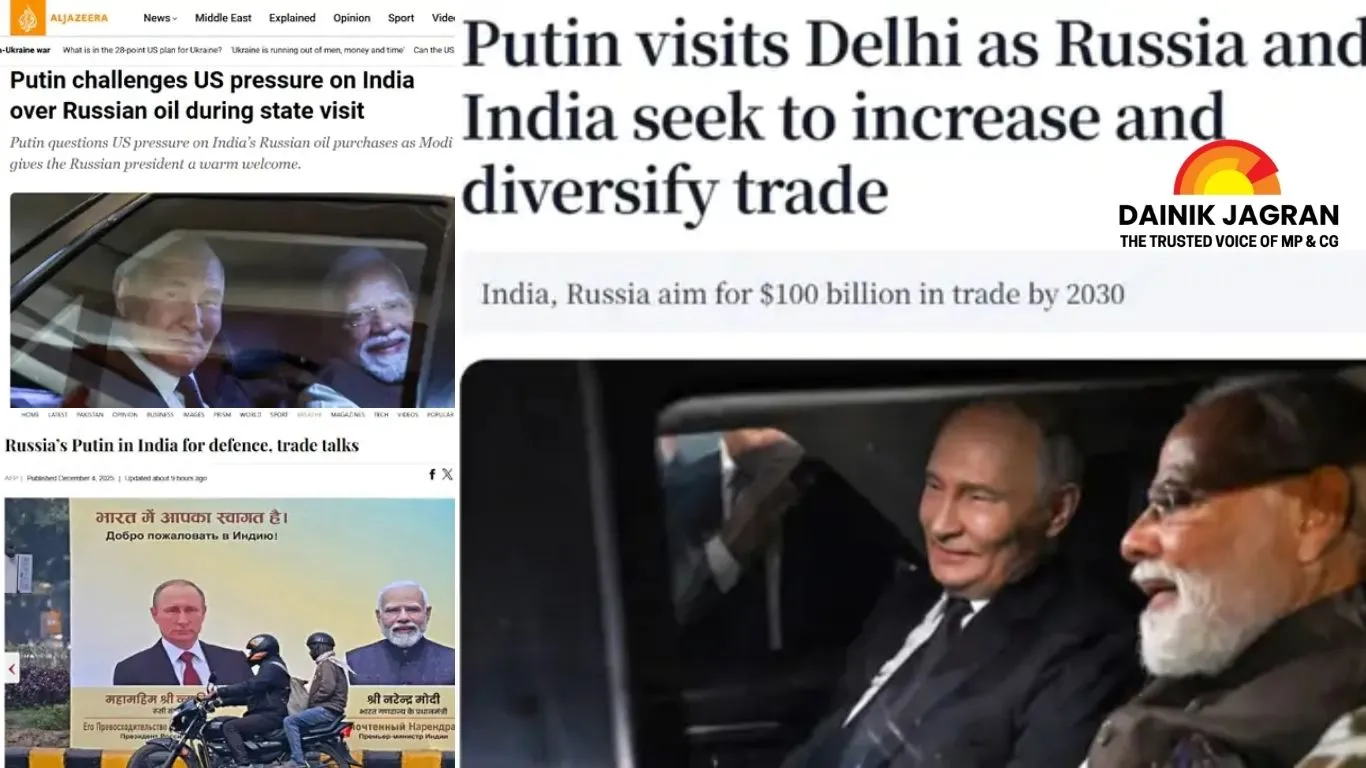
Qatar’s Al Jazeera highlighted India’s stance against external pressure, pointing to the sharp rise in Russian oil imports from 2.5% before 2022 to nearly 36% today making India one of Moscow’s most important energy partners.
Bangladesh’s Daily Star reported that both countries aim to push bilateral trade to $100 billion by 2030, though recent sanctions-related tariffs have impacted volumes. Moscow is now seeking increased Indian exports to balance the trade deficit created by oil shipments.
The global reactions underscore India’s continued effort to navigate a complex geopolitical landscape maintaining strategic autonomy while deepening ties with both the West and Russia.

Global Media Analyzes Putin’s India Visit Amid Strategic Shifts, US Pressure, and Rising Oil Trade
Digital Desk
The visit coincides with heightened US pressure on India to reduce its dependence on Russian crude, even as bilateral trade has reached historic highs. International outlets noted that the summit is expected to finalize key agreements across defence, energy, labour mobility, and technology cooperation.
BBC reported that the timing of the visit is crucial, given sustained Western attempts to isolate Moscow over the war in Ukraine. The broadcaster highlighted discussions on defence procurement and India’s continued purchase of discounted Russian oil, which remains central to the bilateral relationship.
Ukraine’s Kyiv Independent framed the visit as a diplomatic test for India, underscoring New Delhi’s challenge of balancing long-standing ties with Moscow while maintaining relations with Kyiv, Washington, and European capitals. The outlet pointed to India’s consistent neutrality on the Ukraine conflict, rooted in decades of strategic proximity to Russia.
In the US, The New York Times focused on Modi’s personal reception of Putin, calling it a reflection of India’s intent to maintain robust ties despite Western scrutiny. The newspaper noted that labour migration arrangements and defence technology discussions would dominate the summit talks.
Pakistan’s Dawn emphasized the strategic weight of defence cooperation, including ongoing S-400 supplies and potential collaboration on next-generation fighter aircraft. It also noted complications arising from US sanctions on Russian transactions.
Qatar’s Al Jazeera highlighted India’s stance against external pressure, pointing to the sharp rise in Russian oil imports from 2.5% before 2022 to nearly 36% today making India one of Moscow’s most important energy partners.
Bangladesh’s Daily Star reported that both countries aim to push bilateral trade to $100 billion by 2030, though recent sanctions-related tariffs have impacted volumes. Moscow is now seeking increased Indian exports to balance the trade deficit created by oil shipments.
The global reactions underscore India’s continued effort to navigate a complex geopolitical landscape maintaining strategic autonomy while deepening ties with both the West and Russia.
.jpg)




