


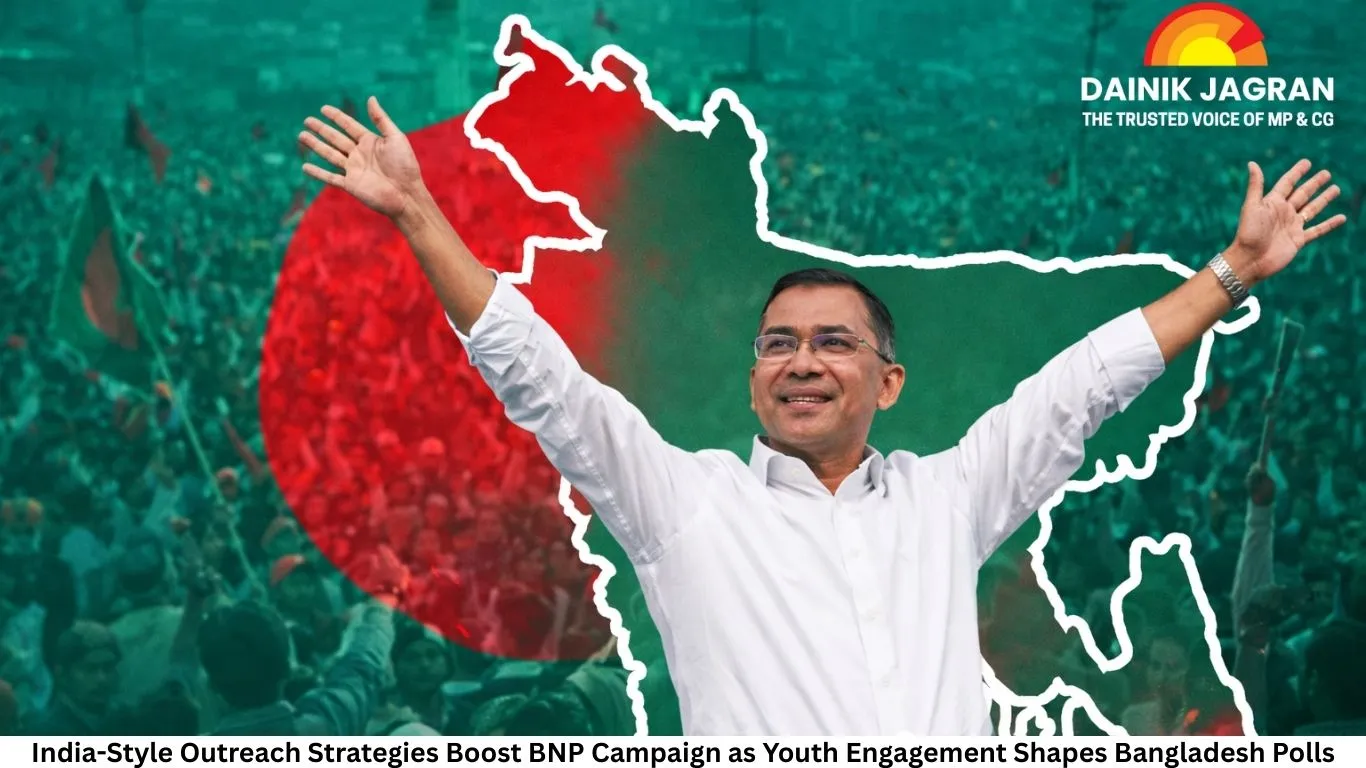
India-Style Outreach Strategies Boost BNP Campaign as Youth Engagement Shapes Bangladesh Polls
Digital Desk
Party insiders and analysts say the campaign’s most visible element was a grassroots interaction format known as “chaayer adda,” informal tea-time discussions held across towns and campuses. The initiative drew inspiration from Indian Prime Minister Narendra Modi’s widely publicized “chai pe charcha” outreach during India’s 2014 general election campaign. Organizers said the goal was to create direct dialogue with voters, particularly first-time electors, rather than relying solely on rallies.
The strategy was designed to counter criticism from rivals who portrayed Rahman as politically distant after years abroad. Campaign planners emphasized relatability, projecting him as accessible and conversational. In youth meetings, supporters promoted the phrase “Don’t call me sir, call me bhai,” echoing the informal tone used by Indian opposition leader Rahul Gandhi during student interactions.
With an estimated 40 million young voters eligible to cast ballots, the BNP concentrated resources on digital engagement. The party launched online contests encouraging content creators to produce short videos sharing policy ideas or social concerns. Selected entries were amplified through official channels, giving participants visibility and reinforcing the campaign’s youth-centric messaging.
Political observers note that the communication strategy blended international campaign techniques with local cultural formats. Posters and speeches carried the slogan “I have a plan,” reminiscent of messaging used by former US president Barack Obama, signaling an emphasis on policy-driven leadership.
Despite electoral gains, challenges remain. Rival Jamaat-e-Islami has questioned the credibility of the results and alleged irregularities, raising the prospect of political friction. BNP leaders have rejected the claims and said the mandate reflects public demand for change.
Analysts say the campaign illustrates how political movements increasingly borrow successful tactics across borders, adapting them to local contexts. In this case, techniques pioneered in India’s high-intensity election environment were repurposed for Bangladesh’s evolving electorate.
Whether the strategy translates into long-term political stability will depend on governance performance and opposition response. For now, however, the BNP’s experiment with conversational outreach and digital participation has underscored the growing influence of voter engagement models that prioritize accessibility, personalization, and youth inclusion in modern South Asian politics.
.jpg)




