
.jpg)
The demonstrations began on December 28 with scattered protests in Tehran’s markets after the national currency, the rial, plunged to record lows. Since then, rallies have expanded across major urban centres including Tehran, Mashhad, Isfahan and Shiraz, driven by public anger over rising prices, unemployment and declining living standards.
On Thursday night, Iran’s Supreme Leader Ayatollah Ali Khamenei addressed the nation for the first time since the protests erupted. In a televised speech, Khamenei accused demonstrators of “ruining their own streets to please the president of another country,” an apparent reference to US President Donald Trump. He warned that authorities would not tolerate what he described as “mercenaries working for foreigners,” asserting that external forces were inciting violence.
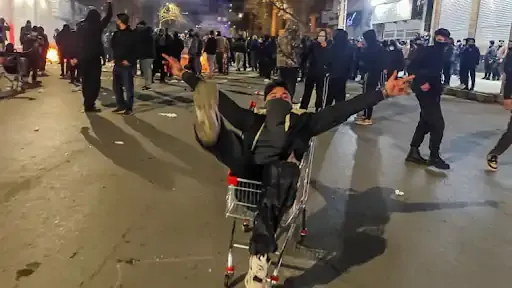
Iranian state media echoed the claim, blaming “US and Israeli agents” and “terrorist groups” for arson attacks on public property, including government buildings, buses and metro stations. Videos circulating online showed fires at a state broadcaster’s facility in Isfahan and a government office in eastern Tehran, though officials have not confirmed casualties from those incidents.
The protests have also drawn international attention. The US State Department and several European leaders publicly expressed solidarity with Iranian protesters, urging Tehran to refrain from violence. Trump warned that the Iranian regime could face severe consequences if demonstrators were harmed, while Sweden and Belgium voiced support for what they called the Iranian people’s struggle for freedom.
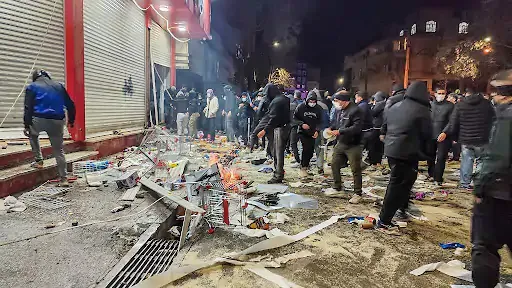
Iranian President Masoud Pezeshkian struck a more conciliatory tone, urging security forces to exercise restraint and calling for dialogue to address public grievances. His appeal came amid reports of a nationwide internet blackout, which has restricted communication and access to information.
Economists say the unrest is rooted in deepening economic stress. The rial has lost nearly half its value over the past year, food prices have surged by more than 70 percent, and the government’s proposed 62 percent tax hike in the 2026 budget has further fueled resentment. US sanctions and reduced oil exports have compounded the pressure on the economy.
As protests continue, analysts warn that the government faces a critical test: balancing security measures with economic reforms to contain public anger without triggering wider instability.

.jpg)
Iran Protests Over Inflation Spread to 100 Cities; 45 Killed as Khamenei Blames ‘Foreign Hands’
Digital Desk
The demonstrations began on December 28 with scattered protests in Tehran’s markets after the national currency, the rial, plunged to record lows. Since then, rallies have expanded across major urban centres including Tehran, Mashhad, Isfahan and Shiraz, driven by public anger over rising prices, unemployment and declining living standards.
On Thursday night, Iran’s Supreme Leader Ayatollah Ali Khamenei addressed the nation for the first time since the protests erupted. In a televised speech, Khamenei accused demonstrators of “ruining their own streets to please the president of another country,” an apparent reference to US President Donald Trump. He warned that authorities would not tolerate what he described as “mercenaries working for foreigners,” asserting that external forces were inciting violence.
Iranian state media echoed the claim, blaming “US and Israeli agents” and “terrorist groups” for arson attacks on public property, including government buildings, buses and metro stations. Videos circulating online showed fires at a state broadcaster’s facility in Isfahan and a government office in eastern Tehran, though officials have not confirmed casualties from those incidents.
The protests have also drawn international attention. The US State Department and several European leaders publicly expressed solidarity with Iranian protesters, urging Tehran to refrain from violence. Trump warned that the Iranian regime could face severe consequences if demonstrators were harmed, while Sweden and Belgium voiced support for what they called the Iranian people’s struggle for freedom.
Iranian President Masoud Pezeshkian struck a more conciliatory tone, urging security forces to exercise restraint and calling for dialogue to address public grievances. His appeal came amid reports of a nationwide internet blackout, which has restricted communication and access to information.
Economists say the unrest is rooted in deepening economic stress. The rial has lost nearly half its value over the past year, food prices have surged by more than 70 percent, and the government’s proposed 62 percent tax hike in the 2026 budget has further fueled resentment. US sanctions and reduced oil exports have compounded the pressure on the economy.
As protests continue, analysts warn that the government faces a critical test: balancing security measures with economic reforms to contain public anger without triggering wider instability.
.jpg)




