IRGC Claims US Marines Killed in Kuwait Drone Missile Strike
Digital Desk
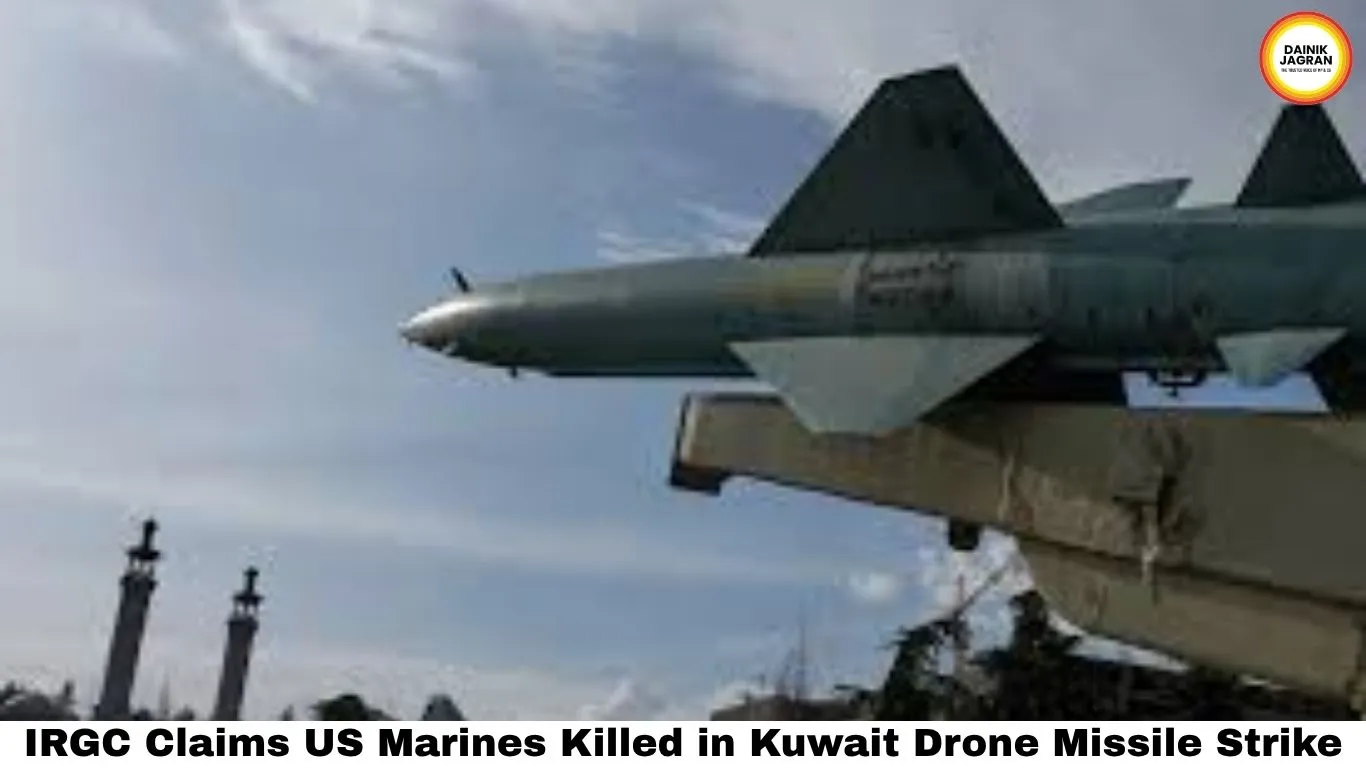
Iran's IRGC claimed a mass drone and missile strike on US Marines at Kuwait's Bubiyan Island on March 28, alleging large-scale American casualties in the ongoing Iran war.
The Strike and the Claim
The IRGC did not hold back in framing the assault. In a video statement, Iranian military spokesperson Ebrahim Zolfaghari described the attack as part of a broader campaign aimed at forcing US forces out of what Tehran calls Muslim lands.
"Complete elimination of American soldiers from the land of Muslims," Zolfaghari declared, framing the strike explicitly as retaliation for recent US and Israeli attacks on Iranian nuclear facilities and strategic infrastructure.
The IRGC claimed the assault — employing suicide drones and ballistic missiles — killed "a large number" of American personnel, with the wounded reportedly evacuated to multiple hospitals including Saleh al-Sabah, Mohammed al-Hamad, and Ali al-Salem. The US military had not issued an official casualty confirmation at the time of reporting.
Why Bubiyan Island
The target was not chosen at random. Bubiyan Island, located off Kuwait's north-eastern coast near the Iraqi border, hosts logistics and surveillance facilities used by US forces to support broader military operations in the northern Gulf. For the IRGC, it represents a forward American pressure point — close enough to Iranian naval reach and significant enough to send a message.
The island has assumed greater strategic importance as the broader war has pushed US force concentration across the Gulf into tighter, more exposed positions. Targeting it directly, with a combined drone-missile package, is consistent with the IRGC's evolving doctrine of high-visibility, high-claim strikes designed as much for domestic and regional signalling as for operational effect.
Kuwait Caught in the Crossfire
Kuwait, despite not being a party to the US-Iran conflict, has found itself a repeated target as Iran accuses Gulf governments of enabling American and Israeli military operations from their territory. Earlier this month, a drone strike on a US logistics facility within a civilian port killed six American soldiers — signalling a deliberate shift toward the direct targeting of US personnel rather than infrastructure.
The latest strike compounds the pressure on Gulf states that have been caught between longstanding security arrangements with Washington and the intensifying danger of Iranian retaliation. Several Gulf governments have raised urgent concerns at the United Nations, warning that continued attacks on ports, refineries, and logistics facilities threaten both civilian populations and global energy markets.
A Pattern of Escalating IRGC Aggression
Saturday's claim did not emerge in isolation. Since the war began on February 28 — triggered by coordinated US-Israeli strikes that killed Supreme Leader Ali Khamenei and targeted Iran's nuclear infrastructure — the IRGC has steadily expanded both the geography and intensity of its retaliatory operations.
Iran has launched waves of missile and drone attacks against US military bases across the region, including Al Udeid Air Base in Qatar, Ali Al Salem Air Base in Kuwait, Al Dhafra in the UAE, and the US Navy Fifth Fleet headquarters in Bahrain. A ballistic missile launched from Iranian territory was intercepted by NATO integrated air defence systems as it entered Turkish airspace — a significant escalation that rattled alliance planners.
The IRGC also claimed to have struck the USS Abraham Lincoln with ballistic missiles — a claim flatly denied by US Central Command, which stated the carrier was unaffected and continued normal flight operations.
US Response and Posture
Washington has consistently challenged or denied the more dramatic IRGC claims while acknowledging the broader operational reality of Iranian aggression. US CENTCOM confirmed earlier this week that it had destroyed IRGC command and control facilities, air defence installations, missile and drone launch sites, and a turbine engine production facility in Qom province.
US casualties in the conflict have been rising. CENTCOM confirmed the deaths of six service members in a drone attack on a logistics facility earlier this month. If Saturday's Bubiyan Island claims are even partially borne out, it would represent one of the single deadliest attacks on US personnel since Operation Epic Fury began.
President Donald Trump, who has said Washington has "the capability to go far longer" than its projected four-to-five-week operational timeline, has simultaneously signalled interest in a de-escalation pathway — though the pace of ongoing military action on all fronts suggests no immediate off-ramp is in sight.
The IRGC's Expanding Shadow
Analysts have noted that the IRGC's role has expanded well beyond its conventional military mandate as the war has progressed. Operating parallel to Iran's regular armed forces and answering directly to the supreme leader, the Guard has become the primary architect and executor of Iran's asymmetric strategy — managing proxy networks in Iraq, Lebanon, and Yemen while simultaneously directing ballistic missile and drone operations across the Gulf.
Its elite Quds Force has coordinated proxy attacks from Iraq and Syria on US coalition positions, while the IRGC Navy has remained the lead actor in Iran's effort to choke the Strait of Hormuz — through which roughly one-fifth of global oil supplies pass.
What Comes Next
With the Houthis now also formally in the war and the IRGC launching its most direct claimed attack on US ground forces to date, the conflict is entering a new and dangerous phase. The immediate pressure is on Washington — to verify casualties, respond militarily, and maintain Gulf partner confidence — all while managing domestic pressure over a war that was projected to be short but is showing no signs of resolution.
For Kuwait, and for the wider Gulf, the margin for staying on the sidelines is narrowing rapidly.

--------
🚨 Beat the News Rush – Join Now!
Get breaking alerts, hot exclusives, and game-changing stories instantly on your phone. No delays, no fluff – just the edge you need. ⚡
Tap to join:
🟢 WhatsApp Channel: Dainik Jagran MP CG
Crave more?
🅕 Facebook: Dainik Jagran MP CG English
🅧 Twitter (X): Dainik Jagran MP CG
🅘 Instagram: Dainik Jagran MP CG
Share the fire – keep your crew ahead! 🗞️🔥
IRGC Claims US Marines Killed in Kuwait Drone Missile Strike
Digital Desk
The Strike and the Claim
The IRGC did not hold back in framing the assault. In a video statement, Iranian military spokesperson Ebrahim Zolfaghari described the attack as part of a broader campaign aimed at forcing US forces out of what Tehran calls Muslim lands.
"Complete elimination of American soldiers from the land of Muslims," Zolfaghari declared, framing the strike explicitly as retaliation for recent US and Israeli attacks on Iranian nuclear facilities and strategic infrastructure.
The IRGC claimed the assault — employing suicide drones and ballistic missiles — killed "a large number" of American personnel, with the wounded reportedly evacuated to multiple hospitals including Saleh al-Sabah, Mohammed al-Hamad, and Ali al-Salem. The US military had not issued an official casualty confirmation at the time of reporting.
Why Bubiyan Island
The target was not chosen at random. Bubiyan Island, located off Kuwait's north-eastern coast near the Iraqi border, hosts logistics and surveillance facilities used by US forces to support broader military operations in the northern Gulf. For the IRGC, it represents a forward American pressure point — close enough to Iranian naval reach and significant enough to send a message.
The island has assumed greater strategic importance as the broader war has pushed US force concentration across the Gulf into tighter, more exposed positions. Targeting it directly, with a combined drone-missile package, is consistent with the IRGC's evolving doctrine of high-visibility, high-claim strikes designed as much for domestic and regional signalling as for operational effect.
Kuwait Caught in the Crossfire
Kuwait, despite not being a party to the US-Iran conflict, has found itself a repeated target as Iran accuses Gulf governments of enabling American and Israeli military operations from their territory. Earlier this month, a drone strike on a US logistics facility within a civilian port killed six American soldiers — signalling a deliberate shift toward the direct targeting of US personnel rather than infrastructure.
The latest strike compounds the pressure on Gulf states that have been caught between longstanding security arrangements with Washington and the intensifying danger of Iranian retaliation. Several Gulf governments have raised urgent concerns at the United Nations, warning that continued attacks on ports, refineries, and logistics facilities threaten both civilian populations and global energy markets.
A Pattern of Escalating IRGC Aggression
Saturday's claim did not emerge in isolation. Since the war began on February 28 — triggered by coordinated US-Israeli strikes that killed Supreme Leader Ali Khamenei and targeted Iran's nuclear infrastructure — the IRGC has steadily expanded both the geography and intensity of its retaliatory operations.
Iran has launched waves of missile and drone attacks against US military bases across the region, including Al Udeid Air Base in Qatar, Ali Al Salem Air Base in Kuwait, Al Dhafra in the UAE, and the US Navy Fifth Fleet headquarters in Bahrain. A ballistic missile launched from Iranian territory was intercepted by NATO integrated air defence systems as it entered Turkish airspace — a significant escalation that rattled alliance planners.
The IRGC also claimed to have struck the USS Abraham Lincoln with ballistic missiles — a claim flatly denied by US Central Command, which stated the carrier was unaffected and continued normal flight operations.
US Response and Posture
Washington has consistently challenged or denied the more dramatic IRGC claims while acknowledging the broader operational reality of Iranian aggression. US CENTCOM confirmed earlier this week that it had destroyed IRGC command and control facilities, air defence installations, missile and drone launch sites, and a turbine engine production facility in Qom province.
US casualties in the conflict have been rising. CENTCOM confirmed the deaths of six service members in a drone attack on a logistics facility earlier this month. If Saturday's Bubiyan Island claims are even partially borne out, it would represent one of the single deadliest attacks on US personnel since Operation Epic Fury began.
President Donald Trump, who has said Washington has "the capability to go far longer" than its projected four-to-five-week operational timeline, has simultaneously signalled interest in a de-escalation pathway — though the pace of ongoing military action on all fronts suggests no immediate off-ramp is in sight.
The IRGC's Expanding Shadow
Analysts have noted that the IRGC's role has expanded well beyond its conventional military mandate as the war has progressed. Operating parallel to Iran's regular armed forces and answering directly to the supreme leader, the Guard has become the primary architect and executor of Iran's asymmetric strategy — managing proxy networks in Iraq, Lebanon, and Yemen while simultaneously directing ballistic missile and drone operations across the Gulf.
Its elite Quds Force has coordinated proxy attacks from Iraq and Syria on US coalition positions, while the IRGC Navy has remained the lead actor in Iran's effort to choke the Strait of Hormuz — through which roughly one-fifth of global oil supplies pass.
What Comes Next
With the Houthis now also formally in the war and the IRGC launching its most direct claimed attack on US ground forces to date, the conflict is entering a new and dangerous phase. The immediate pressure is on Washington — to verify casualties, respond militarily, and maintain Gulf partner confidence — all while managing domestic pressure over a war that was projected to be short but is showing no signs of resolution.
For Kuwait, and for the wider Gulf, the margin for staying on the sidelines is narrowing rapidly.