


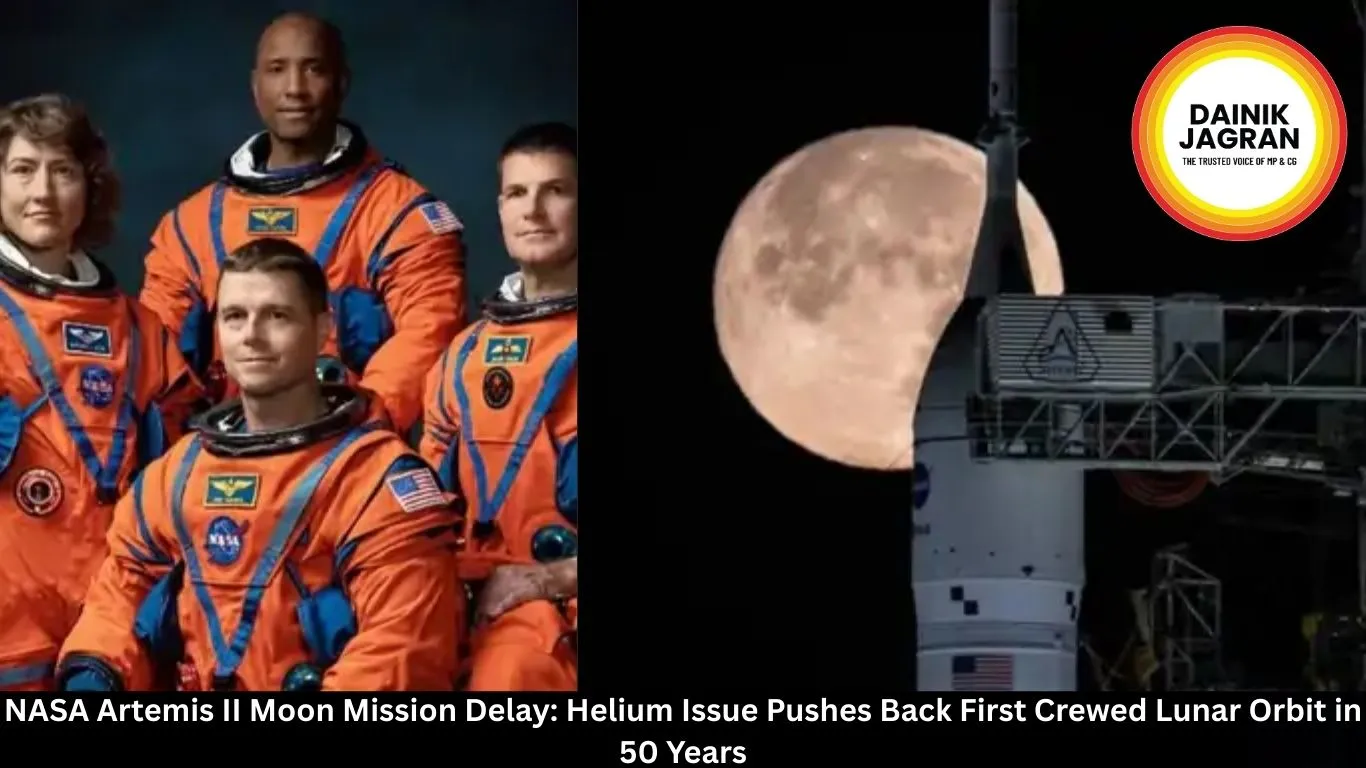
NASA Artemis II Moon Mission Delay: Helium Issue Pushes Back First Crewed Lunar Orbit in 50 Years
Digital Desk
NASA's highly anticipated Artemis II moon mission delay has gripped space enthusiasts worldwide. Just a day after announcing a March 6 launch, the agency detected a critical helium flow problem in the rocket's upper stage, potentially pushing back the first crewed lunar orbit in 50 years.
Helium Flow Halt Sparks Urgent Review
Last night, helium flow—vital for rocket pressurization—suddenly stopped in the SLS rocket at Florida's Kennedy Space Center. NASA engineers are analyzing data round-the-clock. They aim to fix it on the launch pad but are ready to roll the rocket back to the hangar if needed. This NASA Artemis II moon mission delay highlights the high-stakes precision of deep-space travel.
The issue echoes challenges from Artemis I's 2022 launch, which succeeded on the third try after similar technical hurdles. Why now? With global eyes on U.S. space leadership amid China's lunar ambitions, any slip-up tests NASA's Artemis program's credibility.
Historic Crew and 2.2 Million Km Journey
Artemis II launch date remains fluid, but the 10-day flyby mission will send four astronauts— including a woman and a Black astronaut—into lunar orbit without landing. Crew highlights:
-
Christina Hammock Koch: Record-holder for longest spaceflight by a woman.
-
Victor Glover: U.S. Navy pilot, first Black astronaut on a moon mission.
-
Commander Reid Wiseman and specialist Jeremy Hansen round out the team.
The Orion spacecraft will travel 2.2 million kilometers, venturing 10,300 km past the moon's far side. It tests life-support systems for Artemis III's 2028 moon landing.
Artemis vs. Apollo: A New Era Beyond Rivalry
Unlike Apollo 17's 1972 triumph—born from Cold War rivalry—Artemis II focuses on sustainable exploration. NASA eyes moon ice and soil for fuel, food, and habitats, paving way for Mars. Artemis I's 2022 success (1.4 million miles in 25 days) proved the tech; now humans step up.
What This Means for Space Fans
This delay, while frustrating, ensures safety—crucial after 50 years without crewed lunar trips. Experts like former NASA engineer John Frassanito say: "It's a smart pause; Orion's deep-space verification is non-negotiable." Stay tuned for Artemis II launch date updates.
As India ramps up its Chandrayaan missions, NASA's Artemis saga inspires global innovation. Will the fix happen in time? NASA promises clarity soon.
.jpg)




