


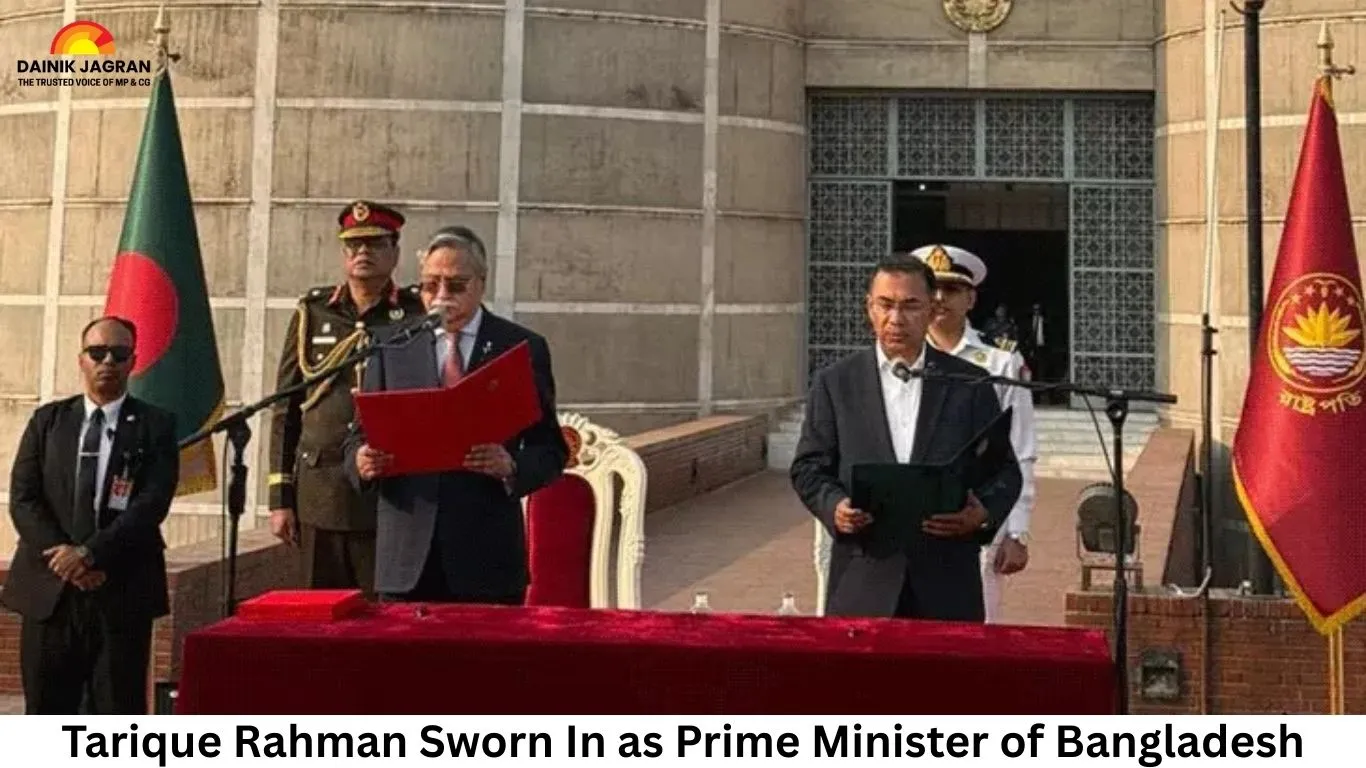
Tarique Rahman Sworn In as Prime Minister of Bangladesh; New Cabinet Formed Amid Constitutional Debate
Digital Desk
Rahman, elected earlier in the day as leader of the BNP’s parliamentary party, becomes prime minister for the first time. The son of former prime minister Khaleda Zia and former president Ziaur Rahman, he returned to the country only two months ago after 17 years in London. His party secured 209 of 299 seats in last week’s general election, comfortably surpassing the majority mark.
Alongside the prime minister, 49 ministers were sworn in, including 25 cabinet ministers and 24 ministers of state. Among them is Nitai Roy Chowdhury, the lone Hindu representative in the cabinet. Officials said 17 of the cabinet members and all ministers of state are first-time appointees, signaling a generational shift in leadership.
The ceremony drew more than 1,000 domestic and international guests under tight security. Foreign dignitaries included India’s Lok Sabha Speaker Om Birla, Bhutanese Prime Minister Shering Tobgay, Pakistan’s Planning Minister Ahsan Iqbal, Nepal’s Foreign Minister Bala Nanda Sharma, Maldives’ Foreign Minister Abdullah Khaleel, Sri Lanka’s Health Minister Nalinda Jayatissa and UK minister Seema Malhotra, reflecting regional interest in the transition.
The new administration takes office amid mounting political tension over proposed constitutional reforms linked to the recently approved “July Charter,” endorsed by 62% of voters in a referendum held alongside the election. The charter proposes limiting prime ministers to a lifetime maximum of 10 years in office, strengthening presidential powers, and creating a bicameral legislature. BNP leaders have endorsed the document in principle but objected to provisions establishing a constitutional reform council, arguing it lacks a basis in the current constitution.
Senior party figures say lawmakers will not take oaths for the proposed council unless parliament first amends the constitution to authorize it. Analysts note the dispute could test the new government’s legislative strength early in its tenure.
Rahman has already relinquished one of the two constituencies he won, triggering a by-election that must be held within 90 days under electoral rules. Political observers say the coming months will determine whether his administration can balance reform promises with institutional consensus.
.jpg)




