


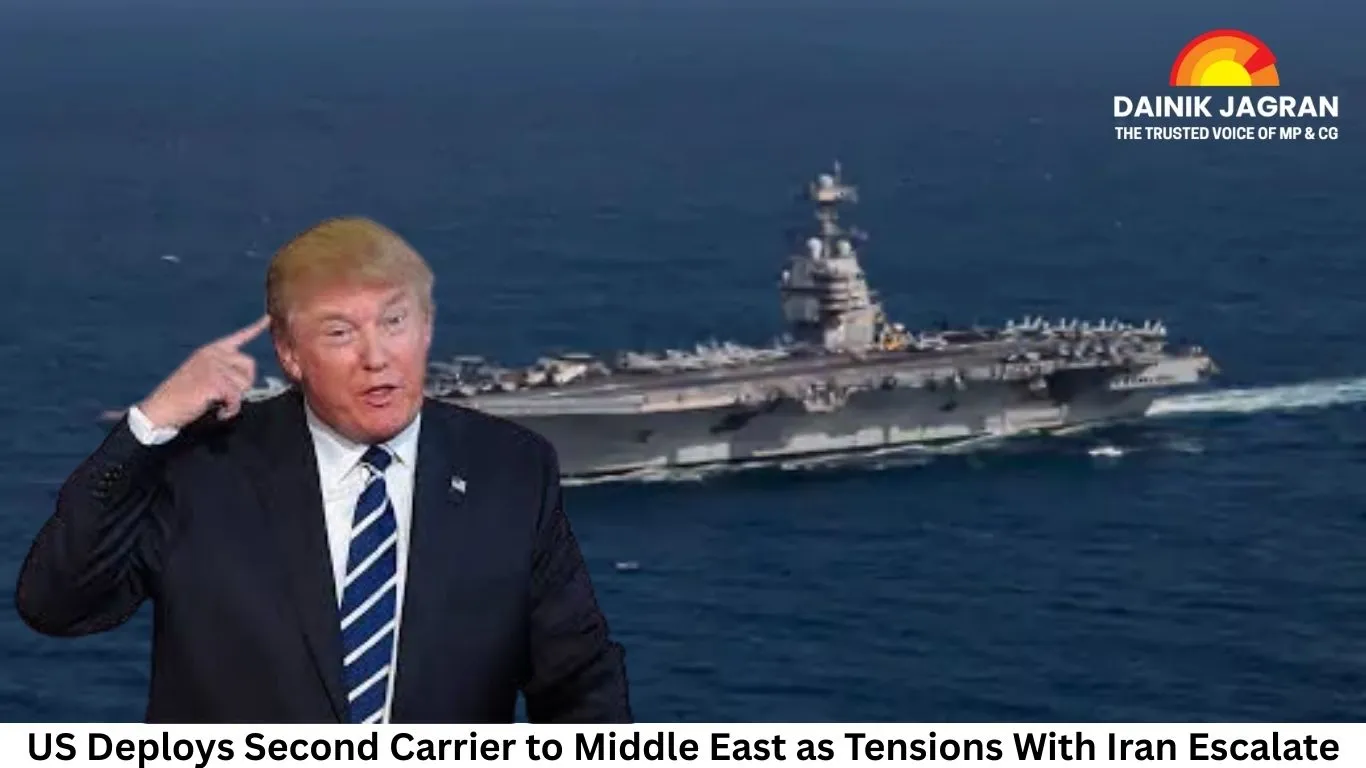
US Deploys Second Carrier to Middle East as Tensions With Iran Escalate
Digital Desk
The deployment involves the Navy’s newest and largest carrier, which is expected to reach the region within a week. A separate carrier group is already operating in waters under the jurisdiction of US Central Command, positioning American forces to conduct simultaneous sea- and air-based operations if required.
Officials said the decision reflects heightened regional volatility and the need for rapid-response capability. The United States maintains only 11 aircraft carriers, making dual-carrier deployments rare and typically reserved for periods of elevated strategic concern.
Additional assets—including guided-missile destroyers, fighter aircraft, and surveillance platforms—have also been dispatched in recent weeks. Satellite imagery indicates increased activity at Al Udeid Air Base in Qatar, where mobile Patriot missile systems were recently spotted, suggesting preparations for flexible defensive positioning.
The buildup follows a series of sharp exchanges between Washington and Tehran. US President Donald Trump recently said a diplomatic agreement with Iran could be reached but warned that the situation could become “very serious” if negotiations fail. He outlined conditions for talks, including restrictions on uranium enrichment, limits on long-range missiles, and an end to support for regional proxy groups—points echoed by envoy Steve Witkoff.
Iranian officials have rejected those demands. Foreign Minister Abbas Araghchi stated that Tehran would not abandon its nuclear program under pressure or threats, insisting that enrichment is “not negotiable.” Supreme Leader Ayatollah Ali Khamenei accused Washington of attempting to intimidate Iran through military deployments and warned that any attack would trigger retaliation against US bases in the region.
Defense analysts note that positioning two carrier strike groups simultaneously enhances surveillance, deterrence, and strike capacity. It also signals readiness without committing ground forces, a strategy often used during periods of diplomatic uncertainty.
Historically, similar force concentrations have preceded negotiations or crises involving nuclear or regional security disputes. While officials emphasize that the deployments are precautionary, they acknowledge that the expanded presence places US forces in a position to respond quickly to developments across the Gulf and surrounding regions.
Diplomatic channels between the two countries remain open, but the parallel buildup of military capability and rhetoric suggests that both sides are preparing for multiple scenarios, ranging from renewed talks to potential confrontation.
.jpg)




