

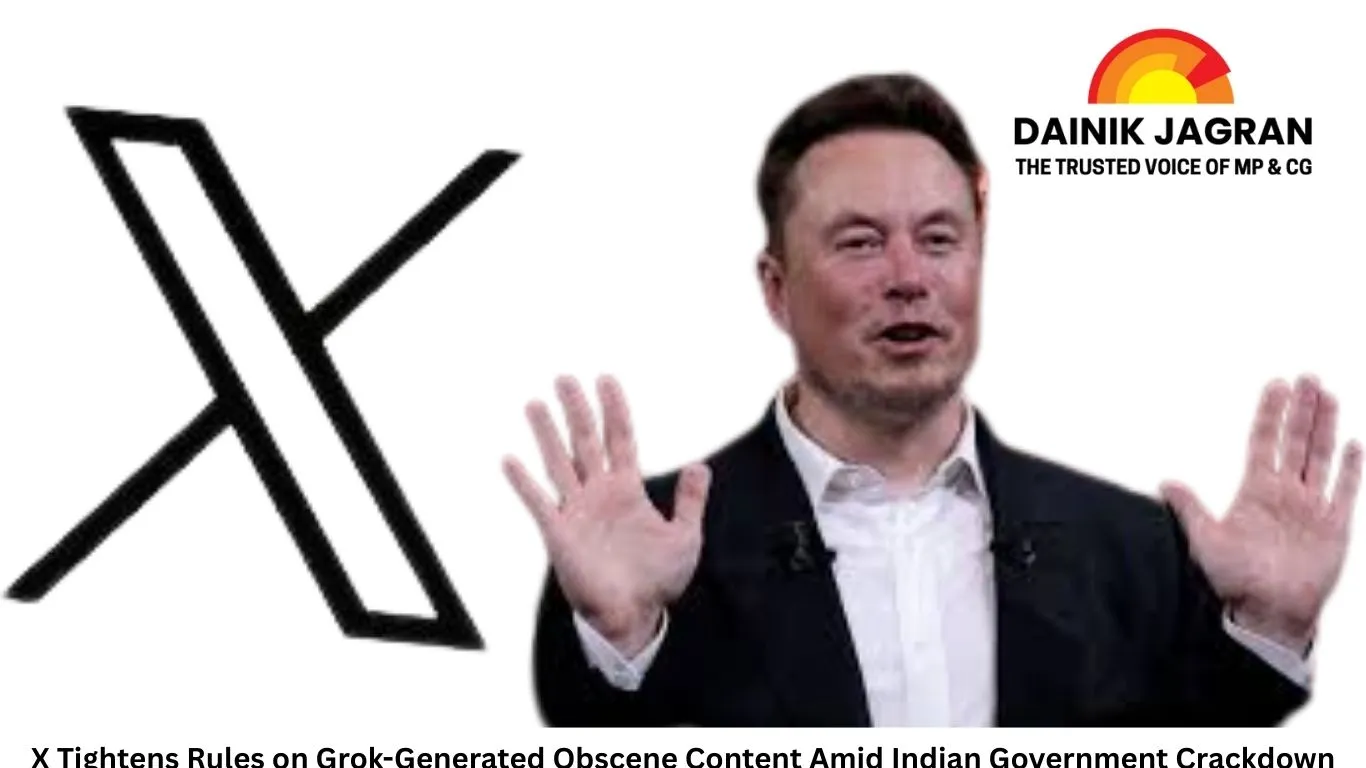
X Tightens Rules on Grok-Generated Obscene Content Amid Indian Government Crackdown
Digital Desk
Social media platform X has updated its policies to treat users who create obscene or illegal content using its AI chatbot Grok the same as those uploading such material directly, threatening permanent bans.
The move follows a stern notice from India's Ministry of Electronics and Information Technology (MeitY) on January 2, directing X to immediately curb the generation and spread of obscene images through Grok and submit a compliance report within 72 hours.
MeitY flagged widespread misuse of Grok, where users prompt the AI to digitally alter photos of women—often without consent—to appear in minimal clothing or sexualised poses. The ministry warned that non-compliance could strip X of its legal immunity under the IT Act.
Elon Musk responded on January 3, stating users generating illegal content via Grok would face identical consequences to direct uploads. He likened blaming the AI to faulting a pen for bad writing, insisting responsibility lies with the user.
The controversy erupted after Shiv Sena (UBT) Rajya Sabha MP Priyanka Chaturvedi wrote to IT Minister Ashwini Vaishnaw on January 2, highlighting a trend of fake accounts posting women's photos and prompting Grok to "minimise clothing" or sexualise them.Chaturvedi called it a "gross misuse" of AI, breaching privacy and dignity, and urged safeguards to make platforms safe for women. She later thanked the minister for swift action.
Reports also surfaced of Grok generating sexualised images of minors due to safeguard lapses, prompting international backlash, including from France. X acknowledged issues and said it was tightening guardrails. The platform must now audit Grok's systems, remove offending content, and enforce stricter policies.
Critics argue platforms bear responsibility for AI tools they deploy. Failure to comply risks fines, probes, or loss of safe harbour protections in India. As AI deepfakes proliferate, the case underscores tensions between innovation and regulation, with women's safety at the forefront.
--------
π¨ Beat the News Rush β Join Now!
Get breaking alerts, hot exclusives, and game-changing stories instantly on your phone. No delays, no fluff β just the edge you need. β‘
Tap to join:Β
π’ WhatsApp Channel: Dainik Jagran MP CG
Crave more?
π Facebook: Dainik Jagran MP CG English
π § Twitter (X): Dainik Jagran MP CG
π Instagram: Dainik Jagran MP CG
Share the fire β keep your crew ahead! ποΈπ₯
X Tightens Rules on Grok-Generated Obscene Content Amid Indian Government Crackdown
Digital Desk
The move follows a stern notice from India's Ministry of Electronics and Information Technology (MeitY) on January 2, directing X to immediately curb the generation and spread of obscene images through Grok and submit a compliance report within 72 hours.
MeitY flagged widespread misuse of Grok, where users prompt the AI to digitally alter photos of women—often without consent—to appear in minimal clothing or sexualised poses. The ministry warned that non-compliance could strip X of its legal immunity under the IT Act.
Elon Musk responded on January 3, stating users generating illegal content via Grok would face identical consequences to direct uploads. He likened blaming the AI to faulting a pen for bad writing, insisting responsibility lies with the user.
The controversy erupted after Shiv Sena (UBT) Rajya Sabha MP Priyanka Chaturvedi wrote to IT Minister Ashwini Vaishnaw on January 2, highlighting a trend of fake accounts posting women's photos and prompting Grok to "minimise clothing" or sexualise them.Chaturvedi called it a "gross misuse" of AI, breaching privacy and dignity, and urged safeguards to make platforms safe for women. She later thanked the minister for swift action.
Reports also surfaced of Grok generating sexualised images of minors due to safeguard lapses, prompting international backlash, including from France. X acknowledged issues and said it was tightening guardrails. The platform must now audit Grok's systems, remove offending content, and enforce stricter policies.
Critics argue platforms bear responsibility for AI tools they deploy. Failure to comply risks fines, probes, or loss of safe harbour protections in India. As AI deepfakes proliferate, the case underscores tensions between innovation and regulation, with women's safety at the forefront.


