


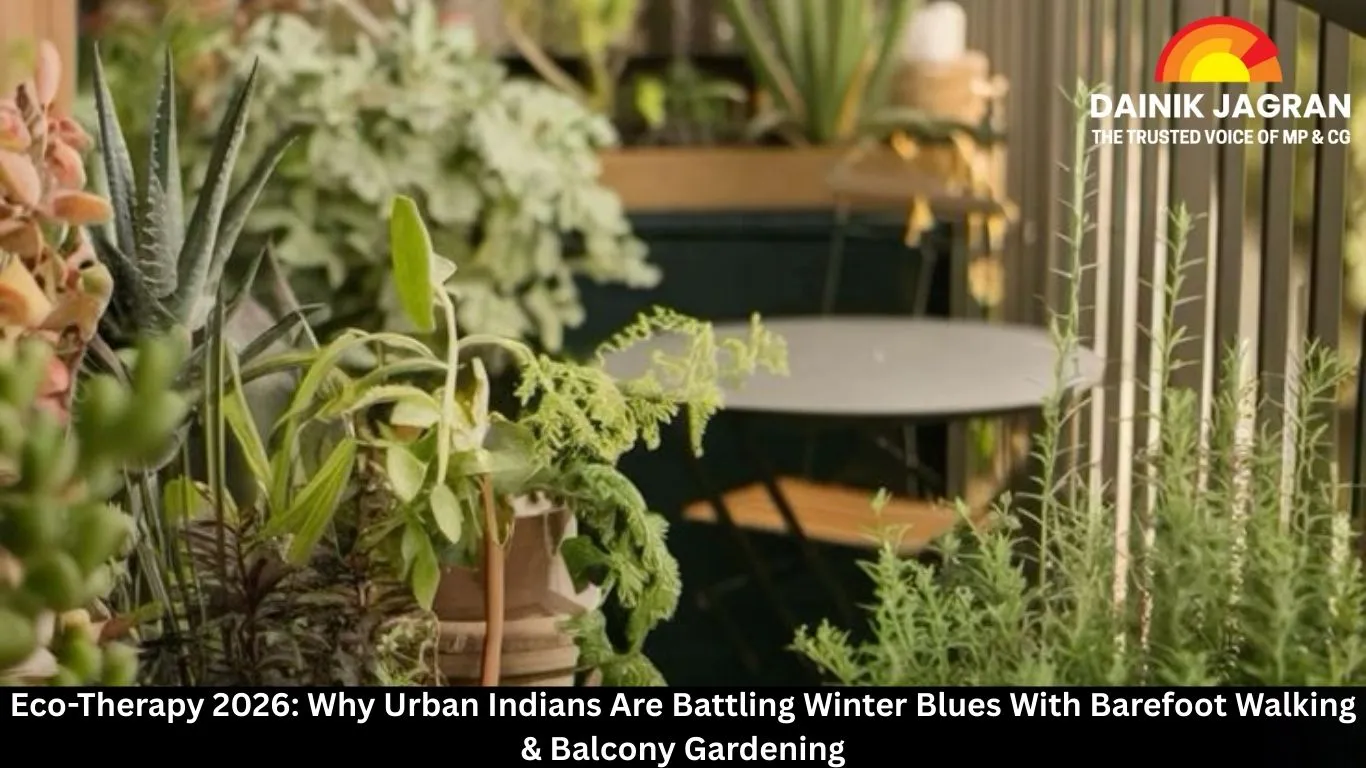
Eco-Therapy 2026: Why Urban Indians Are Battling Winter Blues With Barefoot Walking & Balcony Gardening
Digital Desk
While the rest of the world talks about light therapy lamps for Seasonal Affective Disorder (SAD), India is rediscovering its own cure: eco-therapy. As of February 2026, mental health professionals are moving away from purely clinical interventions for mild winter depression and prescribing "nature doses" instead .
What is Eco-Therapy?
Eco-therapy, or nature therapy, is the practice of connecting with the natural world to improve psychological well-being. In the Indian context, this is far from a new-age fad. It aligns perfectly with ancient practices like walking barefoot on grass (grounding) or sitting under specific trees for peace. With air quality improving in cities post-January, residents in Delhi NCR and Pune are being encouraged to take "mindful walks" where they leave their phones behind and simply observe the rustle of leaves or the winter sun on their skin .
Beating the Isolation
February can be a lonely month. The festive sparkle of December and January has faded, and summer isn't quite here yet. HCL Healthcare recently published insights stating that winter disrupts India's natural rhythm of community and outdoor socialization, leading to feelings of isolation. Their recommended hack? Terrace gardening. Even tending to a single pot of methi or coriander provides a "nurturing effect" that reduces cortisol levels .
The 5-Minute Morning Ritual
Mindfulness experts at Continental Hospitals suggest a simple hack that requires zero monetary investment: the balcony sit-down. Instead of waking up and immediately checking WhatsApp, individuals are advised to wrap themselves in a shawl and sit on their balcony or near a window for five minutes. Focus on the sounds—the distant hum of traffic, the birds, the pressure cooker whistle from a neighbor's kitchen. This practice of "passive awareness" grounds the mind and prevents the day from starting in a state of reactionary stress .
Gratitude in the Cold
Another trending hack is the "Winter Gratitude Shift." Rather than complaining about the cold, practitioners note three things they enjoy about the season—hot chai, cozy blankets, or early sunsets that allow for more rest. This cognitive reframing is a powerful, drug-free hack to improve emotional resilience during the tail end of winter .
.jpg)




