


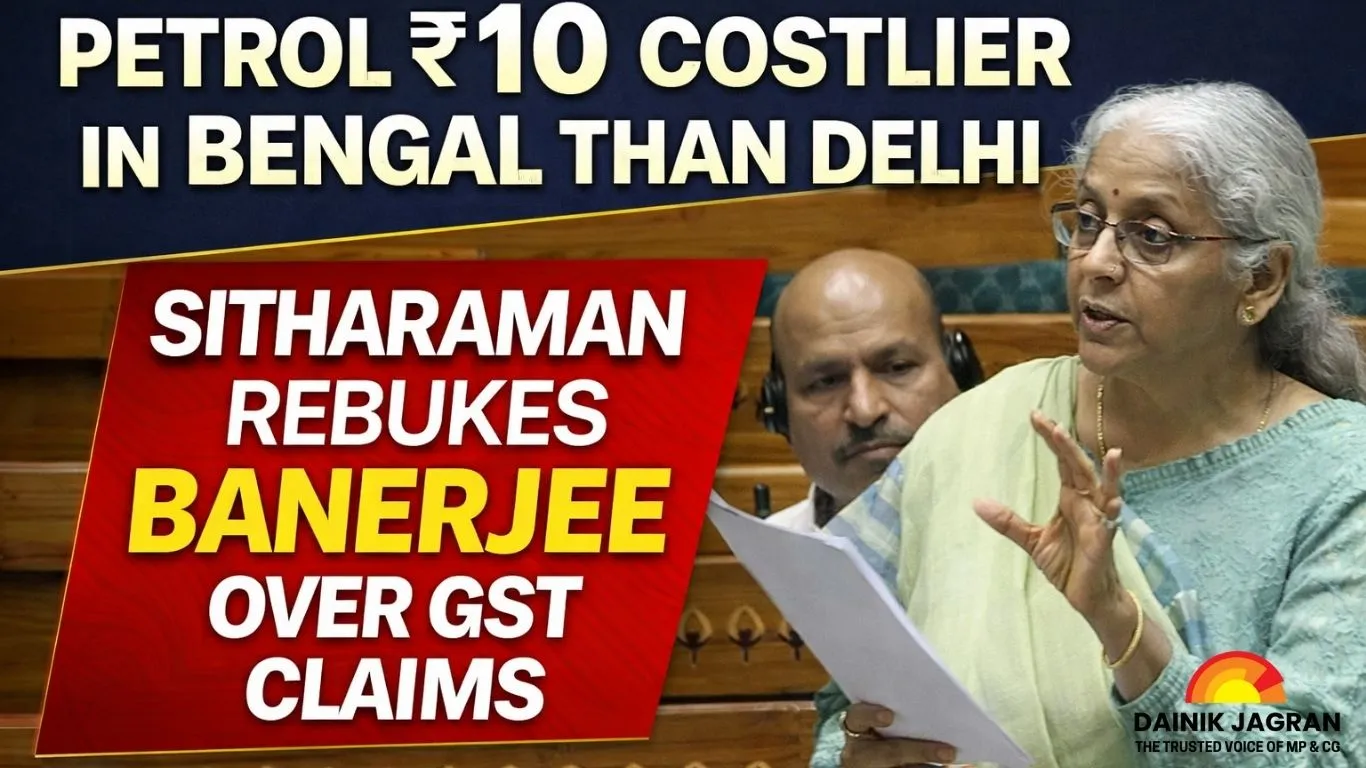
Petrol ₹10 Costlier in Bengal Than Delhi, Sitharaman Rebukes Banerjee Over GST Claims
Digital Desk
Responding to the Budget debate in Parliament, Sitharaman said she was “saddened” by Banerjee’s remarks that citizens pay GST “from birth to death.” She questioned the basis of the claim, asking when GST had ever been imposed on milk, education, books or other basic necessities.
“There are clear exemptions. Healthcare services and certain health insurance components have also seen relief,” the Finance Minister said, rejecting the allegation that GST burdens citizens at every stage of life. She further clarified that GST does not apply to petrol and diesel, countering what she described as misleading assertions.
Sitharaman turned the spotlight on West Bengal’s fuel pricing, stating that petrol is approximately ₹10 costlier in the state than in Delhi due to higher state taxes. “If the state government wants to provide relief, it can reduce its own taxes,” she said, urging the Mamata Banerjee-led administration to act instead of “discrediting the Centre.”
She also referred to concerns raised by Union Minister Giriraj Singh, alleging that in some instances local levies in Bengal were being collected under the guise of GST. If citizens are being charged extra, she said, it may not be due to central taxation.
The exchange followed a broader attack by Leader of Opposition Rahul Gandhi, who accused the Centre of weakening India’s economic sovereignty and criticised the Union Budget. Gandhi alleged that foreign powers could influence India’s policy decisions, including oil purchases, and claimed the Budget favoured foreign corporations in sectors such as data and artificial intelligence.
Sitharaman dismissed the opposition’s charges, urging Congress members to “stick to facts” and read the Budget documents carefully. She maintained that inflation remains under control and highlighted key fiscal indicators, including projected gross tax receipts of ₹44.04 lakh crore and capital expenditure of ₹12.22 lakh crore for 2026–27.
The Finance Minister reiterated that states receive their constitutionally mandated share of central taxes and grants, citing Finance Commission recommendations. She also defended the government’s use of cess and surcharge, stating that funds are channelled toward development projects.
With the Budget session ongoing, the debate over taxation, fuel pricing and Centre-state fiscal responsibilities is expected to intensify, particularly in poll-bound states where fuel costs remain politically sensitive.
.jpg)




