


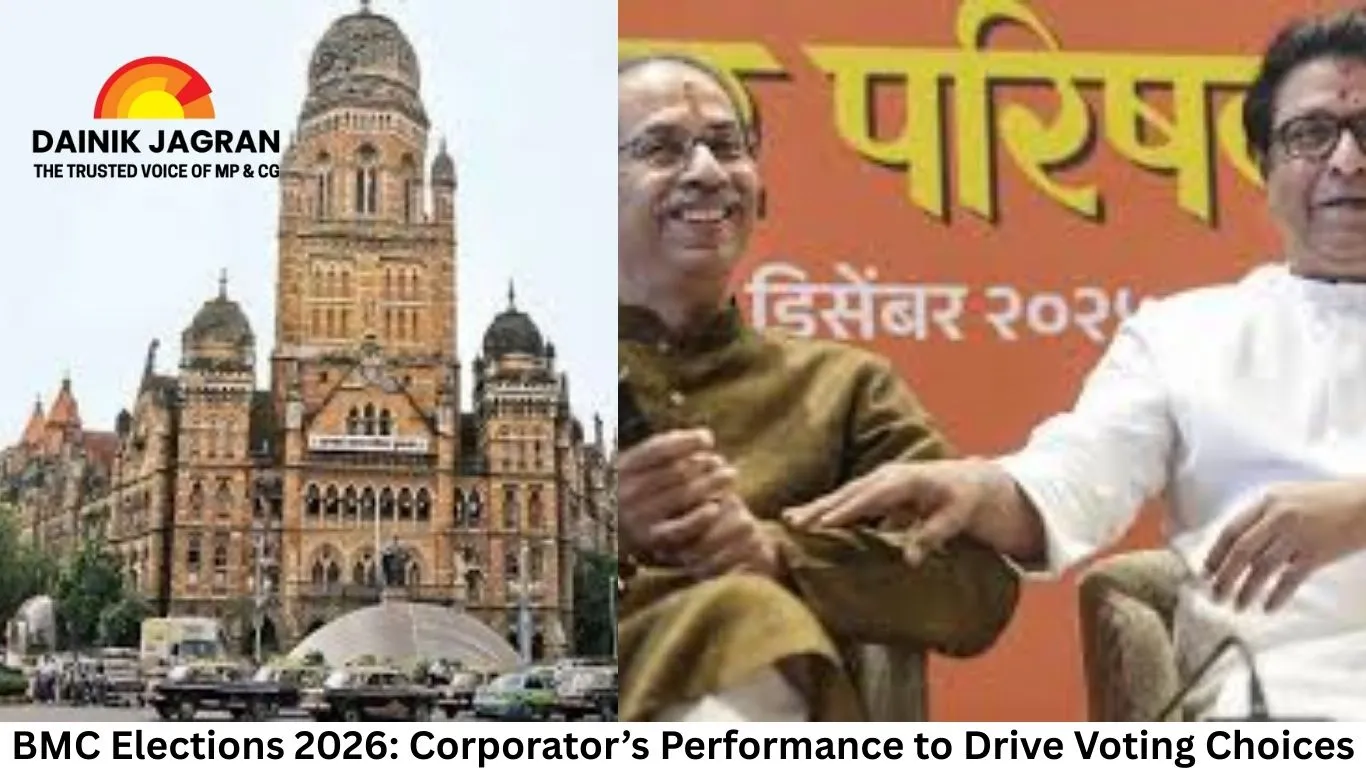
BMC Elections 2026: Corporator’s Performance to Drive Voting Choices, Survey Finds; Women Lean Towards BJP–Shiv Sena Alliance
Digital Desk
The survey, conducted by Ascendia Strategies LLP between December 17 and 24, 2025, covered more than 1,000 respondents across age groups and social segments in Mumbai. It found that 54% of voters consider the development work carried out by their corporator as the most decisive factor in voting. Issues related to local governance and civic amenities ranked next, while party symbols and the influence of national or state leadership were seen as less significant.
The study indicates notable gender-based trends. Nearly 50% of women respondents expressed support for the BJP–Shiv Sena (Shinde faction) alliance, positioning the ruling coalition as a strong contender among female voters. However, a substantial portion of the electorate remains undecided, suggesting room for shifts as campaigning intensifies.
Community-wise data shows a divided Marathi vote, countering assumptions of a consolidated bloc. Around 44% of Marathi respondents indicated support for the Shiv Sena (UBT) and MNS combine, while 42% leaned towards the BJP–Shiv Sena (Shinde) alliance. Among Muslim voters, the Congress emerged as the preferred choice with 41% support. The BJP–Shiv Sena alliance also appeared dominant among Gujarati, North Indian, and South Indian communities, with 53% backing.
Despite these trends, voter indecision remains high. Over 60% of respondents said they had not yet decided whom to vote for or whether they would vote at all. Among women, 69% were undecided, followed by Marathi Manoos at 55% and Muslim voters at 52%. In the 2017 BMC elections, voter turnout was relatively low, with about 45% abstaining.
The survey also highlighted limited engagement between citizens and their elected representatives. Nearly half of the respondents said they had never contacted their corporator for grievances or civic issues. Younger voters were more proactive in reaching out, while those aged 46–60 were least likely to do so.
Satisfaction levels with corporators varied by age. While the 46–60 age group reported the highest satisfaction, younger voters expressed greater discontent. About 13% of respondents aged 18–25 said they were “very dissatisfied” with their corporator’s performance.
Overall, public perception of the BMC’s functioning over the past three to four years was largely positive, particularly among youth and middle-aged voters. However, dissatisfaction was higher among senior citizens, with 23% of those aged above 60 rating civic services as “very poor.”
The findings underline a competitive and fluid political landscape ahead of the 2026 BMC elections, with local performance likely to outweigh party loyalty.
.jpg)




