

Kashmiris Donate Gold, Cash and Livestock for War-Hit Iran — Viral

Digital Desk

Kashmiris Donate Gold, Cash and Livestock for War-Hit Iran — Viral

Kashmiri Shia communities in Budgam and Baramulla donate gold, livestock and piggy banks for Iran's war-affected civilians — Iran's Embassy thanks India saying "this kindness will never be forgotten."

'Thank You, India': Kashmiri Children Empty Piggy Banks, Widows Give Up Gold — Kashmir's Extraordinary Solidarity Drive for War-Hit Iran Goes Viral

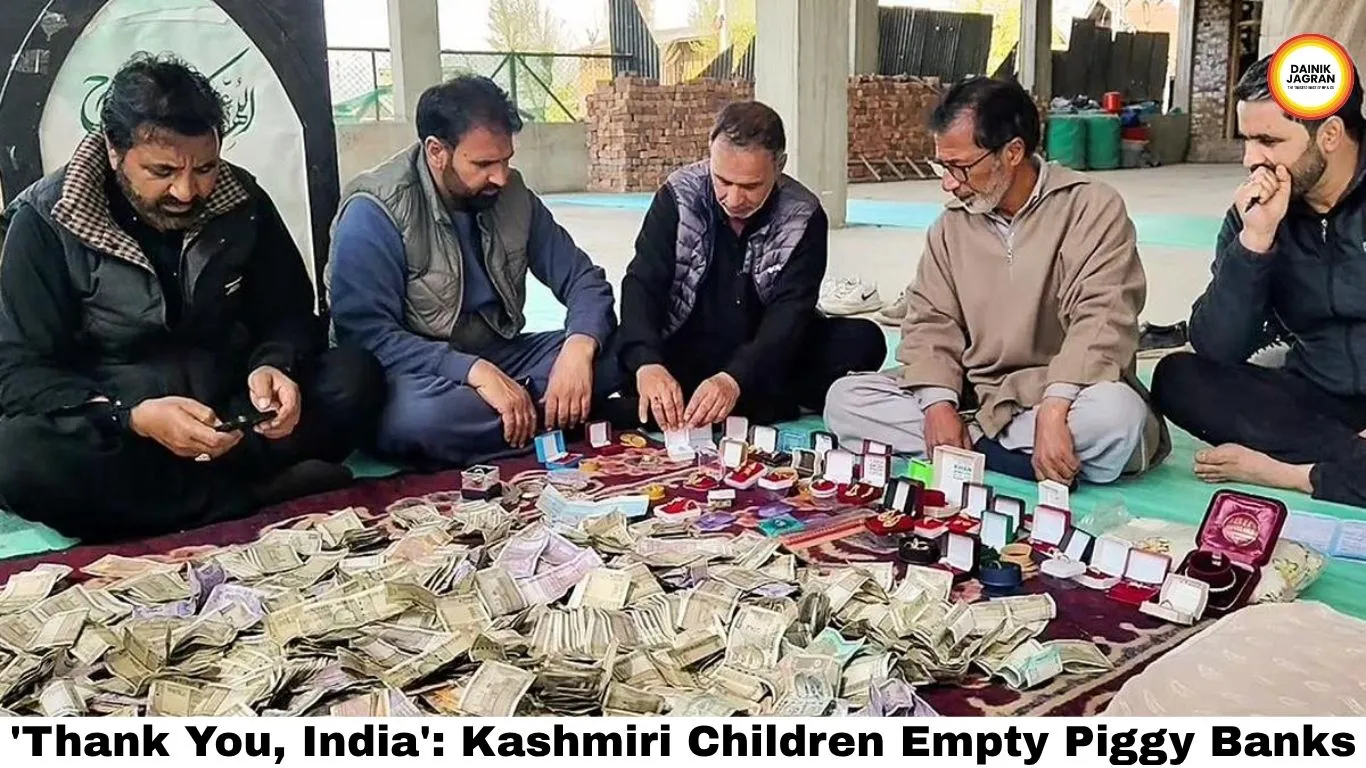
From Budgam and Baramulla, Kashmiri Shia communities launched a post-Eid door-to-door humanitarian drive — donating gold ornaments, silver, copper utensils, livestock and cash for Iran's war-affected civilians — drawing global attention and a heartfelt acknowledgment from Iran's Embassy in India.


A Valley Opens Its Heart

In the middle of a global war that has set oil markets on fire, sent missiles into nuclear sites, and pushed the world economy toward the edge of recession, a quiet and deeply human story emerged from the Kashmir Valley on the morning of March 22 — Eid-ul-Fitr. Residents of Budgam and Baramulla, driven by religious solidarity and a shared sense of grief for the people of Iran, began going door to door collecting whatever their neighbours could spare. Gold ornaments. Silver jewellery. Copper utensils. Livestock. Cash. And in the most poignant images to emerge — children bringing their piggy banks.

By the time these images reached social media, they had gone viral across India, Iran and the wider Islamic world — a rare moment of unambiguous human warmth in a news cycle defined by missiles, ultimatums and oil prices.


What Was Donated — And By Whom

The donation campaign began in Shia-majority localities across Budgam and Baramulla districts, where volunteers set up collection stalls at mosques and conducted house-to-house visits. A collection point was established at Masjid Imam Zaman in Budgam — one of the district's prominent Shia religious centres — where residents came in person to contribute.

The range of contributions was striking in its breadth. Women donated gold and silver ornaments — jewellery that in many Kashmiri households represents a family's most significant financial asset and emotional inheritance. Copper utensils, traditionally valued in Kashmiri households, were brought out of storage and offered. Families donated livestock — animals that represent livelihood, not surplus. And children came with their piggy banks.

Among the most emotionally resonant contributions was that of a Kashmiri widow who donated a gold memento she had preserved for 28 years in memory of her late husband. That she chose to part with it for the people of Iran — people she has never met, in a country she may never visit — says something profound about the depth of feeling driving this campaign.


Iran's Embassy Responds — 'This Kindness Will Never Be Forgotten'

The Iranian Embassy in India was among the first official voices to acknowledge the outpouring. In a post on X that itself went viral, the embassy wrote: "With hearts full of gratitude, we sincerely thank the kind people of Kashmir for standing with the people of Iran through their humanitarian support and heartfelt solidarity; this kindness will never be forgotten. Thank you, India."

The embassy posted photographs and videos of the donation drive — including images of children offering their piggy banks. A second post specifically highlighted the children's contributions, writing: "Even Kashmiri children are offering their piggy banks as gifts to Iran. God bless you." The posts were shared tens of thousands of times across platforms, drawing responses from Iranian citizens, diaspora communities and solidarity movements across the Middle East.


Why Kashmir — The Historical and Spiritual Bond

The depth of Kashmiri solidarity with Iran is not spontaneous or sudden. It is rooted in a centuries-old spiritual and cultural connection between Kashmir's Shia Muslim population and Iran — the world's largest Shia-majority nation. Shia Islam has deep historical roots in the Kashmir Valley, with religious links to Iran's Qom seminary, a tradition of Persian-language scholarship, and regular pilgrimage connections through the Ziyarat circuit.

For Kashmir's Shia communities, the US-Israel war on Iran is not a distant geopolitical event. It is an attack on a country they feel spiritually connected to — a country whose language, literature, religious leadership, and cultural heritage are woven into their own identity. The donation drive is, in this sense, an expression not merely of humanitarian impulse but of a lived and felt bond that predates the current conflict by centuries.


Solidarity Across Age and Gender

What distinguishes this campaign from similar expressions of political solidarity is its breadth across age, gender and social class. It was not a protest or a political rally. It was a household-by-household, person-by-person act of giving — participated in by elderly women parting with gold they have worn for decades, by men bringing livestock that forms their economic backbone, and by children whose understanding of the war may be limited but whose impulse to help was evidently not.

Local clerics who participated in the drive described the response as spontaneous and overwhelming. The campaign needed no central organiser. Once it began, it spread through the community through word of mouth, religious networks and social media — each contribution inspiring the next.


India's Broader Kashmir-Iran Dynamic

The viral images from Kashmir carry significance that extends beyond the humanitarian. India's official position on the Iran war has been one of calibrated neutrality — condemning attacks on infrastructure, pressing for the Strait of Hormuz to remain open, and engaging diplomatically with Tehran through PM Modi's calls with President Pezeshkian. The Embassy's public "Thank You, India" message — directed at Kashmiris but addressed to India as a whole — is a subtle diplomatic signal that the grassroots solidarity from Kashmir is being noticed and valued at the official level in Tehran.

For a government navigating the complex geometry of a war that involves its largest oil suppliers, a strategic partner in Iran, and pressure from Western allies — the organic people-to-people goodwill from Kashmir toward Iran is an asset that requires no policy decision and costs nothing diplomatically.


The War Behind the Generosity

The donations are being made in the context of a conflict that has now entered its 24th day and claimed over 1,500 Iranian lives. US and Israeli airstrikes have hit military facilities, government buildings, and residential areas. Missiles have struck schools and hospitals. A US airstrike on a school in Minab is alleged to have killed 168 children — a claim under international scrutiny. For the people of Kashmir who have lived their own history of conflict, displacement and loss, the images of Iranian civilians caught in a war not of their making are not abstract. They are familiar.

That familiarity — the recognition of a people under bombardment in the face of the world — is perhaps the deepest explanation for why a widow in Budgam chose to give up her most treasured possession for strangers in Tehran.

--------

🚨 Beat the News Rush – Join Now!

Get breaking alerts, hot exclusives, and game-changing stories instantly on your phone. No delays, no fluff – just the edge you need. ⚡

Tap to join: 

🟢 WhatsApp Channel: Dainik Jagran MP CG

Crave more?

🅕 Facebook: Dainik Jagran MP CG English

🅧 Twitter (X): Dainik Jagran MP CG

🅘 Instagram: Dainik Jagran MP CG

Share the fire – keep your crew ahead! 🗞️🔥

english.dainikjagranmpcg.com
23 Mar 2026 By Jiya.S

Kashmiris Donate Gold, Cash and Livestock for War-Hit Iran — Viral

Digital Desk

'Thank You, India': Kashmiri Children Empty Piggy Banks, Widows Give Up Gold — Kashmir's Extraordinary Solidarity Drive for War-Hit Iran Goes Viral

From Budgam and Baramulla, Kashmiri Shia communities launched a post-Eid door-to-door humanitarian drive — donating gold ornaments, silver, copper utensils, livestock and cash for Iran's war-affected civilians — drawing global attention and a heartfelt acknowledgment from Iran's Embassy in India.


A Valley Opens Its Heart

In the middle of a global war that has set oil markets on fire, sent missiles into nuclear sites, and pushed the world economy toward the edge of recession, a quiet and deeply human story emerged from the Kashmir Valley on the morning of March 22 — Eid-ul-Fitr. Residents of Budgam and Baramulla, driven by religious solidarity and a shared sense of grief for the people of Iran, began going door to door collecting whatever their neighbours could spare. Gold ornaments. Silver jewellery. Copper utensils. Livestock. Cash. And in the most poignant images to emerge — children bringing their piggy banks.

By the time these images reached social media, they had gone viral across India, Iran and the wider Islamic world — a rare moment of unambiguous human warmth in a news cycle defined by missiles, ultimatums and oil prices.


What Was Donated — And By Whom

The donation campaign began in Shia-majority localities across Budgam and Baramulla districts, where volunteers set up collection stalls at mosques and conducted house-to-house visits. A collection point was established at Masjid Imam Zaman in Budgam — one of the district's prominent Shia religious centres — where residents came in person to contribute.

The range of contributions was striking in its breadth. Women donated gold and silver ornaments — jewellery that in many Kashmiri households represents a family's most significant financial asset and emotional inheritance. Copper utensils, traditionally valued in Kashmiri households, were brought out of storage and offered. Families donated livestock — animals that represent livelihood, not surplus. And children came with their piggy banks.

Among the most emotionally resonant contributions was that of a Kashmiri widow who donated a gold memento she had preserved for 28 years in memory of her late husband. That she chose to part with it for the people of Iran — people she has never met, in a country she may never visit — says something profound about the depth of feeling driving this campaign.


Iran's Embassy Responds — 'This Kindness Will Never Be Forgotten'

The Iranian Embassy in India was among the first official voices to acknowledge the outpouring. In a post on X that itself went viral, the embassy wrote: "With hearts full of gratitude, we sincerely thank the kind people of Kashmir for standing with the people of Iran through their humanitarian support and heartfelt solidarity; this kindness will never be forgotten. Thank you, India."

The embassy posted photographs and videos of the donation drive — including images of children offering their piggy banks. A second post specifically highlighted the children's contributions, writing: "Even Kashmiri children are offering their piggy banks as gifts to Iran. God bless you." The posts were shared tens of thousands of times across platforms, drawing responses from Iranian citizens, diaspora communities and solidarity movements across the Middle East.


Why Kashmir — The Historical and Spiritual Bond

The depth of Kashmiri solidarity with Iran is not spontaneous or sudden. It is rooted in a centuries-old spiritual and cultural connection between Kashmir's Shia Muslim population and Iran — the world's largest Shia-majority nation. Shia Islam has deep historical roots in the Kashmir Valley, with religious links to Iran's Qom seminary, a tradition of Persian-language scholarship, and regular pilgrimage connections through the Ziyarat circuit.

For Kashmir's Shia communities, the US-Israel war on Iran is not a distant geopolitical event. It is an attack on a country they feel spiritually connected to — a country whose language, literature, religious leadership, and cultural heritage are woven into their own identity. The donation drive is, in this sense, an expression not merely of humanitarian impulse but of a lived and felt bond that predates the current conflict by centuries.


Solidarity Across Age and Gender

What distinguishes this campaign from similar expressions of political solidarity is its breadth across age, gender and social class. It was not a protest or a political rally. It was a household-by-household, person-by-person act of giving — participated in by elderly women parting with gold they have worn for decades, by men bringing livestock that forms their economic backbone, and by children whose understanding of the war may be limited but whose impulse to help was evidently not.

Local clerics who participated in the drive described the response as spontaneous and overwhelming. The campaign needed no central organiser. Once it began, it spread through the community through word of mouth, religious networks and social media — each contribution inspiring the next.


India's Broader Kashmir-Iran Dynamic

The viral images from Kashmir carry significance that extends beyond the humanitarian. India's official position on the Iran war has been one of calibrated neutrality — condemning attacks on infrastructure, pressing for the Strait of Hormuz to remain open, and engaging diplomatically with Tehran through PM Modi's calls with President Pezeshkian. The Embassy's public "Thank You, India" message — directed at Kashmiris but addressed to India as a whole — is a subtle diplomatic signal that the grassroots solidarity from Kashmir is being noticed and valued at the official level in Tehran.

For a government navigating the complex geometry of a war that involves its largest oil suppliers, a strategic partner in Iran, and pressure from Western allies — the organic people-to-people goodwill from Kashmir toward Iran is an asset that requires no policy decision and costs nothing diplomatically.


The War Behind the Generosity

The donations are being made in the context of a conflict that has now entered its 24th day and claimed over 1,500 Iranian lives. US and Israeli airstrikes have hit military facilities, government buildings, and residential areas. Missiles have struck schools and hospitals. A US airstrike on a school in Minab is alleged to have killed 168 children — a claim under international scrutiny. For the people of Kashmir who have lived their own history of conflict, displacement and loss, the images of Iranian civilians caught in a war not of their making are not abstract. They are familiar.

That familiarity — the recognition of a people under bombardment in the face of the world — is perhaps the deepest explanation for why a widow in Budgam chose to give up her most treasured possession for strangers in Tehran.

https://english.dainikjagranmpcg.com/national/kashmiris-donate-gold-cash-and-livestock-for-war-hit-iran-%E2%80%94/article-15837

Related Posts

Latest News


