


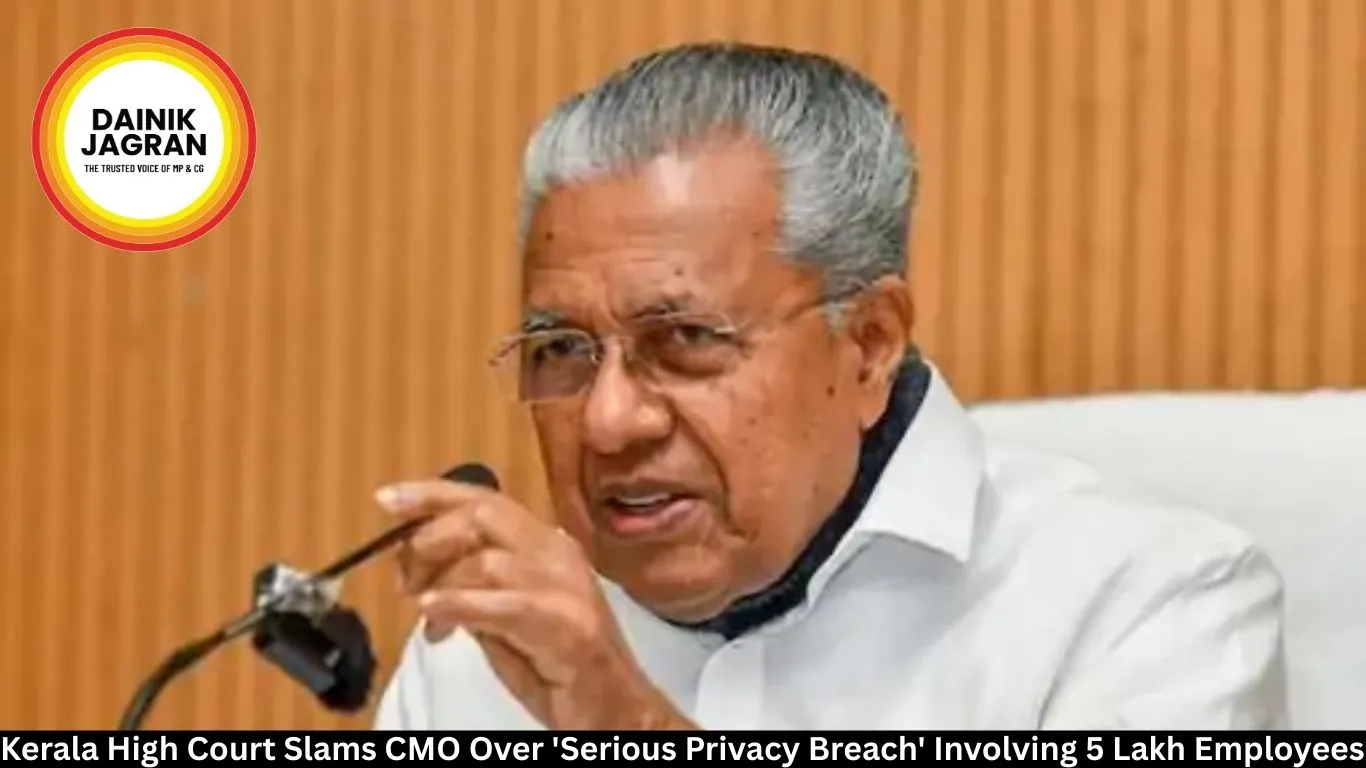
Kerala High Court Slams CMO Over 'Serious Privacy Breach' Involving 5 Lakh Employees
Digital Desk
The Kerala High Court has intervened in what is being described as a massive Kerala data privacy breach, involving the unauthorized use of personal contact details of nearly 5 lakh government employees and judicial officers. On Tuesday, the court expressed "strong displeasure" over the Chief Minister’s Office (CMO) sending unsolicited election-related WhatsApp messages and has temporarily banned the practice.
A "Serious Violation" of the Right to Privacy
The controversy erupted after roughly 500,000 individuals—including government staff, judges, and welfare beneficiaries—received WhatsApp messages featuring Chief Minister Pinarayi Vijayan's photograph. The messages highlighted government achievements, such as a 10% Dearness Allowance (DA) hike, ahead of the 2026 Assembly Elections.
Justice Bechu Kurian Thomas, while hearing a petition, remarked that the initiative lacked any semblance of privacy. The court raised critical questions regarding the source of this data, specifically pointing to the SPARK portal—a dedicated e-governance system intended strictly for salary processing and administrative records.
"Using administrative data for political propaganda is a serious violation of the right to privacy under Article 21 and the Digital Personal Data Protection Act 2023," the Court observed.
Key Highlights of the Court's Ruling
-
Immediate Ban: The court has prohibited the CMO from sending further unsolicited messages until the legal source of the data is verified.
-
Data Leak Suspicion: There is a strong suspicion that private mobile numbers were improperly transferred from the SPARK portal to the CMO via the Kerala State IT Mission.
-
Accountability: The court has demanded to know who manages the "WhatsApp Business Account" used for these messages, noting that personal data should not be accessible for political campaigning without explicit consent.
Why This Matters for the 2026 Elections
Kerala is currently the only state in India where the Left Democratic Front (LDF) remains in power. As the state gears up for the 2026 Assembly Elections, which are expected to be announced by mid-March, the political stakes are at an all-time high.
While the LDF made history by winning back-to-back terms in 2021, the opposition Congress-led UDF and the BJP—fresh off local wins in Thiruvananthapuram—are capitalizing on this Kerala data privacy breach to highlight concerns over "state-sponsored surveillance."
Legal Implications under the DPDP Act 2023
This case serves as one of the first major tests for the Digital Personal Data Protection Act 2023 in a political context. Legal experts suggest that if the CMO is found to have used "informed consent" data for purposes other than what was intended (salary and service), it could set a massive precedent for how political parties handle citizen data across India.
Practical Takeaways for Citizens:
-
Data Rights: Under the new Act, individuals have the right to know how their data is being processed.
-
Reporting: If you receive unsolicited political messages on platforms like WhatsApp, you can report them as "spam" or file a grievance if you suspect your data was leaked from a government database.
Conclusion
The Kerala High Court's stance sends a clear message: administrative databases are not a tool for electioneering. As the state moves toward the polls, the focus remains on whether the government can justify the "legal basis" for accessing the private numbers of half a million citizens. The next hearing is scheduled for Friday, which may determine the long-term digital campaign strategies for all parties involved.

.jpg)




