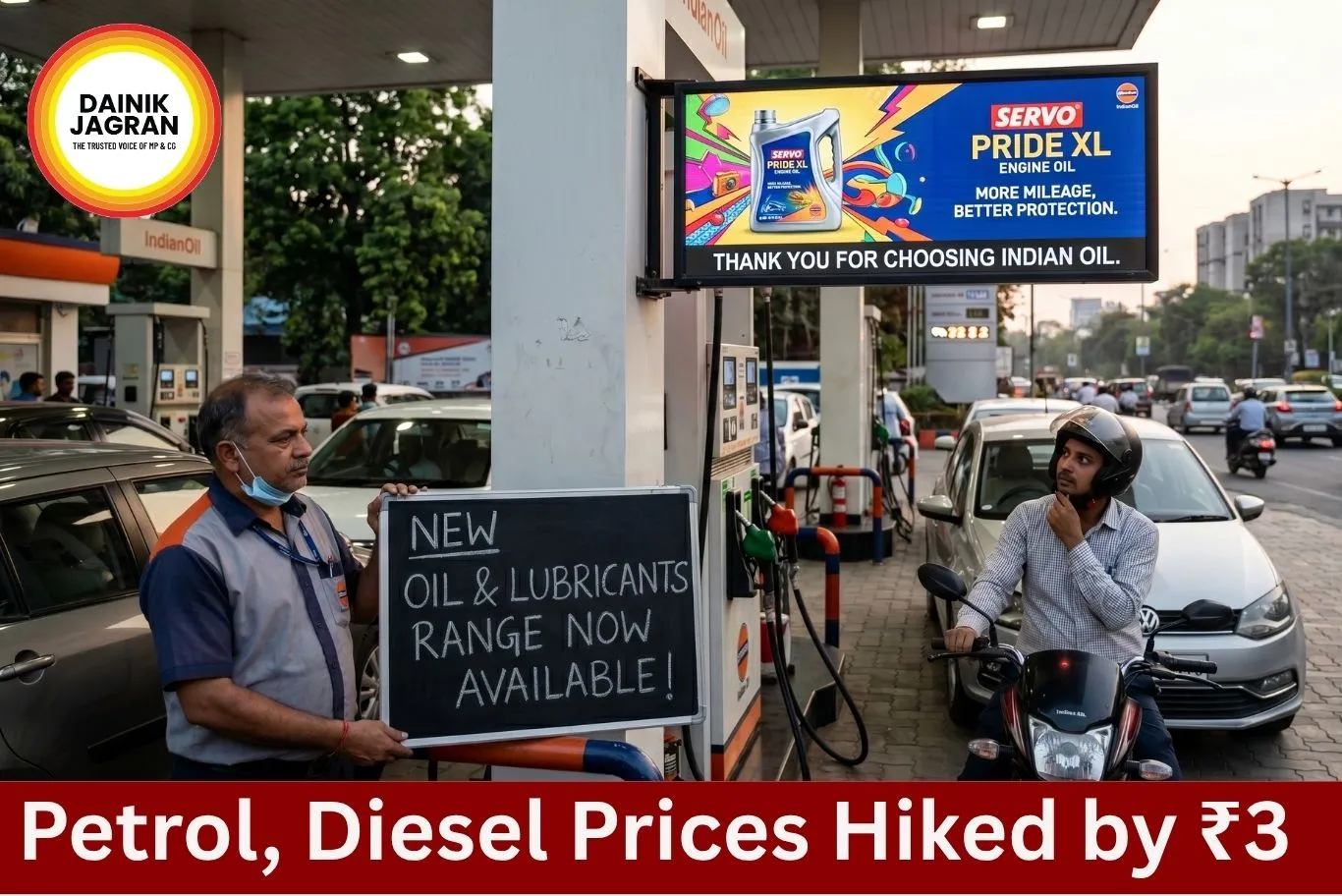
Petrol, Diesel Prices Hiked by ₹3; Delhi Petrol at ₹97.77
Digital Desk
Fuel prices revised after nearly two years as global crude oil surge increases pressure on oil companies; experts warn of further hikes if West Asia tensions continue.
Petrol and diesel prices across India have been increased by ₹3 per litre from Thursday, marking the first major fuel price revision in nearly two years. In Delhi, petrol is now retailing at ₹97.77 per litre, while diesel has climbed to ₹90.67 per litre. The revised rates came into effect from 6 am on May 15, triggering immediate reactions from consumers, transport operators and businesses dependent on fuel costs.
The latest fuel price hike comes amid rising crude oil prices in the international market following escalating tensions between Iran, Israel and the United States in West Asia. Oil marketing companies have cited mounting financial pressure and sustained losses as the primary reasons behind the increase.
Prices Rise Nationwide
Apart from Delhi, fuel prices have increased sharply in several major cities. In Madhya Pradesh, petrol prices crossed ₹109 per litre in cities including Bhopal and Indore. Similar increases were reported from Rajasthan, Maharashtra, Chhattisgarh and other states where local VAT rates are higher. CNG prices have also been revised upward in several cities. In Delhi, compressed natural gas is now priced at ₹79.09 per kg after a hike of nearly ₹2. Long queues were seen outside petrol pumps in cities like Raipur, Bhopal and Indore as many consumers rushed to refill tanks amid fears of further increases. Officials claimed panic buying and rumours about possible shortages led to temporary crowding at several fuel stations.
Oil Companies Under Pressure
According to government officials, public sector oil companies including Indian Oil Corporation, Bharat Petroleum Corporation Limited and Hindustan Petroleum Corporation Limited have been incurring significant losses due to high global crude prices.
Officials from the Petroleum Ministry stated that despite the latest revision, oil companies are still facing losses of nearly ₹25 to ₹30 per litre on petrol and diesel sales. Joint Secretary Sujata Sharma reportedly informed that monthly losses on petrol, diesel and LPG together had touched nearly ₹30,000 crore. Industry experts said crude oil prices had surged from nearly 70 dollars per barrel before the Iran-US conflict to over 100 dollars per barrel now. The sustained rise has increased import costs for India, which relies heavily on imported crude oil.
Impact on Consumers
The fuel price increase is expected to have a direct impact on household budgets and transportation costs. Diesel, which powers trucks, buses, tractors and commercial transport vehicles, plays a critical role in the supply chain. Transporters have indicated that freight charges may soon be revised upward if fuel prices remain elevated. This could increase the prices of vegetables, fruits, food grains and daily essentials transported across states.
Farmers may also face additional pressure due to rising diesel costs used for tractors and irrigation pumps. Experts believe the increase could eventually affect agricultural input costs and food inflation in the coming months. Public transport operators in several cities are also reviewing fares. Auto-rickshaw unions and private bus operators have demanded fare revisions to offset rising operational expenses.
Government Monitoring Situation
The Centre has maintained that global geopolitical instability is the key factor behind the latest fuel revision. Officials pointed out that neighbouring countries including Pakistan, Nepal and Sri Lanka had already witnessed fuel price increases ranging between 15 and 20 percent over recent months. Government sources said India had delayed revising fuel prices despite rising crude costs due to economic and political considerations. Fuel rates had largely remained unchanged since March 2024, when the Centre had reduced petrol and diesel prices by ₹2 per litre ahead of the Lok Sabha elections. Officials said the government continues to monitor the global energy situation closely. However, they indicated that further decisions would depend on international crude price trends and supply stability in the coming weeks.
PM Modi’s Fuel Appeal
Prime Minister Narendra Modi recently appealed to citizens to use petroleum products carefully in view of global uncertainties and rising import burdens. Addressing an event in Telangana earlier this week, the Prime Minister urged people to minimise unnecessary use of petrol and diesel. He stated that reducing fuel consumption would not only help conserve foreign exchange reserves but also reduce the economic impact of global conflicts on India. Following the appeal, several public representatives and officials in different states have started promoting fuel conservation measures. In Madhya Pradesh, some civic leaders switched to electric vehicles and e-rickshaws for official visits to encourage energy-saving practices.
Energy market analysts believe the latest ₹3 increase may not fully offset the losses of oil companies. According to market estimates, petrol prices may still need an increase of up to ₹28 per litre and diesel by nearly ₹32 per litre for companies to achieve break-even levels if crude prices remain elevated for a prolonged period. any further escalation in West Asia could disrupt global crude supply chains and place additional pressure on fuel-importing countries like India. At the same time, economists warned that sustained fuel inflation could increase transportation costs, industrial expenses and retail prices, potentially affecting overall economic growth and consumer spending.
----------------

--------
🚨 Beat the News Rush – Join Now!
Get breaking alerts, hot exclusives, and game-changing stories instantly on your phone. No delays, no fluff – just the edge you need. ⚡
Tap to join:
🟢 WhatsApp Channel: Dainik Jagran MP CG
Crave more?
🅕 Facebook: Dainik Jagran MP CG English
🅧 Twitter (X): Dainik Jagran MP CG
🅘 Instagram: Dainik Jagran MP CG
Share the fire – keep your crew ahead! 🗞️🔥
Petrol, Diesel Prices Hiked by ₹3; Delhi Petrol at ₹97.77
Digital Desk
Petrol and diesel prices across India have been increased by ₹3 per litre from Thursday, marking the first major fuel price revision in nearly two years. In Delhi, petrol is now retailing at ₹97.77 per litre, while diesel has climbed to ₹90.67 per litre. The revised rates came into effect from 6 am on May 15, triggering immediate reactions from consumers, transport operators and businesses dependent on fuel costs.
The latest fuel price hike comes amid rising crude oil prices in the international market following escalating tensions between Iran, Israel and the United States in West Asia. Oil marketing companies have cited mounting financial pressure and sustained losses as the primary reasons behind the increase.
Prices Rise Nationwide
Apart from Delhi, fuel prices have increased sharply in several major cities. In Madhya Pradesh, petrol prices crossed ₹109 per litre in cities including Bhopal and Indore. Similar increases were reported from Rajasthan, Maharashtra, Chhattisgarh and other states where local VAT rates are higher. CNG prices have also been revised upward in several cities. In Delhi, compressed natural gas is now priced at ₹79.09 per kg after a hike of nearly ₹2. Long queues were seen outside petrol pumps in cities like Raipur, Bhopal and Indore as many consumers rushed to refill tanks amid fears of further increases. Officials claimed panic buying and rumours about possible shortages led to temporary crowding at several fuel stations.
Oil Companies Under Pressure
According to government officials, public sector oil companies including Indian Oil Corporation, Bharat Petroleum Corporation Limited and Hindustan Petroleum Corporation Limited have been incurring significant losses due to high global crude prices.
Officials from the Petroleum Ministry stated that despite the latest revision, oil companies are still facing losses of nearly ₹25 to ₹30 per litre on petrol and diesel sales. Joint Secretary Sujata Sharma reportedly informed that monthly losses on petrol, diesel and LPG together had touched nearly ₹30,000 crore. Industry experts said crude oil prices had surged from nearly 70 dollars per barrel before the Iran-US conflict to over 100 dollars per barrel now. The sustained rise has increased import costs for India, which relies heavily on imported crude oil.
Impact on Consumers
The fuel price increase is expected to have a direct impact on household budgets and transportation costs. Diesel, which powers trucks, buses, tractors and commercial transport vehicles, plays a critical role in the supply chain. Transporters have indicated that freight charges may soon be revised upward if fuel prices remain elevated. This could increase the prices of vegetables, fruits, food grains and daily essentials transported across states.
Farmers may also face additional pressure due to rising diesel costs used for tractors and irrigation pumps. Experts believe the increase could eventually affect agricultural input costs and food inflation in the coming months. Public transport operators in several cities are also reviewing fares. Auto-rickshaw unions and private bus operators have demanded fare revisions to offset rising operational expenses.
Government Monitoring Situation
The Centre has maintained that global geopolitical instability is the key factor behind the latest fuel revision. Officials pointed out that neighbouring countries including Pakistan, Nepal and Sri Lanka had already witnessed fuel price increases ranging between 15 and 20 percent over recent months. Government sources said India had delayed revising fuel prices despite rising crude costs due to economic and political considerations. Fuel rates had largely remained unchanged since March 2024, when the Centre had reduced petrol and diesel prices by ₹2 per litre ahead of the Lok Sabha elections. Officials said the government continues to monitor the global energy situation closely. However, they indicated that further decisions would depend on international crude price trends and supply stability in the coming weeks.
PM Modi’s Fuel Appeal
Prime Minister Narendra Modi recently appealed to citizens to use petroleum products carefully in view of global uncertainties and rising import burdens. Addressing an event in Telangana earlier this week, the Prime Minister urged people to minimise unnecessary use of petrol and diesel. He stated that reducing fuel consumption would not only help conserve foreign exchange reserves but also reduce the economic impact of global conflicts on India. Following the appeal, several public representatives and officials in different states have started promoting fuel conservation measures. In Madhya Pradesh, some civic leaders switched to electric vehicles and e-rickshaws for official visits to encourage energy-saving practices.
Energy market analysts believe the latest ₹3 increase may not fully offset the losses of oil companies. According to market estimates, petrol prices may still need an increase of up to ₹28 per litre and diesel by nearly ₹32 per litre for companies to achieve break-even levels if crude prices remain elevated for a prolonged period. any further escalation in West Asia could disrupt global crude supply chains and place additional pressure on fuel-importing countries like India. At the same time, economists warned that sustained fuel inflation could increase transportation costs, industrial expenses and retail prices, potentially affecting overall economic growth and consumer spending.
----------------