

The meeting brought together leaders from several farmer groups across states, who submitted a memorandum outlining their objections to the proposed arrangement. According to participants, discussions focused on the potential impact of increased agricultural imports and the need to launch a nationwide campaign to oppose provisions they believe could disadvantage domestic producers.
Farmer representatives argued that cultivators of crops such as corn, soybeans, cotton, fruits, and nuts could face price pressure if cheaper imports enter the market. They said such competition might weaken rural incomes and disrupt local supply chains. Gandhi, according to party sources, echoed these concerns and cautioned that the agreement could open the door to broader import access for foreign agricultural products in the future.
The consultation followed his recent public remarks criticising the government’s trade approach. Gandhi had said he would continue speaking on farmers’ issues even if legal or parliamentary action were initiated against him, reiterating his allegation that current policy decisions risk harming agricultural interests. He also shared a video statement online asserting that any agreement undermining farmers’ livelihoods would be unacceptable.
Participants in Friday’s meeting included leaders from multiple organisations such as the All India Kisan Congress, Bharatiya Kisan Mazdoor Union, BKU Krantikari, Progressive Farmers Front, BKU Shaheed Bhagat Singh, Kisan Mazdoor Morcha-India, and the Jammu and Kashmir Zamindara Forum. They discussed strategies for coordinated outreach, public mobilisation, and policy advocacy in the coming weeks.
Government officials have not issued a detailed response to the concerns raised during the meeting. However, trade analysts note that interim agreements typically aim to expand market access and strengthen bilateral economic ties, while negotiations continue on broader frameworks. The political debate around such deals often centres on balancing export opportunities with protections for vulnerable domestic sectors.
The interaction underscores the growing prominence of agricultural policy in national political discourse, particularly as trade negotiations intersect with rural economic concerns. With farmer groups signalling plans for wider mobilisation, the issue is likely to remain a focal point of parliamentary debate and public discussion in the months ahead.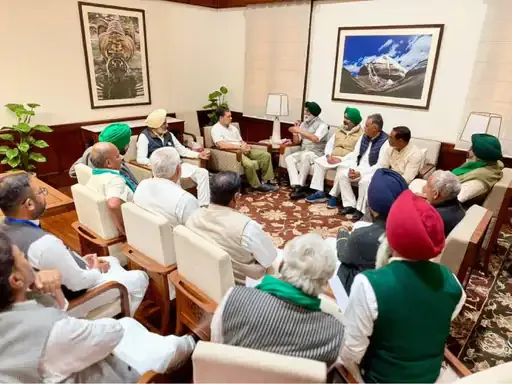

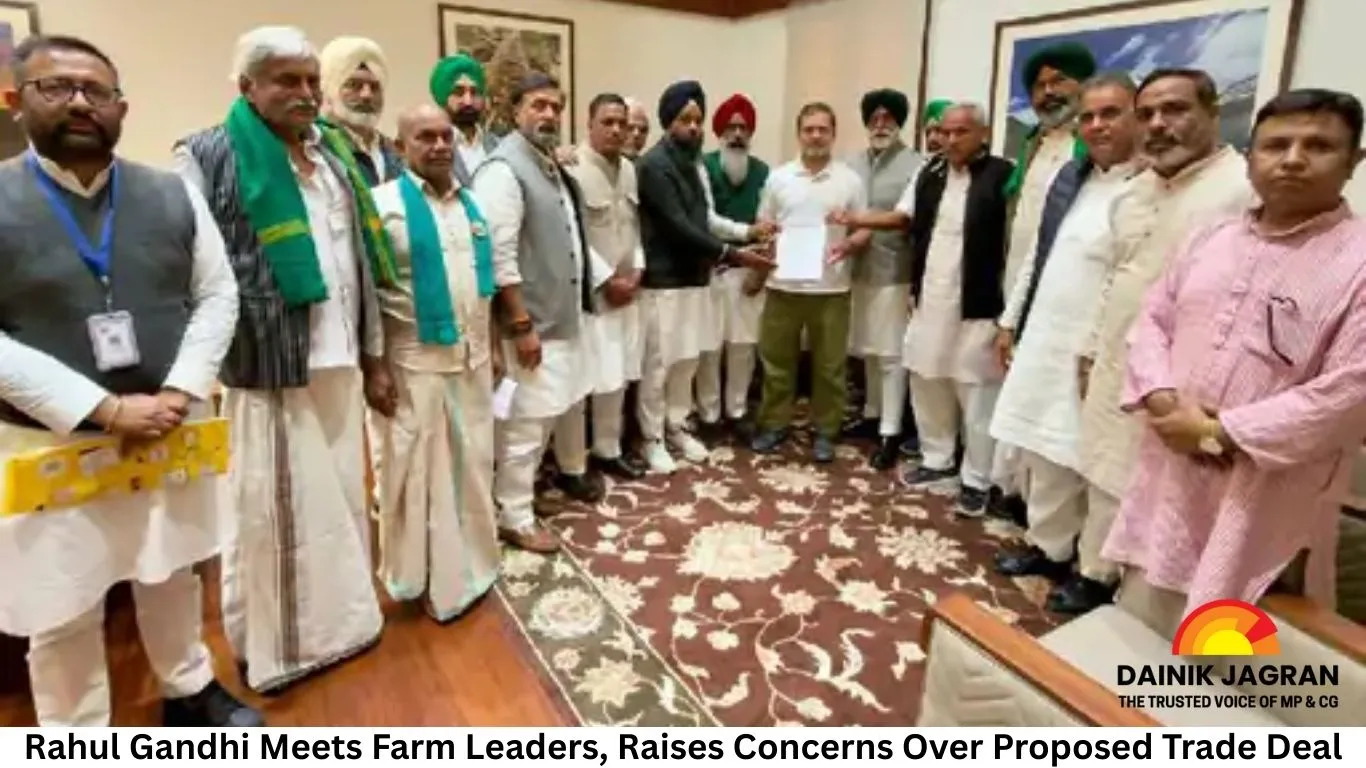
Rahul Gandhi Meets Farm Leaders, Raises Concerns Over Proposed Trade Deal
Digital Desk
The meeting brought together leaders from several farmer groups across states, who submitted a memorandum outlining their objections to the proposed arrangement. According to participants, discussions focused on the potential impact of increased agricultural imports and the need to launch a nationwide campaign to oppose provisions they believe could disadvantage domestic producers.
Farmer representatives argued that cultivators of crops such as corn, soybeans, cotton, fruits, and nuts could face price pressure if cheaper imports enter the market. They said such competition might weaken rural incomes and disrupt local supply chains. Gandhi, according to party sources, echoed these concerns and cautioned that the agreement could open the door to broader import access for foreign agricultural products in the future.
The consultation followed his recent public remarks criticising the government’s trade approach. Gandhi had said he would continue speaking on farmers’ issues even if legal or parliamentary action were initiated against him, reiterating his allegation that current policy decisions risk harming agricultural interests. He also shared a video statement online asserting that any agreement undermining farmers’ livelihoods would be unacceptable.
Participants in Friday’s meeting included leaders from multiple organisations such as the All India Kisan Congress, Bharatiya Kisan Mazdoor Union, BKU Krantikari, Progressive Farmers Front, BKU Shaheed Bhagat Singh, Kisan Mazdoor Morcha-India, and the Jammu and Kashmir Zamindara Forum. They discussed strategies for coordinated outreach, public mobilisation, and policy advocacy in the coming weeks.
Government officials have not issued a detailed response to the concerns raised during the meeting. However, trade analysts note that interim agreements typically aim to expand market access and strengthen bilateral economic ties, while negotiations continue on broader frameworks. The political debate around such deals often centres on balancing export opportunities with protections for vulnerable domestic sectors.
The interaction underscores the growing prominence of agricultural policy in national political discourse, particularly as trade negotiations intersect with rural economic concerns. With farmer groups signalling plans for wider mobilisation, the issue is likely to remain a focal point of parliamentary debate and public discussion in the months ahead.
.jpg)




