


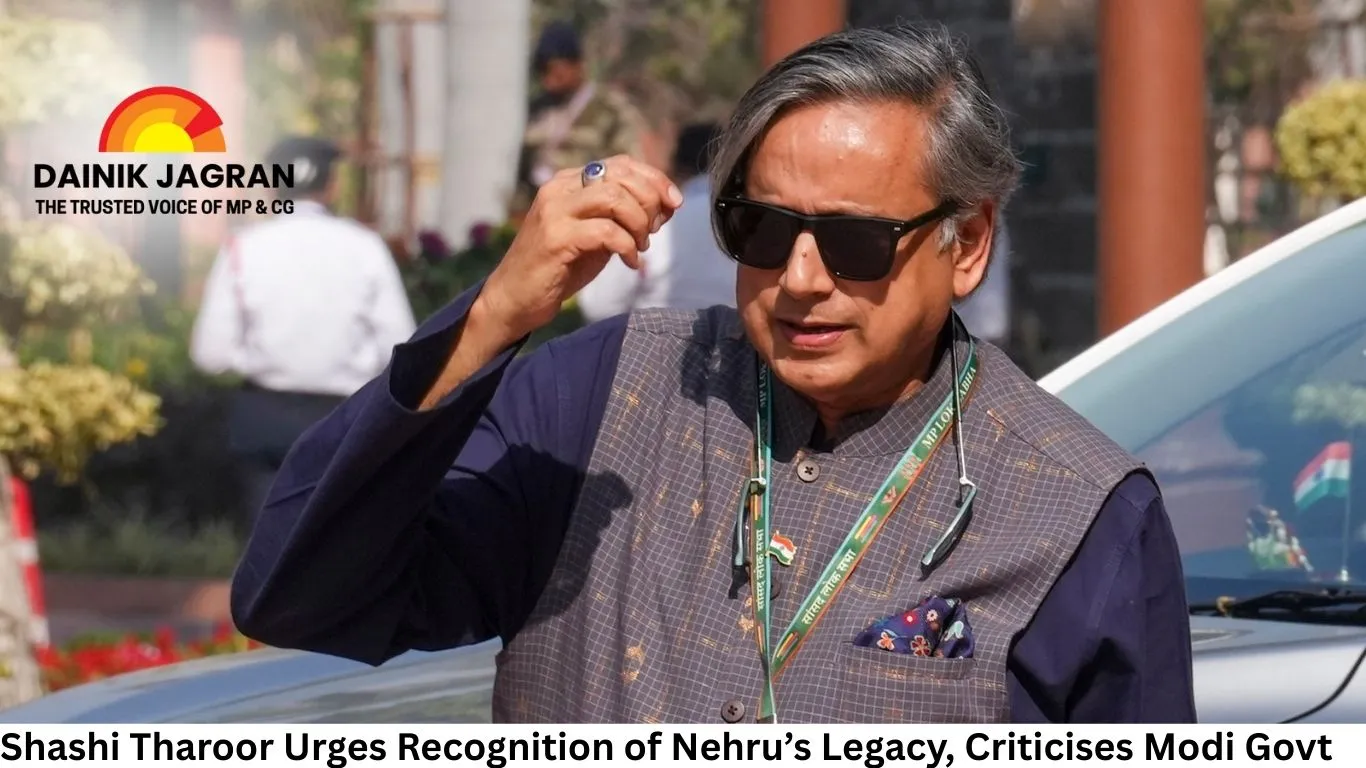
Shashi Tharoor Urges Recognition of Nehru’s Legacy, Criticises Modi Govt for Making Him a Scapegoat
Digital Desk
“I deeply admire Nehru’s thoughts and vision, but that does not mean I uncritically endorse every policy or belief,” Tharoor said. “It is important to recognise his mistakes, but to hold him solely responsible for all of India’s problems is unfair and historically inaccurate.” He highlighted Nehru’s role in firmly establishing Indian democracy and laying the foundation for the nation’s governance structure.
Tharoor also spoke about his personal journey as a writer, noting that childhood asthma led him to develop a love for reading. “Without television or mobile phones, books became my closest companions,” he said. He recounted that his first novel was written at a very young age but was lost due to spilled ink. His 28th book, a biography of social reformer Sree Narayana Guru, reflects his ongoing engagement with history and culture.
Addressing younger readers, Tharoor stressed the importance of accessible literature in today’s fast-paced world. “Shorter books with fewer pages can be more effective as attention spans decline,” he said, adding that Kerala continues to lead in reading culture despite global trends of declining readership.
Tharoor, a member of the Congress Working Committee, has maintained that his views remain aligned with party positions. Earlier this month, he reiterated his commitment to the party line during KPCC’s Lakshya 2026 leadership camp in Wayanad, Kerala, ahead of upcoming state assembly elections.
Over the past few months, Tharoor has publicly addressed a range of issues, including India’s foreign policy, border security, and the politics of dynastic influence. On December 27, he stated that rejoicing at a Prime Minister’s political defeat equates to celebrating India’s defeat. He also expressed support for the government’s measures against illegal immigrants, highlighting the importance of border management.
Through his remarks at KLIBF, Tharoor sought to balance historical recognition with critical assessment, urging a measured approach to India’s first Prime Minister’s legacy.
.jpg)




