

Tamil Nadu Leads Nation in IVF Clinics; Gujarat Follows as Demand Patterns Shift
Digital Desk
Tamil Nadu has emerged as the state with the highest number of In Vitro Fertilization (IVF) centers in India, according to the National Assisted Reproductive Technology (ART) and Surrogacy Registry. As of January 6, 2025, the state hosts 669 registered IVF clinics, reflecting a growing demand driven by urban lifestyles, higher female education, and formal employment.
Experts note that the demand for IVF is not strictly tied to fertility rates but to delayed marriage and childbirth. Tamil Nadu’s total fertility rate stands at 1.3, and many women pursue higher education and careers before starting families. “Women in Tamil Nadu often marry later, which naturally reduces biological fertility, yet their desire for children remains strong. IVF offers a solution for such couples,” said Dr. Rekha Suresh, a reproductive endocrinologist in Chennai.
In contrast, Gujarat, with a fertility rate of approximately 1.4 to 1.5, has fewer IVF clinics, roughly half the number of Tamil Nadu. Traditional family structures, early marriages, and higher natural conception rates contribute to a lower demand for assisted reproductive technologies. Additionally, income plays a role, as Tamil Nadu’s per capita income of ₹3.61 lakh makes IVF procedures financially accessible to a broader population.
Madhya Pradesh reflects another dimension of the trend. With declining fertility rates and a 12.8 percent drop in birth rates over the past decade, the demand for IVF has surged. Sagar Multi-Specialty Hospital in Bhopal recently inaugurated the city’s 12th IVF center, offering services including IVF, ICSI, IUI, and test tube baby procedures. Costs for a typical IVF cycle in private centers range from ₹2 to ₹4 lakh.
Understanding IVF
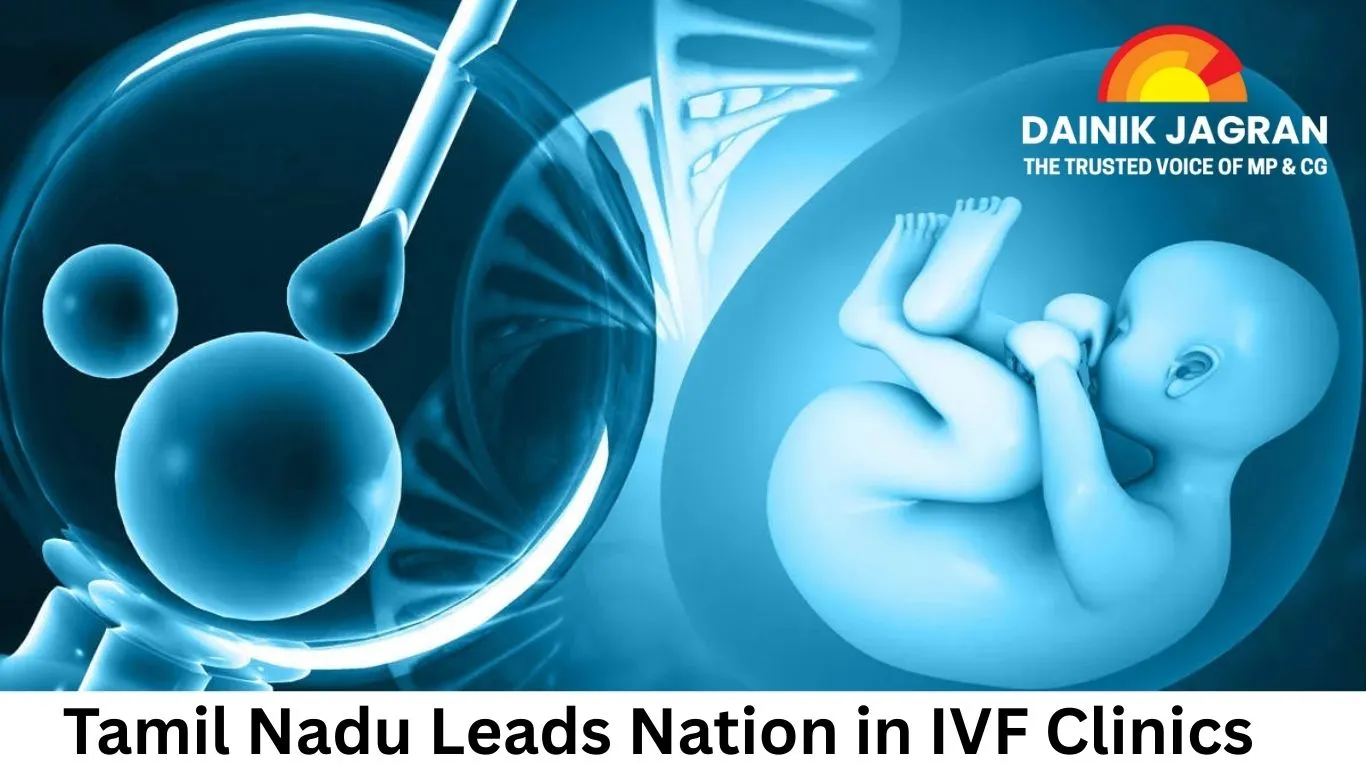
IVF, commonly referred to as the “test tube baby” technique, involves fertilizing a woman’s egg with sperm outside the body in a laboratory. The resulting embryo is then transferred to the uterus to achieve pregnancy. The key steps include ovarian stimulation, egg retrieval via ultrasound, laboratory fertilization, embryo development, and embryo transfer. The procedure is especially beneficial for couples experiencing difficulties conceiving naturally.
Analysts suggest that India’s expanding urban middle class, increasing female workforce participation, and awareness about reproductive options are likely to sustain the growth of IVF centers. As more couples delay parenthood due to education and career priorities, demand for fertility treatments is expected to rise steadily across urban regions.
--------
🚨 Beat the News Rush – Join Now!
Get breaking alerts, hot exclusives, and game-changing stories instantly on your phone. No delays, no fluff – just the edge you need. ⚡
Tap to join:
🟢 WhatsApp Channel: Dainik Jagran MP CG
Crave more?
🅕 Facebook: Dainik Jagran MP CG English
🅧 Twitter (X): Dainik Jagran MP CG
🅘 Instagram: Dainik Jagran MP CG
Share the fire – keep your crew ahead! 🗞️🔥
Tamil Nadu Leads Nation in IVF Clinics; Gujarat Follows as Demand Patterns Shift
Digital Desk
Experts note that the demand for IVF is not strictly tied to fertility rates but to delayed marriage and childbirth. Tamil Nadu’s total fertility rate stands at 1.3, and many women pursue higher education and careers before starting families. “Women in Tamil Nadu often marry later, which naturally reduces biological fertility, yet their desire for children remains strong. IVF offers a solution for such couples,” said Dr. Rekha Suresh, a reproductive endocrinologist in Chennai.
In contrast, Gujarat, with a fertility rate of approximately 1.4 to 1.5, has fewer IVF clinics, roughly half the number of Tamil Nadu. Traditional family structures, early marriages, and higher natural conception rates contribute to a lower demand for assisted reproductive technologies. Additionally, income plays a role, as Tamil Nadu’s per capita income of ₹3.61 lakh makes IVF procedures financially accessible to a broader population.
Madhya Pradesh reflects another dimension of the trend. With declining fertility rates and a 12.8 percent drop in birth rates over the past decade, the demand for IVF has surged. Sagar Multi-Specialty Hospital in Bhopal recently inaugurated the city’s 12th IVF center, offering services including IVF, ICSI, IUI, and test tube baby procedures. Costs for a typical IVF cycle in private centers range from ₹2 to ₹4 lakh.
Understanding IVF
IVF, commonly referred to as the “test tube baby” technique, involves fertilizing a woman’s egg with sperm outside the body in a laboratory. The resulting embryo is then transferred to the uterus to achieve pregnancy. The key steps include ovarian stimulation, egg retrieval via ultrasound, laboratory fertilization, embryo development, and embryo transfer. The procedure is especially beneficial for couples experiencing difficulties conceiving naturally.
Analysts suggest that India’s expanding urban middle class, increasing female workforce participation, and awareness about reproductive options are likely to sustain the growth of IVF centers. As more couples delay parenthood due to education and career priorities, demand for fertility treatments is expected to rise steadily across urban regions.


