


Beyond Diplomatic Niceties: Jaishankar's Blunt Message to Poland Signals a New Indian Foreign Policy Era
Digital Desk
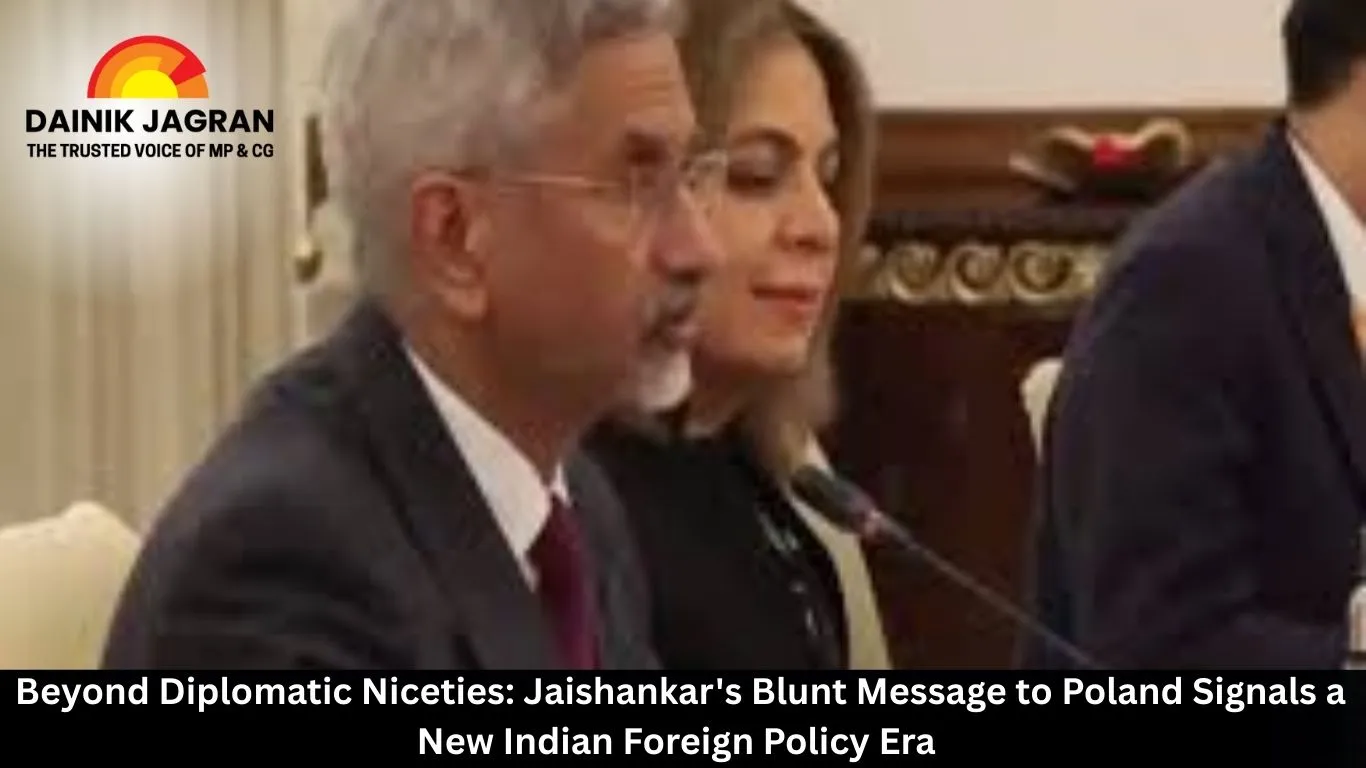
The air in New Delhi’s Hyderabad House this week was thick with more than the usual diplomatic pleasantries. During a meeting with Poland’s Deputy Prime Minister and Foreign Minister, Radosław Sikorski, India’s External Affairs Minister, Dr. S. Jaishankar, delivered a public rebuke so direct it reverberated across foreign ministries. He stated that Poland, and by extension other partners, must display "zero tolerance for terrorism" and should not help "fuel the terrorist infrastructure in our neighbourhood". This wasn't a private aside; it was a televised statement, marking a stark departure from the normally guarded language of high-level diplomacy and signaling India's growing confidence in defining the terms of its strategic relationships.
The immediate provocation was clear. Minister Jaishankar pointedly referred to Mr. Sikorski’s "recent travels to the region," a direct reference to the Polish leader's visit to Pakistan in October 2025. That visit, which included meetings with Pakistan's top leadership and a joint statement, occurred just months after a military clash between India and Pakistan in May 2025, and was viewed in New Delhi as ill-timed at best, and legitimizing at worst.
A Clash of Perspectives and "Selective Targeting"
The meeting highlighted a fundamental divergence in how the two nations view their engagement with contentious regional players. The table below summarises the core disagreements aired publicly:
| India's Stance (via EAM Jaishankar) | Poland's Stance (via FM Sikorski) |
| Partners must not "fuel terrorist infrastructure" near India. | All nations have "regional concerns" and "challenges" with neighbours. |
| Criticised the EU's "selective targeting" of India over Russian oil imports. | Called India's participation in joint military drills with Russia "threatening". |
| Implied that engagement with Pakistan cannot be separated from terrorism concerns. | Argued that on terrorism, India and Poland are of "one mind". |
Jaishankar’s frustration extended beyond Pakistan. He sharply countered Sikorski’s recent public comments praising India for reducing Russian oil imports, calling the European Union’s criticism "selective targeting" that is "both unfair and unjustified". This refers to EU sanctions on Indian companies for dealing in Russian oil, which India sees as an unfair penalty for its independent energy security decisions.
In response, Sikorski acknowledged the conversation was "frank" and, while agreeing on terrorism, flipped the script by expressing alarm over India's strategic partnership with Russia, specifically its participation in the "Zapad-2025" military exercises.
The High-Stakes Backdrop: A Historic Trade Deal Looms
This diplomatic spat is particularly striking because it occurs on the eve of a monumental breakthrough. On January 27, just days after this tense meeting, India and the European Union are set to announce the conclusion of negotiations for a landmark Free Trade Agreement (FTA), described by Indian officials as the "mother of all trade deals".
The agreement, culminating nearly two decades of talks, aims to link two of the world's largest democratic economies at a time of rising global protectionism. Poland itself has been a vocal proponent of swiftly signing this deal, with Sikorski recently stating it is "very important" to do so quickly. This context makes Jaishankar’s bluntness even more significant: it underscores that for New Delhi, core security concerns are non-negotiable, even when massive economic incentives are on the line.
Opinion: More Than a Spat – A Declaration of Strategic Autonomy
This was not merely a diplomatic disagreement; it was a deliberate and public articulation of India's foreign policy doctrine under Prime Minister Narendra Modi. Jaishankar’s message serves multiple strategic purposes:
1. Establishing Red Lines: By calling out a European partner publicly, India is signaling that its sensitivity regarding terrorism emanating from Pakistan is an absolute priority. It warns all nations that engagement with Pakistan, without acknowledging or addressing India’s terror concerns, will have diplomatic costs.
2. Challenging Western Hypocrisy: The coupling of the "terrorism" warning with the complaint about "selective targeting" on Russia is masterful. It challenges what India perceives as a Western double standard: Europe can engage with Pakistan (which India views as a terror sponsor) while chastising India for its pragmatic energy ties with Russia (a historical partner). Jaishankar’s stance insists that partnerships must be holistic and respect each other's core interests.
3. Asserting Sovereign Agency: The timing, right before the EU summit, is a powerful assertion of India's confidence. It demonstrates that New Delhi will not mute its security concerns for the sake of a trade deal. India is entering this partnership as an equal, on its own terms.
The path forward is complex. The EU-India FTA promises immense benefits, potentially boosting two-way trade that already exceeds $130 billion and strengthening supply chain resilience for both sides. However, as this episode reveals, the strategic partnership will require Europe to engage with a more assertive India that demands its geopolitical realities be understood and respected.
Jaishankar’s blunt words in Hyderabad House were not a threat to derail the new partnership with Europe, but a clear-eyed foundation for it. They announced that India's era of quiet diplomacy on core security issues is over. The message to Poland, and to the world, is that true partnership requires seeing the world through your ally's eyes—not just your own.
.jpg)




