
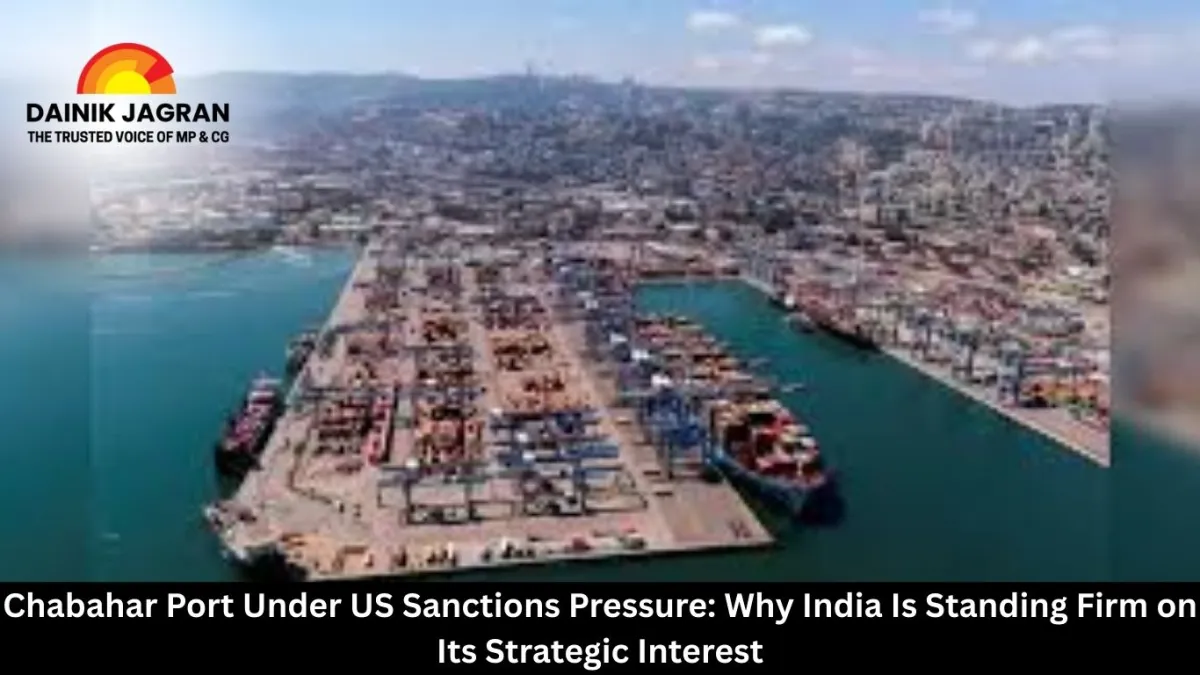

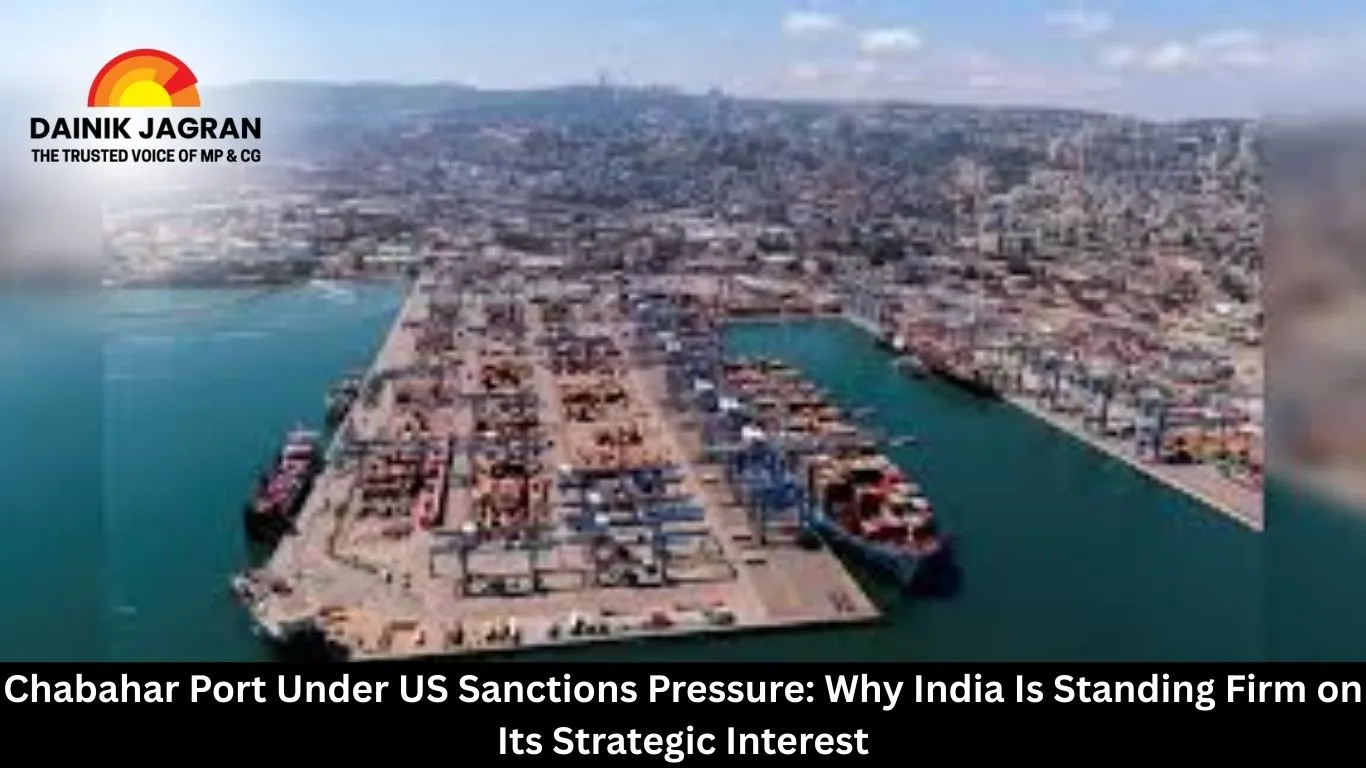
Chabahar Port Under US Sanctions Pressure: Why India Is Standing Firm on Its Strategic Interest
Digital Desk
Chabahar Port and the Reality of Global Politics
In international relations, one truth remains constant: there are no permanent friends or enemies, only permanent interests. This reality is once again visible in the evolving Chabahar Port issue, where India finds itself balancing strategic autonomy amid growing pressure from the United States.
Despite calling India a “strategic partner,” the US has repeatedly used sanctions and tariffs as tools of pressure—even on allies. The latest uncertainty over the Chabahar Port sanctions waiver highlights this uncomfortable truth and places India at a critical geopolitical crossroads.
What Is the Latest Update on the Sanctions Waiver?
India had received a special US sanctions waiver to operate Chabahar Port in Iran, recognising its importance for regional stability and humanitarian access to Afghanistan. However:
In October 2025, the US announced it would withdraw the waiver
After negotiations, a six-month extension was granted
This extension expires in April 2026
The US claims the extension was only to allow India to “wind down” operations. India, however, has made its position clear: it is not exiting Chabahar Port.
External Affairs Minister S. Jaishankar has confirmed that India and the US are still engaging diplomatically to find a middle path.
Why Chabahar Port Is Non-Negotiable for India
The importance of Chabahar Port goes far beyond trade. Strategically, it is one of India’s most valuable overseas assets.
Key Strategic Benefits:
Bypasses Pakistan, giving India direct access to Afghanistan
Counters China’s Gwadar Port in Pakistan
Integral to the International North-South Transport Corridor (INSTC)
Provides a shorter, cheaper trade route to Central Asia, Russia, and Europe
Exiting Chabahar would force India to rely on longer and riskier routes like the Suez Canal, increasing costs, insurance, and exposure to piracy.
India’s Response: Strategic Caution, Not Retreat
To reduce exposure to US sanctions on Iran, India has taken calibrated steps:
Government officials resigned from the board of IPGL, the Indian entity managing Chabahar
Exploring sanctions-resilient operational models
Continuous engagement with the US Treasury and State Department
India is walking a careful line—neither openly defying the US nor surrendering its strategic interests.
Bigger Implications for Global Geopolitics
The Chabahar issue reflects larger global trends:
US use of extraterritorial sanctions and tariff threats
India asserting strategic autonomy
Preventing Iran from drifting fully towards China and Russia
Strengthening India’s role as a Global South leader
Though India’s trade with Iran is limited, the strategic cost of exiting Chabahar Port far outweighs economic risks.
A Test of India’s Rising Power Ambitions
The Chabahar Port crisis is not just about sanctions—it is a test of India’s ability to defend long-term national interests in a coercive global order. By choosing dialogue without surrender, India is signalling that strategic assets are not bargaining chips.
As April 2026 approaches, Chabahar remains a litmus test for India’s foreign policy maturity—and its determination to act as a leading power, not a pressured partner.


.jpg)




