


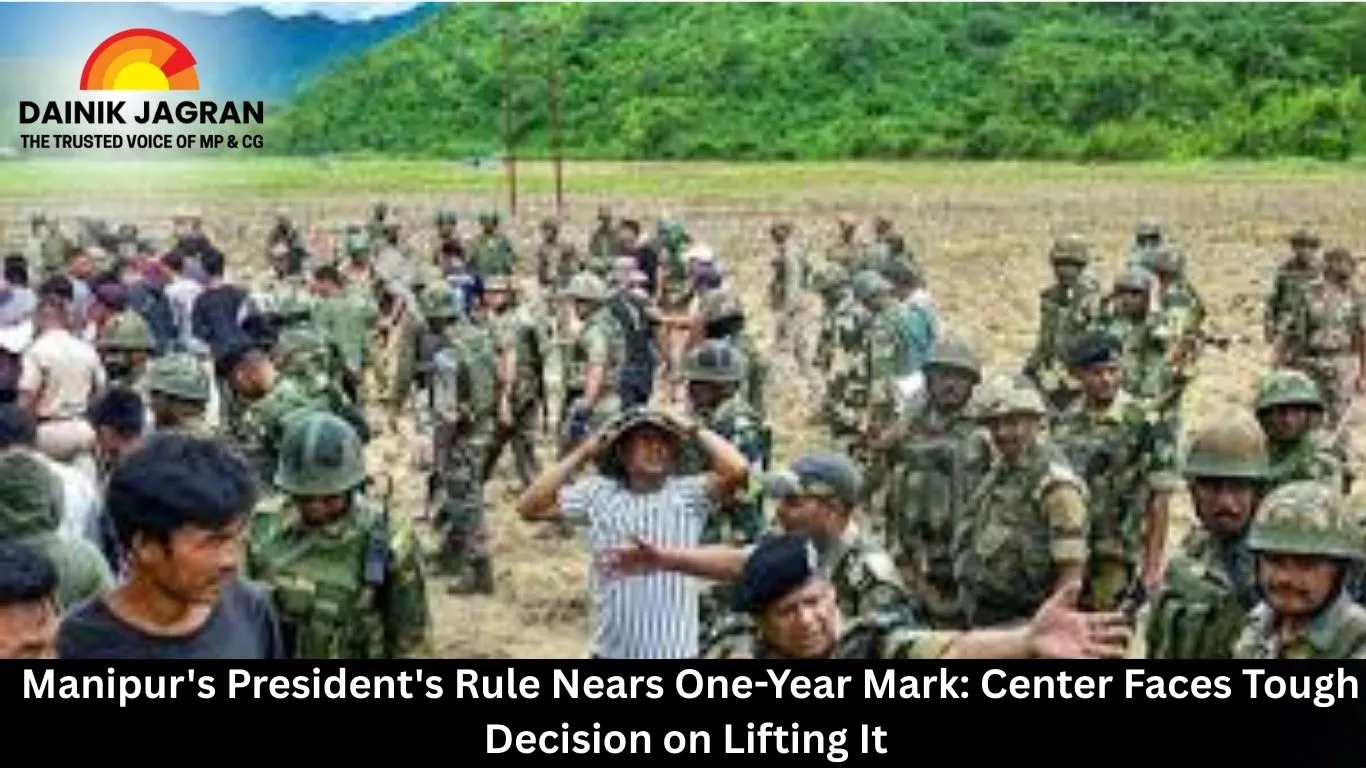
Manipur's President's Rule Nears One-Year Mark: Center Faces Tough Decision on Lifting It
Digital Desk
As Manipur nears the completion of one year under President's Rule on February 13, 2026, the Central government finds itself in a constitutional bind. Imposed on February 13, 2025, amid escalating ethnic clashes between Kuki and Meitei communities and political instability, this measure under Article 356 has stabilized the state temporarily. But with the deadline looming, questions arise: Can it be extended further, and why might the Center have no choice but to lift it? This development is crucial in today's polarized political landscape, highlighting the limits of emergency powers in India's federal structure.
Understanding President's Rule Under Article 356
President's Rule, often called state emergency, allows the Center to take over a state's administration when constitutional machinery breaks down. As per the Indian Constitution, it's invoked based on the Governor's report or other evidence showing governance failure. In Manipur's case, violent conflicts and political deadlock justified its imposition last year.
Key provisions include:
- Executive powers shift to the Center.
- Legislative powers can be vested in Parliament.
- The state assembly can be suspended or dissolved.
However, extensions aren't indefinite. Initially approved for six months by Parliament with a simple majority, it can be renewed every six months up to three years maximum. But after one year, stricter conditions apply for further extensions.
Historical Context and Data Insights
Since 1953, President's Rule has been imposed 135 times across India, often leading to regime changes post-lifting—in about two-thirds of cases, the ruling party shifted. Manipur tops the list with 11 instances, followed by Uttar Pradesh at 10. In terms of duration, Jammu and Kashmir leads with 4,668 days, while Punjab follows at 3,878 days.
This data underscores how President's Rule has been a tool for political maneuvering, especially when Center and state governments are from opposing parties. Critics argue it's prone to misuse, as seen in the 1992 Babri Masjid aftermath when BJP-led states faced dismissals.
The Bind: Why Lifting Seems Inevitable
For Manipur, the one-year mark is pivotal. To extend beyond February 13, 2026, two conditions must be met under Article 356:
- A national emergency (Article 352) must be in effect nationwide or in part of the country—currently, none exists.
- The Election Commission must certify that holding elections is impossible due to prevailing conditions.
With no national emergency and ongoing but not insurmountable unrest, experts like constitutional scholar Amrit Upadhyay (from Study IQ IAS) predict the Center can't justify an extension. "The Constitution limits such powers to prevent federal overreach," Upadhyay notes in a recent analysis. If lifted, fresh elections could follow, potentially reigniting tensions but restoring democratic processes.
The Supreme Court's 1994 S.R. Bommai judgment adds scrutiny: It allows judicial review for malafide intent and bars assembly dissolution until parliamentary approval. This safeguards against abuse, ensuring President's Rule isn't a permanent fix.
Why It Matters Now
In 2026, amid rising demands for regional autonomy and ethnic harmony, Manipur's situation tests India's democratic resilience. Lifting President's Rule could signal progress toward peace talks, but risks fresh violence if polls deepen divides. For citizens and UPSC aspirants alike, it offers a real-time lesson in constitutional dynamics.
Actionable takeaway: Monitor Election Commission updates and advocate for inclusive dialogues. As India evolves, balancing security with democracy remains key. The Center's decision will shape not just Manipur's future but the nation's federal ethos.



.jpg)




