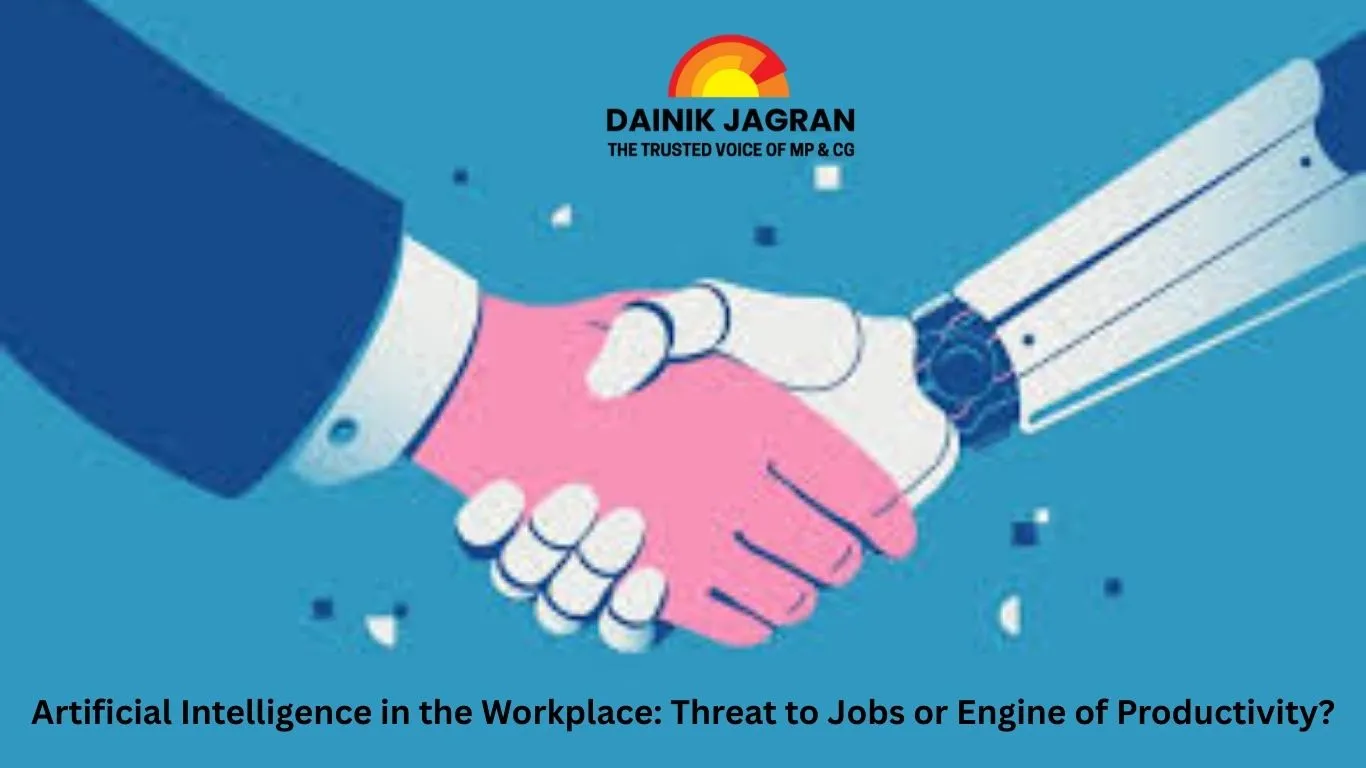
Artificial Intelligence in the Workplace: Threat to Jobs or Engine of Productivity?
Digital Desk
The shift is already visible. Businesses are using AI to automate repetitive tasks, analyze large datasets and improve decision-making speed. Employers say this has led to efficiency gains, cost savings and faster turnaround times. In technology and services sectors, AI-assisted coding, customer support bots and data analytics platforms have become routine.
However, concerns over job security persist. Trade unions and labour economists warn that entry-level roles and routine clerical jobs are most vulnerable. Studies by international labour agencies suggest that while AI may not eliminate entire professions, it is likely to alter job profiles significantly, requiring workers to adapt quickly.
Industry leaders argue that the narrative of AI as a job killer is incomplete. According to them, technology historically replaces certain tasks while creating new roles. Demand is rising for AI trainers, data specialists, cybersecurity experts and professionals who can manage and interpret automated systems. Companies also point out that AI allows human workers to focus on creative, strategic and interpersonal responsibilities.
The impact varies by sector and geography. In India’s IT hubs, AI adoption is accelerating reskilling initiatives rather than mass layoffs. Large firms have launched internal training programs to help employees transition into new roles. In contrast, small businesses and informal sector workers face greater uncertainty due to limited access to training and digital infrastructure.
Government agencies are beginning to respond. Skill development missions and public-private partnerships are focusing on digital literacy, machine learning basics and ethical AI use. Experts say such interventions are critical to prevent a widening skills gap between early adopters and the rest of the workforce.
The timing of this transformation is significant. With global economic pressures and shifting work patterns after the pandemic, organizations are under pressure to remain competitive. AI is increasingly viewed as a productivity partner rather than a replacement for human labour, provided the transition is managed responsibly.
Labour analysts caution that without clear policies, automation could deepen inequality. They recommend stronger social security systems, continuous learning frameworks and industry accountability to ensure workers are not left behind.
As AI continues to integrate into daily work, the debate is moving beyond whether jobs will be lost to how work itself will evolve. The challenge for governments, businesses and workers alike is to ensure that productivity gains translate into inclusive growth rather than widespread disruption.