


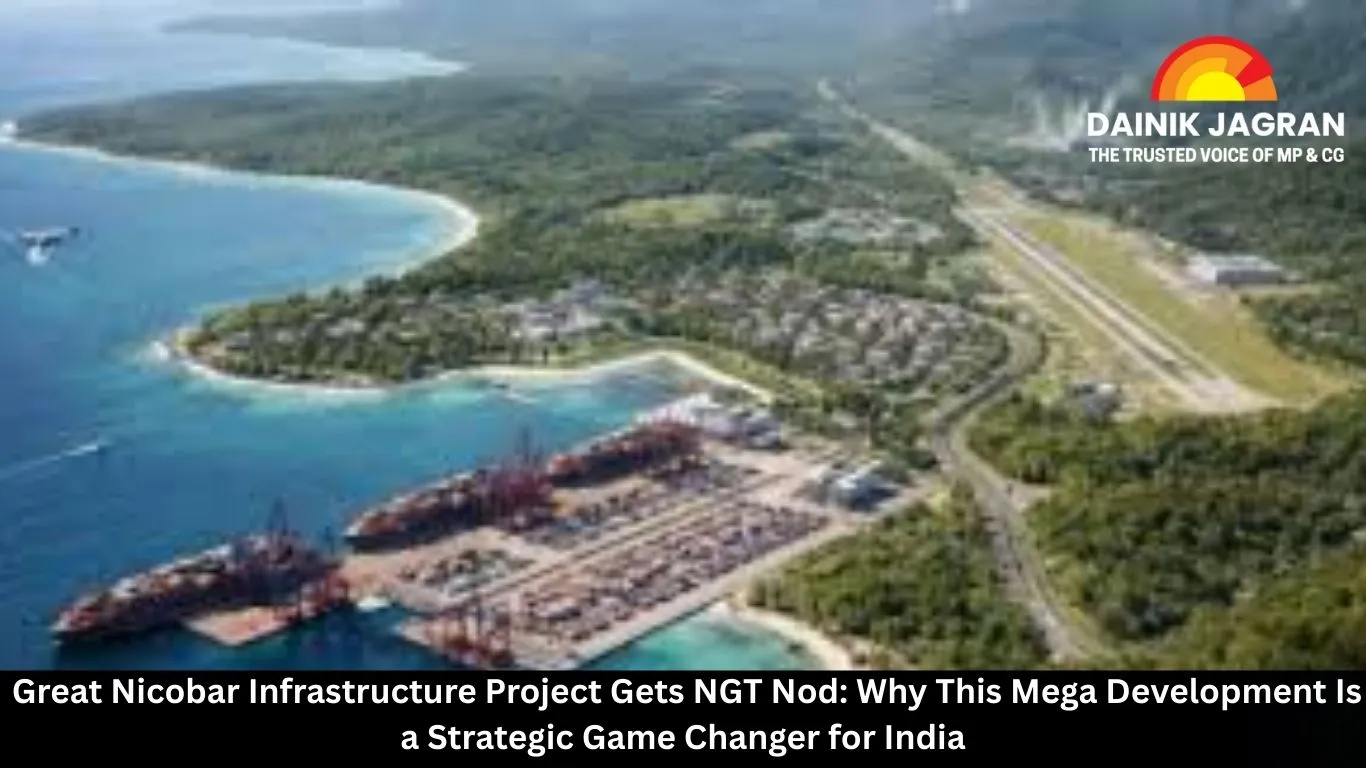
Great Nicobar Infrastructure Project Gets NGT Nod: Why This Mega Development Is a Strategic Game Changer for India
Digital Desk
India’s ambitious Great Nicobar Infrastructure Project has received a major push after the National Green Tribunal (NGT) upheld the environmental clearance granted to the project. This decision removes a significant legal hurdle and paves the way for one of India’s largest greenfield infrastructure developments in the Andaman and Nicobar Islands.
The NGT stated that adequate environmental safeguards have been provided, allowing the project to move forward. This development is crucial at a time when India is strengthening its strategic and economic position in the Indo-Pacific region.
What Is the Great Nicobar Infrastructure Project?
The Great Nicobar Infrastructure Project is a multi-component mega development plan estimated to cost over ₹90,000 crore (around $10–11 billion). It is being implemented with coordination among central ministries and policy bodies.
Key components include:
International Container Transshipment Port
Greenfield International Airport (Dual-use: Civil & Military)
Integrated Township Development
Gas-based and Solar Hybrid Power Plant
Roads, Digital and Water Infrastructure
The project is expected to be developed in phases, with initial port operations and airport functionality targeted by 2028. Long-term expansion aims for full maritime hub status by 2040–2050.
Strategic Importance: Location Near Malacca Strait
Great Nicobar is India’s southernmost island, located close to the highly strategic Malacca Strait. Nearly 40 nautical miles from this global shipping chokepoint, the island offers India a rare geostrategic advantage.
The Malacca Strait handles:
A significant portion of global trade
Major oil shipments to East Asia
Heavy container traffic between Europe and Asia
By developing a major transshipment hub here, India can:
Strengthen maritime surveillance
Enhance naval capabilities
Improve response time during emergencies
Counterbalance China’s growing maritime presence under initiatives like the Belt and Road Initiative
Economic Impact: Reducing Trade Costs
Currently, nearly 70–75% of India’s transshipment cargo is handled at foreign ports like Colombo and Singapore. This increases logistics costs and strategic dependence.
With the new port:
India can handle large “mother vessels” domestically
Turnaround time for exports will reduce
Foreign exchange outflow may decline
Indian exports can become more competitive
The port’s Phase 1 capacity is projected at 4 million TEUs, expandable to 16 million TEUs in the long term. This aligns with India’s ambition to become a global manufacturing hub.
Environmental and Social Concerns
Despite the NGT clearance, concerns remain.
Great Nicobar is an ecologically sensitive region with:
Coral reefs and mangroves
Nesting grounds of leatherback turtles
Dense forest cover
Around 130 sq km of forest diversion is expected. Environmental activists and tribal rights groups have raised concerns about potential impact on indigenous communities such as the Shompen and Nicobarese tribes.
However, the tribunal has ruled that the project complies with environmental conditions. The success of the initiative will depend heavily on balancing development with sustainability.
Why It Matters Now
With rising geopolitical tensions in the Indo-Pacific and global supply chain realignments, the Great Nicobar Infrastructure Project represents more than infrastructure—it is a strategic signal.
If executed carefully, it could:
Transform India’s maritime power
Reduce economic vulnerabilities
Strengthen regional influence
But long-term success will require strict environmental compliance and protection of tribal rights.
The NGT clearance marks the beginning of a new phase. The real challenge now lies in implementation—with balance, vision, and responsibility.

.jpg)




