


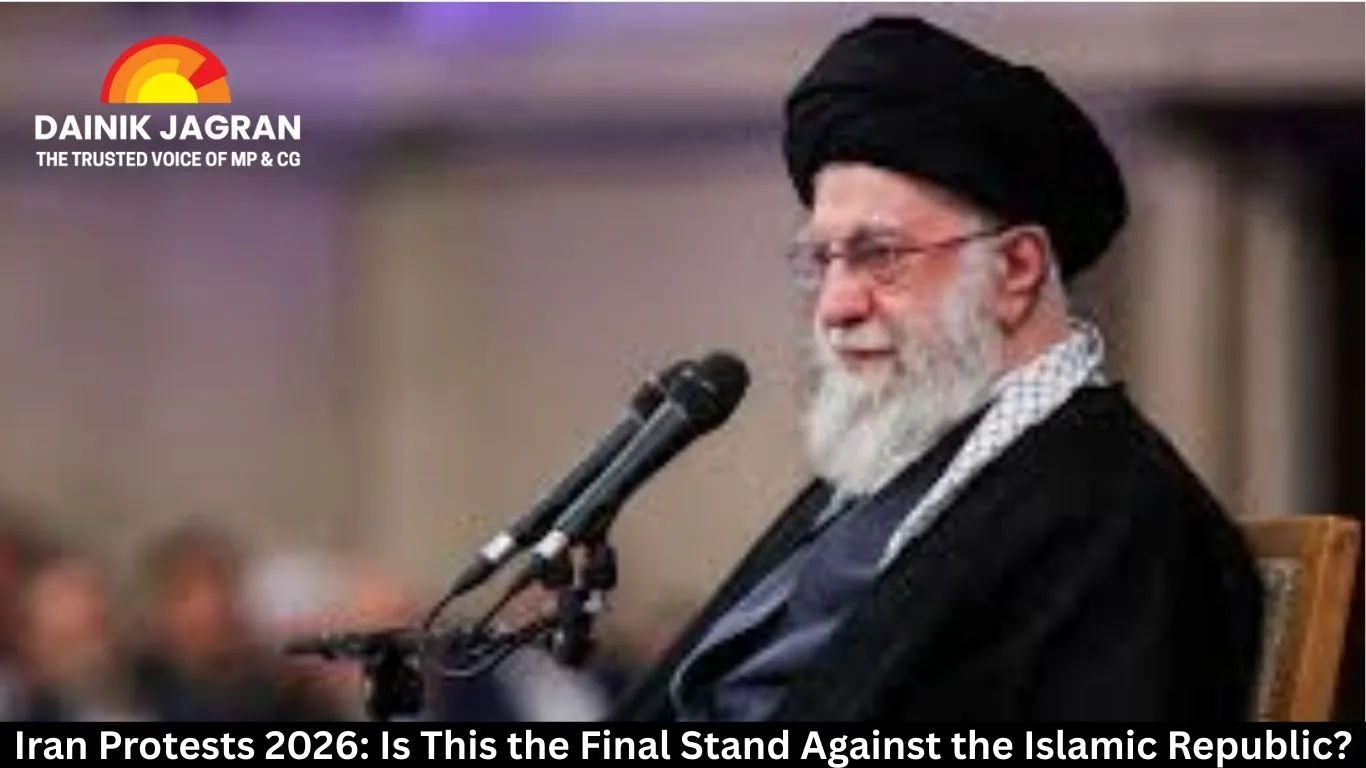
Iran Protests 2026: Is This the Final Stand Against the Islamic Republic?
Digital Desk
The streets of Iran are once again thick with the smoke of rebellion. From the bustling Grand Bazaar of Tehran to the restive provinces of Sistan-Baluchestan, a familiar yet more ferocious cry is echoing: "Death to the Dictator." What began on December 28, 2025, as a desperate strike by shopkeepers against backbreaking inflation has transformed into a national existential crisis for the Islamic Republic.
As we enter the second week of January 2026, the Iran Protests 2026 represent more than just economic frustration; they appear to be a fundamental rejection of the clerical establishment.
A Nation in Flames: Symbols of the Revolution Toppled
Verified footage shows a level of defiance unseen in previous years. In Mashhad, the national flag—a symbol of the post-1979 Islamic Republic—was torn to shreds. In other cities, statues of Qasem Soleimani and the late Supreme Leader Ayatollah Khomeini have been set ablaze.
These are not merely acts of vandalism; they are targeted strikes against the very soul of the regime's ideology. The movement has spread to over 100 cities across all 31 provinces. While state media claims a death toll of 21, international human rights groups suggest the number is closer to 45, including minors, as security forces struggle to contain the "last fight."
The Pahlavi Factor: Nostalgia or Political Necessity?
A striking development in the Iran Protests 2026 is the vocal support for the exiled Pahlavi dynasty. Slogans like "Pahlavi will return" are trending in Persian social media circles.
Reza Pahlavi, the son of the last Shah, has become a symbolic rallying point. While he remains in exile in the United States, his influence is peaking. Interestingly, he is scheduled to attend an event at Mar-a-Lago next week. While Donald Trump has played a cautious hand, stating it is "not the right time" for an official meeting, the mere presence of Pahlavi near the U.S. political elite sends a chilling message to Tehran.
However, analysts remain divided:
-
The Symbolists: Many believe the "Pahlavi" chants are a tool for a leaderless movement to find a face, rather than a genuine desire to return to a monarchy.
-
The Skeptics: Critics remind the public of the autocracy of the Shah’s era, suggesting that Pahlavi is a symbol of desperation, not necessarily a democratic solution.
Economic Desperation and the "Token" Relief
The spark for this explosion was the "Great Inflation." The Iranian Rial is in freefall, making basic trade impossible. In an attempt to pacify the masses, the government announced a relief package of 1 million Tomans (roughly $7 USD) per month for four years.
This "band-aid" solution has largely backfired. The credit-only system—which limits what people can buy—has been mocked as an insult to the dignity of citizens who can no longer afford meat or medicine.
Two Possible Endgames for Iran
As Supreme Leader Ayatollah Khamenei blames "foreign enemies" and Israel for the unrest, experts suggest two likely scenarios for the near future:
-
"Bonapartism" (The Strongman Rise): The regime may be tired but it is not yet broken. If the clergy cannot govern, a "strongman" from within the IRGC (Revolutionary Guard) or the military might emerge to centralize power and force through economic reforms.
-
The Venezuelan Trap: There is a fear that Iran could enter a permanent state of "managed chaos." If the U.S. continues sanctions without offering a "face-saving" diplomatic exit, Iran may spiral into a long-term economic decay where the regime survives through sheer force, much like the situation in Caracas.
Why This Matters Now
The Iran Protests 2026 are a warning to the world that the status quo in the Middle East is unsustainable. For the Iranian people, the stakes are survival; for the regime, it is a battle for the legacy of 1979. Whether this is truly the "final fight" or another chapter in a long struggle, the wall of fear in Iran has clearly been breached.
.jpg)




