


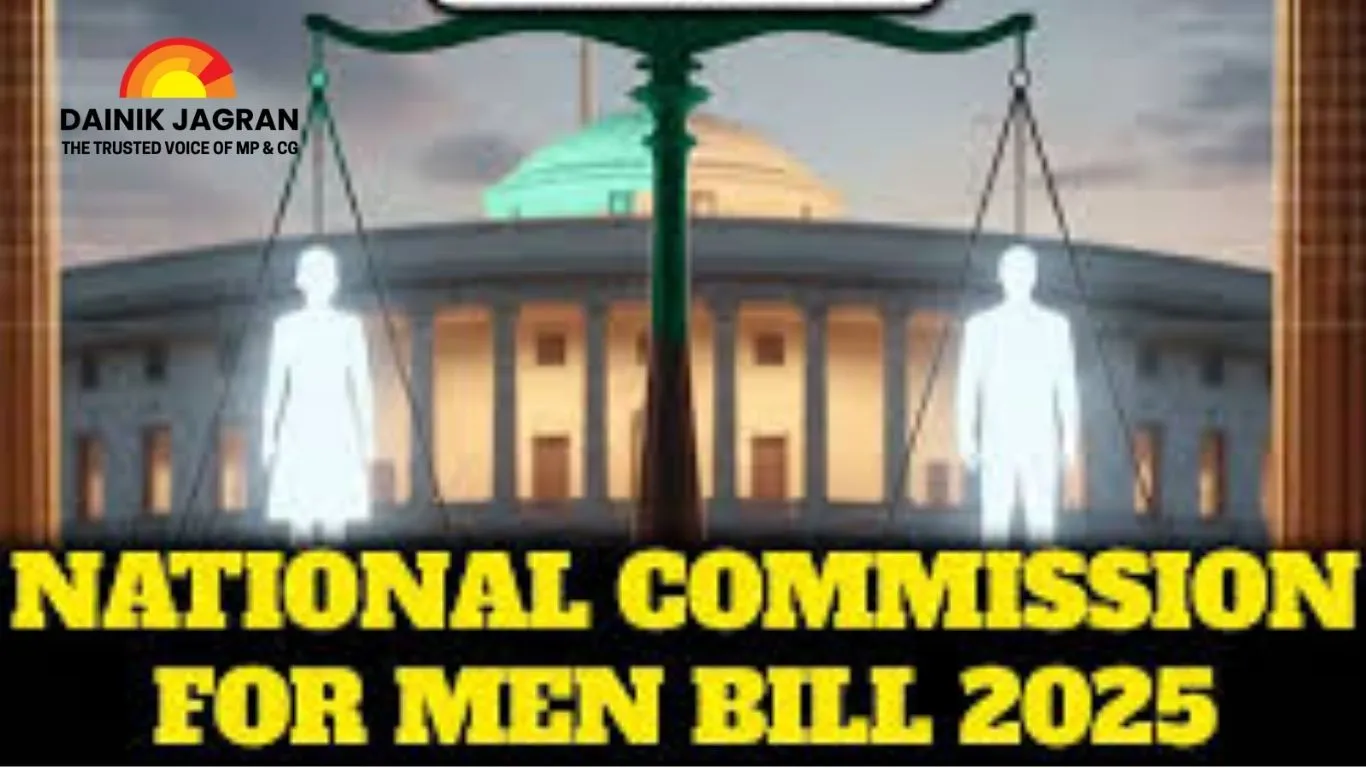
National Commission for Men Bill 2025: Is India Ready To Accept That ‘Pain Has No Gender’?
Digital Desk
Preamble, Equality And A New Question
India’s Constitution promises equality before law and justice without discrimination, yet the human rights conversation still largely imagines the victim as a woman, child, Dalit or minority.
The National Commission for Men Bill 2025, introduced as a private member Bill in the Rajya Sabha, directly challenges this blind spot and asks whether Indian law truly believes that “pain has no gender”.
Why A Men’s Commission, And Why Now?
India already has statutory bodies like the National Commission for Women (1992), National Commission for Minorities (1993) and National Commission for Protection of Child Rights (2007), but there is no equivalent institutional mechanism for men.
This institutional vacuum looks more serious when read with NCRB data showing that around 70–73% of suicide victims in India are men, with family problems emerging as the single biggest reported cause.
Sociologists describe this as a “disposable male syndrome”, where a man’s suffering is normalised as mere struggle, not as a rights issue.
In that backdrop, a statutory commission dedicated to men’s mental health, legal vulnerability and family law concerns has become part of a larger global trend towards gender‑inclusive justice bodies in countries like the UK, Australia and Canada.
Misuse Of Laws, Section 498A And Supreme Court Signals
One major trigger behind the National Commission for Men Bill 2025 is the continuing debate over misuse of Section 498A IPC, a provision originally designed to protect women from cruelty and dowry harassment.
In Arnesh Kumar vs State of Bihar (2014), the Supreme Court flagged the tendency of automatic arrests and noted that Section 498A was being used in some cases as a weapon rather than a shield, leading the Court to curb routine arrests.
Despite these judicial safeguards, ground reality often remains harsh: once a man is arrested or named in such a case, his career, reputation and social standing can collapse even if he is later acquitted.
The Bill therefore proposes strong penalties for false or malicious complaints, using deterrence theory to argue that punishment for proven misuse will protect both due process and genuine victims.
Feminist Concerns: Will Fear Silence Real Victims?
Critics, including many feminist scholars, warn of a “chilling effect”: if punishment for false cases becomes too harsh, rural or vulnerable women may be even more scared to approach the police in genuine domestic violence situations.
They also point out that India is still a deeply patriarchal society where men hold disproportionate social, economic and physical power, and argue that shifting the legal spotlight towards men may dilute hard‑won protections for women.
There is also a fear that powerful men could weaponise a men’s commission to delegitimise women’s movements or pressure complainants into compromise.
For these critics, the real need is better implementation and gender‑neutral drafting of existing laws, rather than a separate identity‑based institution for men.
Private Member Bill: Law, Or Just A Trigger For Debate?
Historically, private member bills in India rarely become law; their success rate is almost symbolic.
The National Commission for Men Bill 2025, introduced by Dr Ashok Kumar Mittal, therefore appears less like a guaranteed legislative reform and more like a political instrument to force the government to state its position on male suicides, legal bias and gender‑neutral justice.
The Bill seeks a statutory body under the Law Ministry with investigative powers, a mixed‑gender membership and a multi‑year financial allocation to look into men’s rights, mental health and misuse of family‑related criminal laws.
Even if it never passes, it has already shifted the conversation from “men vs women” to a more uncomfortable but necessary question: can a mature democracy accept that vulnerability is not feminine by default, and that law must recognise suffering wherever it exists?
.jpg)




