


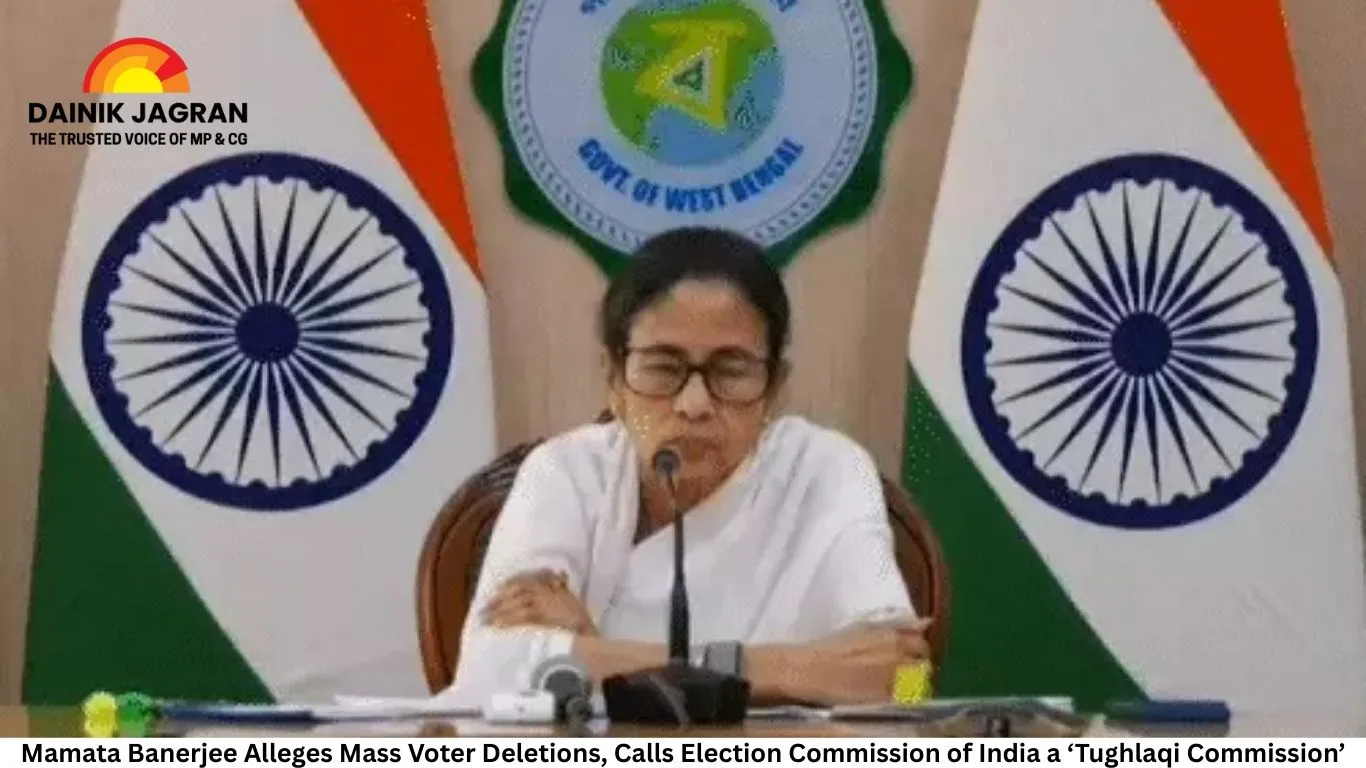
Mamata Banerjee Alleges Mass Voter Deletions, Calls Election Commission of India a ‘Tughlaqi Commission’
Digital Desk
She alleged that the deletions were being conducted under the Special Intensive Revision (SIR) exercise and accused the Commission of disregarding guidelines issued by the Supreme Court of India. According to Banerjee, the revision drive is selectively targeting voters and weakening electoral participation. She also claimed, without presenting official confirmation, that 160 people in West Bengal had died due to stress linked to the verification process and workplace pressure.
The Election Commission has not publicly responded to her latest allegations. Officials have previously maintained that revision exercises are routine administrative procedures aimed at ensuring accuracy in voter lists by removing duplicate, shifted or deceased entries.
Banerjee’s criticism follows a series of confrontations with poll authorities earlier this month. On February 3, she held a press briefing in New Delhi, stating that she had written six letters to the Commission without receiving a reply. She warned that if action were taken against state officials, the West Bengal government would provide them full protection. She also questioned the timing of the revision exercise ahead of elections expected in multiple states, including Tamil Nadu, Kerala and Assam.
On February 2, Banerjee met Chief Election Commissioner Gyanesh Kumar in Delhi, accompanied by leaders of the All India Trinamool Congress and several families she described as affected voters. She later told reporters she was dissatisfied with the meeting and accused the Commission’s leadership of arrogance.
Banerjee further argued that allegations of illegal infiltration—often raised in political debates—fall under the jurisdiction of the central government, not the state administration. Her remarks appeared aimed at countering narratives used during election campaigns.
The dispute underscores escalating tensions between opposition-ruled states and federal institutions ahead of upcoming polls. Analysts say the controversy could sharpen political rhetoric and prompt closer scrutiny of electoral procedures. Whether the allegations lead to legal or administrative review may depend on formal complaints or judicial intervention in the coming weeks.
.jpg)




