

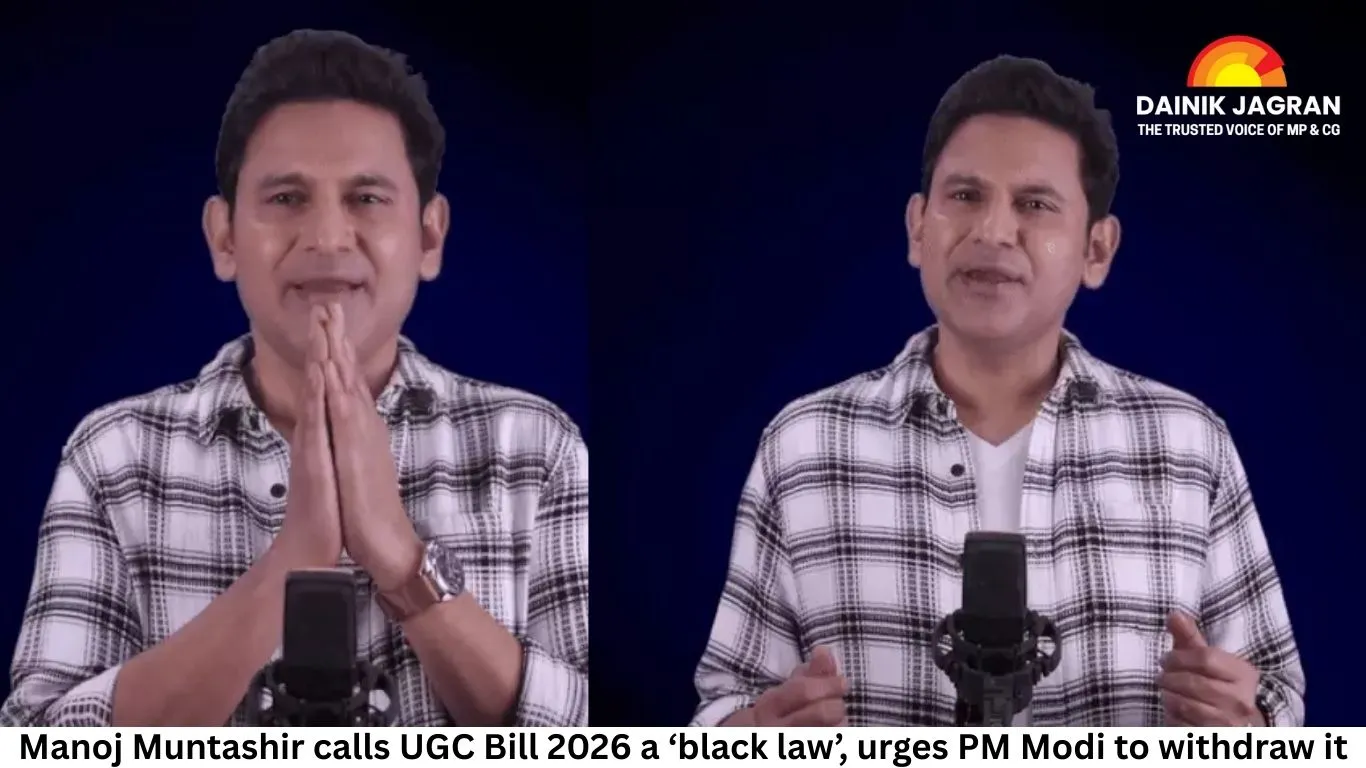
Muntashir released a video statement on his official X account on Tuesday, expressing concern that the proposed law would weaken national unity. Using a metaphor, he said that ensuring equality should not mean harming others. “If one plant in a garden remains small, it does not mean the rest should be cut from the top,” he said, arguing that the country should move beyond caste-based thinking in the 21st century.
In an emotional appeal, Muntashir addressed the Prime Minister as “a father to 140 crore Indians,” urging him not to favour one group at the cost of another. “Do not slap one child to please another,” he said, adding that all citizens deserve equal affection from the state. Warning of long-term consequences, he claimed that if caste-based politics prevailed, it would ultimately harm India as a nation.
The UGC Bill 2026, recently cleared by the commission, mandates the formation of special committees for students from backward classes in all government and private universities and colleges. These committees are intended to address complaints related to caste-based discrimination and racism on campuses and to provide an institutional mechanism for grievance redressal.
However, the exclusion of students from the general category from the scope of these committees has triggered widespread protests. Student groups opposing the bill argue that it creates an unequal framework and could be misused, leading to targeted complaints and administrative bias. Demonstrations have been reported from several states, with protesters demanding either amendments to the bill or its complete rollback.
Supporters of the legislation maintain that it is aimed at protecting historically marginalised students who continue to face discrimination in higher education. They argue that dedicated committees are necessary to ensure accountability and to provide safe reporting channels for vulnerable groups.
The Centre has so far maintained that the bill is intended to strengthen inclusivity on campuses, but has not responded directly to Muntashir’s appeal. As the debate intensifies, the issue is emerging as a flashpoint in the broader discussion on social justice, equality and academic governance, with implications for university administration and student relations across the country.

Manoj Muntashir calls UGC Bill 2026 a ‘black law’, urges PM Modi to withdraw it
Digital Desk
Muntashir released a video statement on his official X account on Tuesday, expressing concern that the proposed law would weaken national unity. Using a metaphor, he said that ensuring equality should not mean harming others. “If one plant in a garden remains small, it does not mean the rest should be cut from the top,” he said, arguing that the country should move beyond caste-based thinking in the 21st century.
In an emotional appeal, Muntashir addressed the Prime Minister as “a father to 140 crore Indians,” urging him not to favour one group at the cost of another. “Do not slap one child to please another,” he said, adding that all citizens deserve equal affection from the state. Warning of long-term consequences, he claimed that if caste-based politics prevailed, it would ultimately harm India as a nation.
The UGC Bill 2026, recently cleared by the commission, mandates the formation of special committees for students from backward classes in all government and private universities and colleges. These committees are intended to address complaints related to caste-based discrimination and racism on campuses and to provide an institutional mechanism for grievance redressal.
However, the exclusion of students from the general category from the scope of these committees has triggered widespread protests. Student groups opposing the bill argue that it creates an unequal framework and could be misused, leading to targeted complaints and administrative bias. Demonstrations have been reported from several states, with protesters demanding either amendments to the bill or its complete rollback.
Supporters of the legislation maintain that it is aimed at protecting historically marginalised students who continue to face discrimination in higher education. They argue that dedicated committees are necessary to ensure accountability and to provide safe reporting channels for vulnerable groups.
The Centre has so far maintained that the bill is intended to strengthen inclusivity on campuses, but has not responded directly to Muntashir’s appeal. As the debate intensifies, the issue is emerging as a flashpoint in the broader discussion on social justice, equality and academic governance, with implications for university administration and student relations across the country.
.jpg)




