


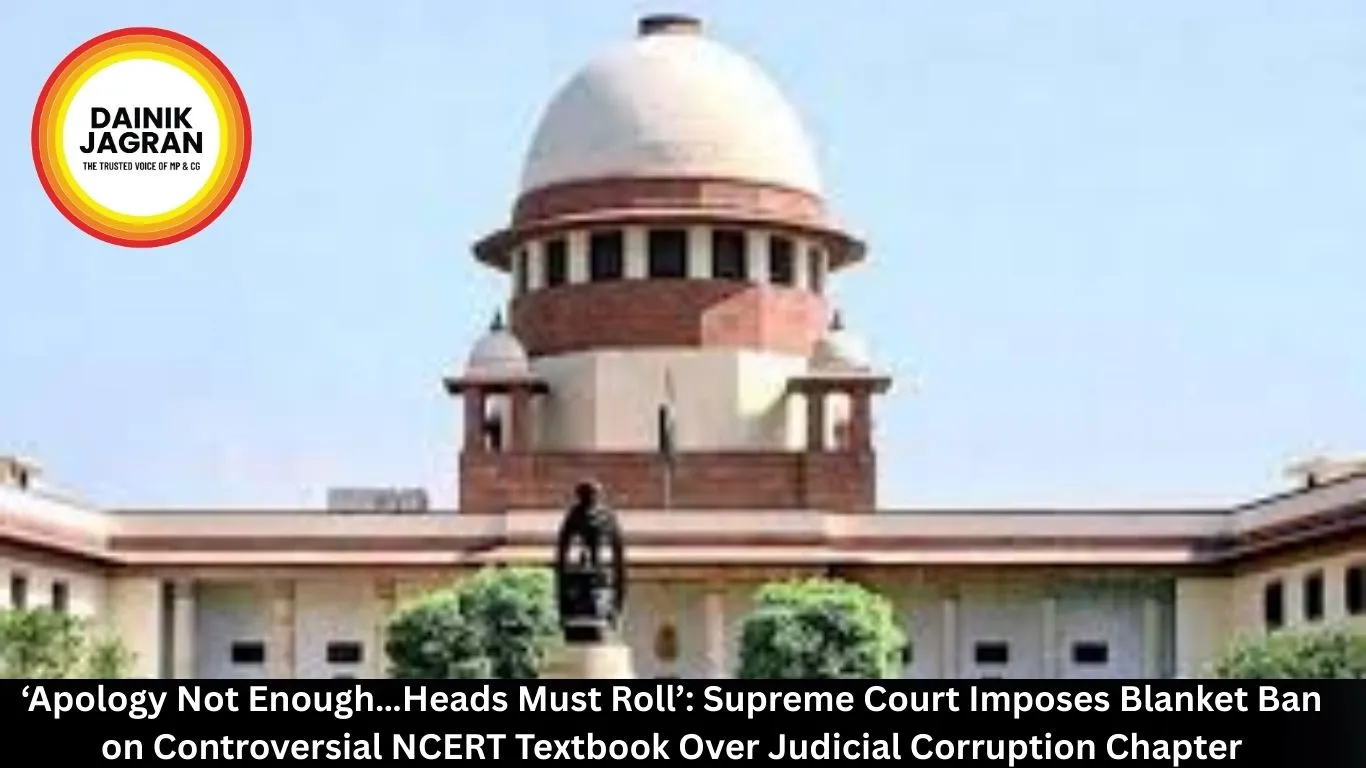
‘Apology Not Enough…Heads Must Roll’: Supreme Court Imposes Blanket Ban on Controversial NCERT Textbook Over Judicial Corruption Chapter
Digital Desk
In a stern move today, the Supreme Court imposed a complete ban on the NCERT Class 8 Social Science textbook "Exploring Society: India and Beyond Part 2" due to its controversial chapter on judicial corruption. Chief Justice Surya Kant-led bench called it a "deep-rooted conspiracy" to defame the judiciary, ordering immediate seizure of all physical and digital copies.
Court Slams NCERT, Demands Accountability
The three-judge bench, including Justices Joymalya Bagchi and Vipul M. Pancholi, took suo motu cognisance after media reports highlighted the chapter "The Role of the Judiciary in Our Society." CJI Surya Kant remarked, "Apology not enough…heads must roll," stressing a thorough probe into those behind the content. The court issued show-cause notices to NCERT Director Dr. Dinesh Prakash Sakhlani and the School Education Secretary, warning of contempt proceedings.
CJI Kant criticized the textbook for omitting the judiciary's role in upholding constitutional values while focusing on issues like corruption, case backlogs (over 81,000 in Supreme Court, 6.24 million in High Courts), and judge shortages. He said exposing young students to "biased misconceptions" could erode public trust in the institution.
Key Court Directives Issued
-
Immediate Ban and Seizure: No printing, sale, or circulation allowed; NCERT Director and school principals personally responsible.
-
No Teaching from Book: States must ensure compliance; reports due in two weeks.
-
Unconditional Apology: Solicitor General Tushar Mehta called NCERT's initial apology insufficient; a full one must be published.
-
Probe Ordered: Names of authors, syllabus meeting records demanded; guilty authors barred from future work.
The bench thanked media for flagging the issue, noting hundreds of public calls received.[
Government's Response and Book Details
Education Minister Dharmendra Pradhan expressed regret, stating, "I am very sad... no intention to insult judiciary. Accountability will be fixed." NCERT halted distribution, apologized, and promised a rewritten chapter for 2026-27 session. Only a few of 2.38 lakh copies circulated.
The chapter discussed corruption's impact on access to justice, judge codes, CPGRAMS complaints (1,600+ from 2017-2021), impeachment processes, and quoted former CJI BR Gavai on transparency. Critics argued it was lopsided, ignoring judicial achievements.
Why This Matters Now
This controversy erupts amid NEP 2020 textbook revisions under NCF, aiming for civic literacy but sparking debates on content balance. With schools gearing for 2026-27, the ruling safeguards judicial dignity while highlighting curriculum oversight needs. Parents and educators await revised versions, underscoring education's role in nation-building.
The hearing concluded with CJI emphasizing unity to protect judicial independence. Compliance reports will decide next steps in this high-stakes education-judiciary
.jpg)




