

According to the complaint filed with a state-level civil rights agency earlier this month, the employee, a software professional working at a mid-sized technology firm, claims colleagues routinely mocked the smell and appearance of her homemade Indian meals, particularly palak paneer, a spinach-based curry commonly eaten across South Asia. The complaint argues that what began as “casual jokes” escalated into persistent comments that affected her dignity, mental well-being, and professional standing.
The employee alleges that co-workers referred to her food as “disgusting,” “weird,” and “unprofessional for office spaces,” and that remarks continued even after she requested them to stop. She further claims her supervisor dismissed her concerns, advising her to “bring something more neutral” to avoid drawing attention.
Legal experts say the case highlights a growing area of workplace law in the US, where cultural practices—including food—are increasingly being recognised as extensions of identity protected under anti-discrimination statutes. While no federal law explicitly mentions cuisine, discrimination based on national origin is prohibited under Title VII of the Civil Rights Act of 1964.
“Food is deeply tied to culture,” said an employment rights attorney familiar with similar cases. “If an employee is targeted or marginalised because of cultural habits linked to national origin, it can potentially meet the threshold for unlawful harassment.”
The company named in the complaint has denied the allegations, stating in a brief response that it promotes inclusivity and that no disciplinary action or negative evaluations were linked to the employee’s lunch choices. An internal review is reportedly underway.
The case has sparked wider discussion on social media, particularly among immigrant communities, many of whom shared similar experiences of altering their diets at work to avoid scrutiny or embarrassment. Advocacy groups argue such pressures force employees to suppress cultural expression to fit into dominant norms.
“This is not about a dish,” said a representative of an Asian-American workplace equity group. “It’s about whose culture is considered acceptable in professional spaces and whose is treated as an inconvenience.”
If the complaint proceeds to litigation, it could test how US courts interpret cultural bias in everyday workplace interactions. For now, the case serves as a reminder that inclusion extends beyond policy statements—sometimes, it begins in the office break room.

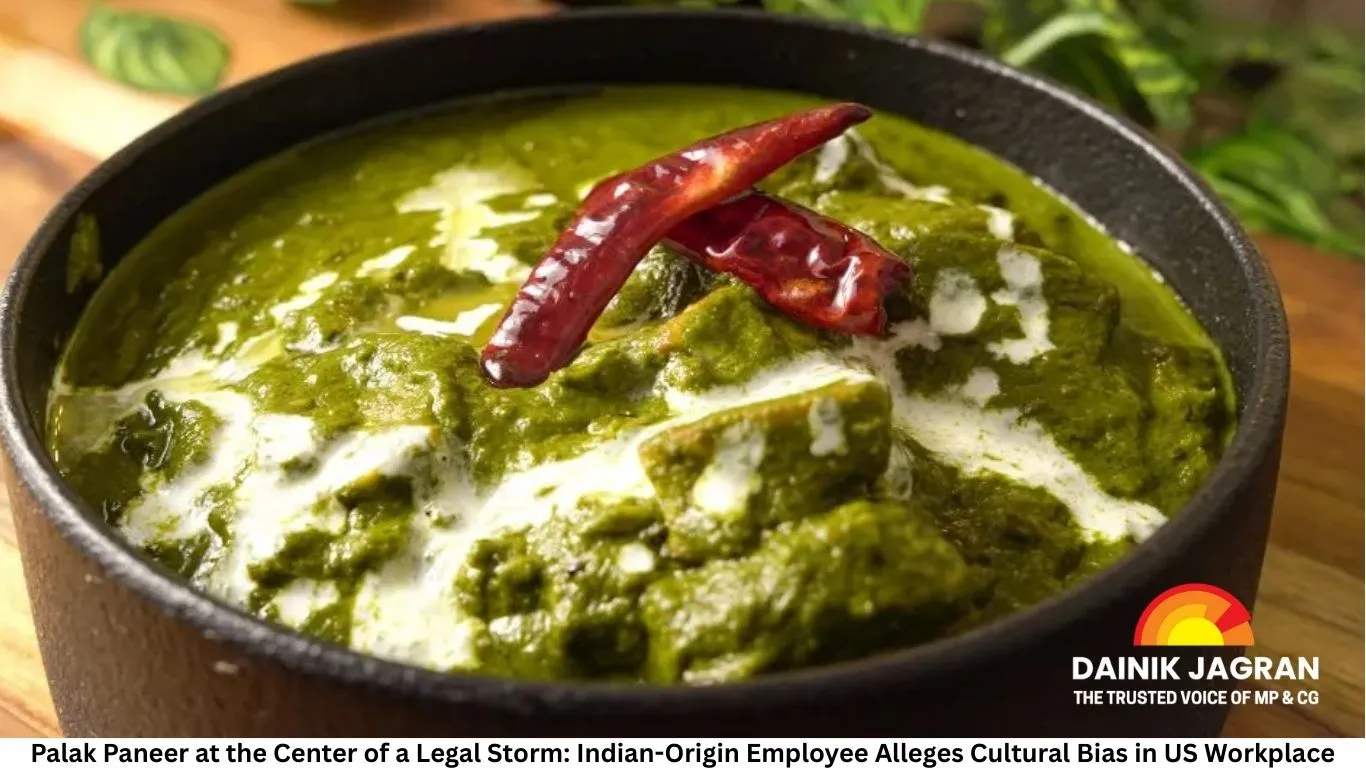
Palak Paneer at the Center of a Legal Storm: Indian-Origin Employee Alleges Cultural Bias in US Workplace
Digital Desk
According to the complaint filed with a state-level civil rights agency earlier this month, the employee, a software professional working at a mid-sized technology firm, claims colleagues routinely mocked the smell and appearance of her homemade Indian meals, particularly palak paneer, a spinach-based curry commonly eaten across South Asia. The complaint argues that what began as “casual jokes” escalated into persistent comments that affected her dignity, mental well-being, and professional standing.
The employee alleges that co-workers referred to her food as “disgusting,” “weird,” and “unprofessional for office spaces,” and that remarks continued even after she requested them to stop. She further claims her supervisor dismissed her concerns, advising her to “bring something more neutral” to avoid drawing attention.
Legal experts say the case highlights a growing area of workplace law in the US, where cultural practices—including food—are increasingly being recognised as extensions of identity protected under anti-discrimination statutes. While no federal law explicitly mentions cuisine, discrimination based on national origin is prohibited under Title VII of the Civil Rights Act of 1964.
“Food is deeply tied to culture,” said an employment rights attorney familiar with similar cases. “If an employee is targeted or marginalised because of cultural habits linked to national origin, it can potentially meet the threshold for unlawful harassment.”
The company named in the complaint has denied the allegations, stating in a brief response that it promotes inclusivity and that no disciplinary action or negative evaluations were linked to the employee’s lunch choices. An internal review is reportedly underway.
The case has sparked wider discussion on social media, particularly among immigrant communities, many of whom shared similar experiences of altering their diets at work to avoid scrutiny or embarrassment. Advocacy groups argue such pressures force employees to suppress cultural expression to fit into dominant norms.
“This is not about a dish,” said a representative of an Asian-American workplace equity group. “It’s about whose culture is considered acceptable in professional spaces and whose is treated as an inconvenience.”
If the complaint proceeds to litigation, it could test how US courts interpret cultural bias in everyday workplace interactions. For now, the case serves as a reminder that inclusion extends beyond policy statements—sometimes, it begins in the office break room.
.jpg)




