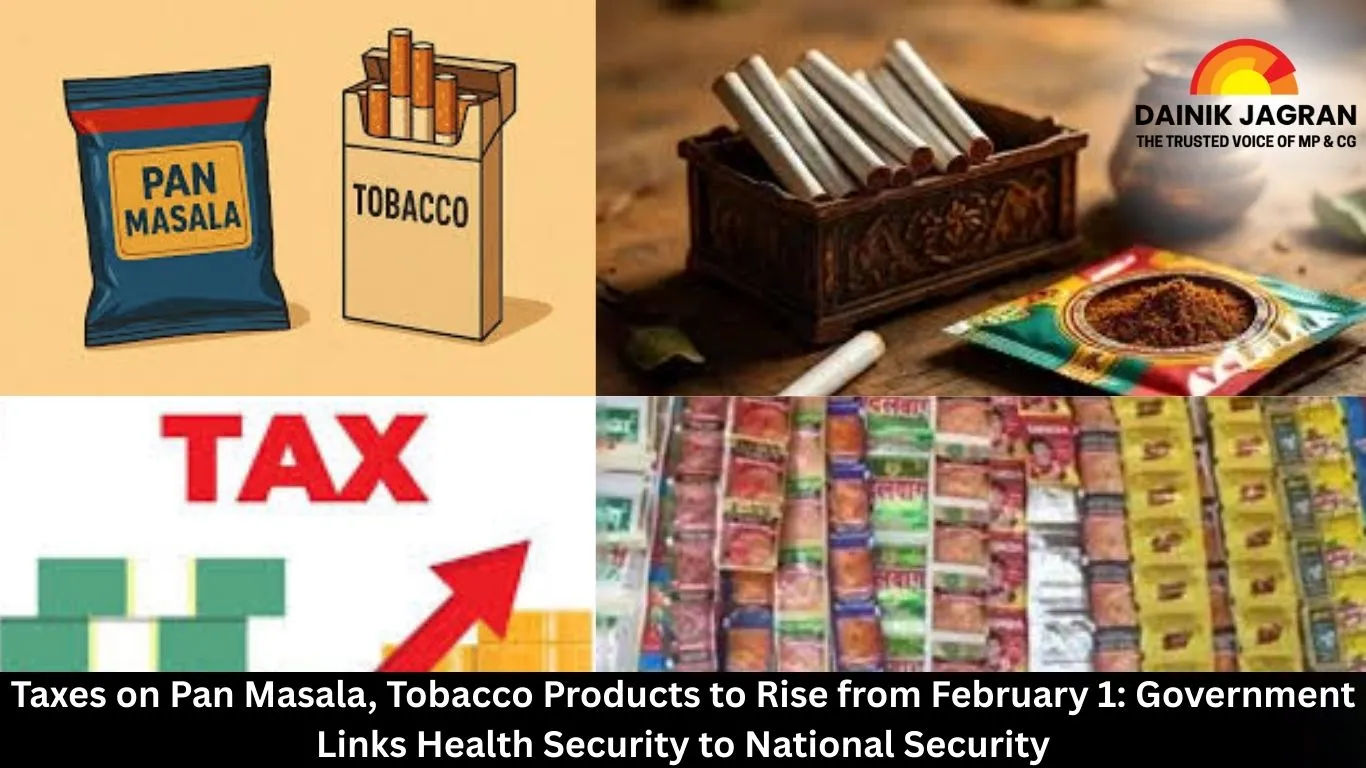
Taxes on Pan Masala, Tobacco Products to Rise from February 1: Government Links Health Security to National Security
Digital Desk
From 1 February 2026, India’s taxation system for tobacco and pan masala is set for a major change. The government will begin taxing not only the sale but also the manufacturing process of these products a move aimed at tightening regulation and boosting public health revenue.
The step comes under the newly proposed Health Security to National Security Cess Bill, 2025, which extends taxation to production machinery and capacity rather than just the final product.
What is the Health Security to National Security Bill?
The Bill, tabled in Parliament during the 2025 winter session, introduces a special cess on tobacco-related products and pan masala. Unlike previous systems under the GST compensation cess, which taxed at the point of sale, the new structure targets how much producers can manufacture.
Manufacturers must declare the installed production capacity of their factories, based on which the new cess will be calculated. This cess will be levied in addition to existing GST and excise duties, ensuring higher overall taxes on these “sin goods.”
A senior Finance Ministry official explained that this policy aims to reduce tax evasion, enhance monitoring, and support both public health and revenue goals as the GST compensation cess phase-out nears completion in March 2026.
Government’s Dual Objective
According to the government, this move serves two main purposes: maintaining state revenues post-GST compensation and promoting health and national security.
By linking the measure to broader welfare and national goals, the government seeks to channel additional funds into healthcare and anti-tobacco awareness programs.
Experts say the production-linked cess could also help curb illegal and unregistered tobacco manufacturing — a long-standing issue in India’s fragmented tobacco industry.
Current Tobacco Regulations in India
India already enforces multiple laws to control tobacco use. The Cigarettes and Other Tobacco Products Act (COTPA), 2003 regulates advertising, packaging, and sale of tobacco products.
Meanwhile, the Food Safety and Standards Authority of India (FSSAI) bans items like gutkha that mix food with nicotine.
India is also a signatory to the WHO Framework Convention on Tobacco Control, which obligates countries to adopt comprehensive strategies to reduce both demand and supply.
Why Visual Warnings Aren’t Enough
Despite graphic mouth cancer warnings on cigarette and pan masala packets, experts note these have limited impact. Many consumers, especially in rural regions, are desensitized to these images due to addiction, cultural acceptance, and lack of enforcement.
Smokeless Tobacco Leads Consumption
India remains one of the world’s largest consumers of smokeless tobacco (SLT) — including khaini, gutkha, and jarda — with over half of total tobacco use stemming from such products, especially in rural areas.
A Step Toward Accountability
While enforcement challenges persist, the new tax regime signals a stronger stance on health-driven fiscal reforms. As one public health expert said, “This isn’t just about collecting revenue — it’s about changing behaviour and linking public health directly to national well-being.”
From February 1, consumers should brace for higher prices, while policymakers hope the move marks a decisive step toward a healthier, more regulated India.