


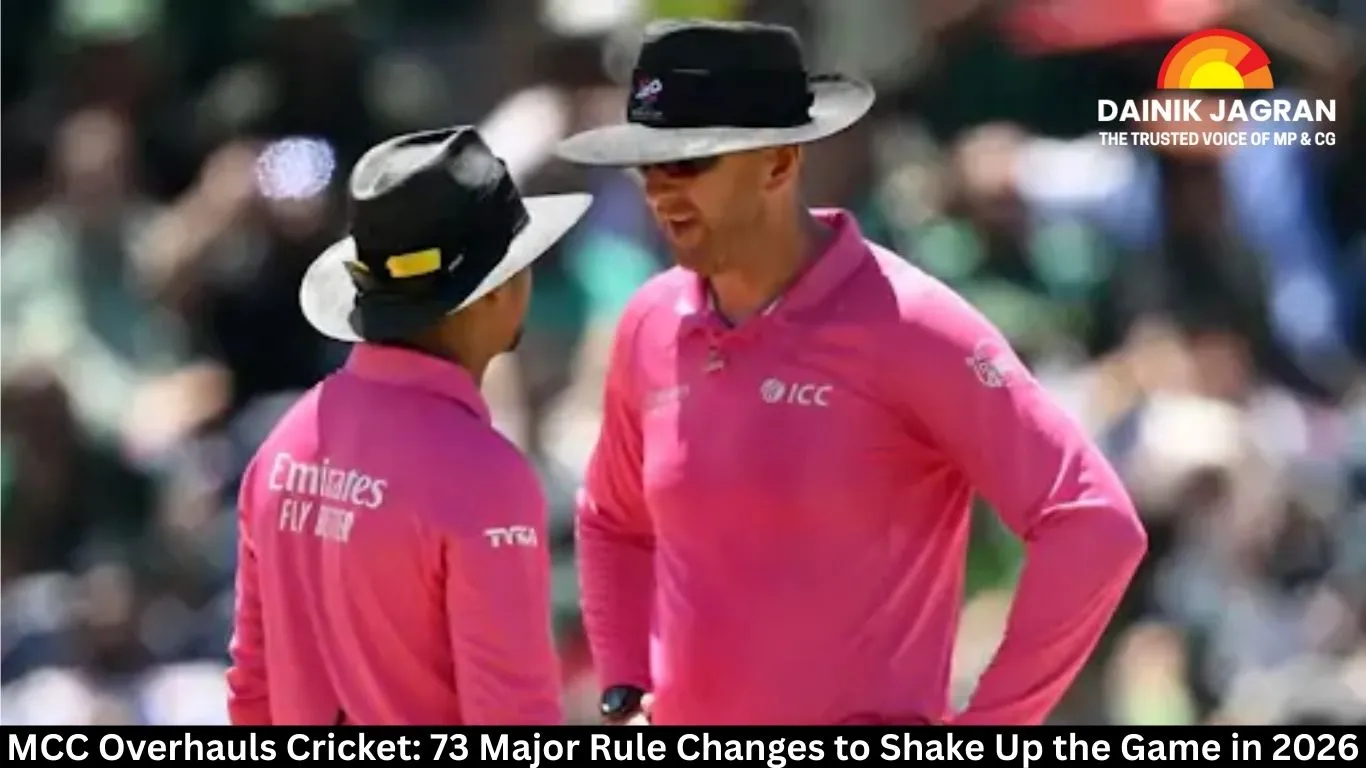
MCC Overhauls Cricket: 73 Major Rule Changes to Shake Up the Game in 2026
Digital Desk
The Marylebone Cricket Club (MCC), the historic custodian of the game’s laws, has officially pulled the curtain back on a massive regulatory transformation. In what is being described as the most significant update to the sport since 2022, the MCC has announced 73 major rule changes in cricket designed to modernize gameplay, enhance inclusivity, and maintain the "drama" of the longest format.
Set to come into effect on October 1, 2026, these amendments touch every corner of the field—from the equipment in a player's bag to the high-stakes final moments of a Test match.
The "End of Day" Drama: Test Match Rules Tweak
Perhaps the most impactful change for international fans concerns Law 12.5.2. Under the current rules, if a wicket falls in the final over of a day’s play in a Test match, the umpires often call "stumps" immediately, allowing the batting side to avoid sending out a new player in fading light or hostile conditions.
Starting in late 2026, the final over of the day must be completed in full, regardless of whether a wicket falls. The MCC noted that the previous rule was "unfair" to the bowling side, as it allowed incoming batters to escape a challenging period. This change ensures that the tactical tension of the "nightwatchman" era remains a live, unmissable spectacle for fans.
Equipment Evolution: Laminated Bats and Ball Sizes
In a move to address the rising costs of the sport at the grassroots level, the MCC has approved the use of laminated bats (Type D bats) for open-age cricket. Previously restricted to junior levels, these bats are made by bonding multiple pieces of wood. While the MCC expects elite professionals to stick with traditional single-piece willow, this shift makes the game more affordable for club cricketers worldwide.
Standardized Ball Categories
The MCC has also refined equipment standards for women’s and junior cricket by introducing three distinct ball categories:
-
Size 1: The standard ball used in men’s senior cricket (unchanged).
-
Size 2: Slightly smaller and lighter, tailored for women’s and senior junior matches.
-
Size 3: The smallest and lightest, designed for young junior players.
Defining the "Grey Areas": Overthrows and Hit-Wickets
The update brings much-needed clarity to confusing on-field incidents. For the first time, an overthrow is strictly defined as a deliberate attempt to hit the stumps to prevent runs. This means accidental deflections or "misfields" near the boundary will no longer be penalized or categorized as overthrows, simplifying the job for match officials.
Hit-Wicket and Dead Ball Updates
-
Hit-Wicket: A batter will now be ruled out even if they lose their balance after playing the shot and fall onto the stumps, provided it is part of their natural movement to receive the ball. However, if a collision with a fielder causes them to hit the stumps, they will remain not out.
-
Dead Ball: Umpires now have more autonomy to declare a ball "dead." Possession by the bowler or keeper is no longer the sole requirement; if the ball is stationary or held by any fielder and play has clearly ceased, the umpire can call it.
Why These Changes Matter Now
This overhaul reflects a shift toward a more inclusive and "fit for purpose" sport. By removing gendered language and tightening equipment tolerances, the MCC is ensuring that the MCC rule changes don't just favor the men's professional game, but support the global expansion of cricket at all levels.
As we look toward the 2026 season, players and fans alike will need to adjust to a game that is faster, fairer, and decidedly more dramatic in its closing hours.
.jpg)




