Chhattisgarh Elephant Calf Deaths: Hepatitis, Septicemia Confirmed

Digital Desk

Chhattisgarh Elephant Calf Deaths: Hepatitis, Septicemia Confirmed

Lab reports from Dehradun and Bareilly confirm hepatitis and septicemia caused the deaths of four elephant calves in Chhattisgarh's Raigarh division.


Dehradun and Bareilly laboratory reports reveal severe infections caused the deaths of four elephant calves within 25 days in Raigarh.

Deadly infections hit herd

Laboratory test results from premium research facilities in Dehradun and Bareilly have confirmed that severe bacterial and viral infections led to the sudden deaths of elephant calves in Chhattisgarh. According to forest department officials, detailed analysis of tissue samples revealed that one calf succumbed to hepatitis—a debilitating liver infection—while another died of septicemia, a severe bloodstream infection. This follows an earlier confirmation where a third calf from the same region was found to have died from pneumonia.

Short window, multiple casualties

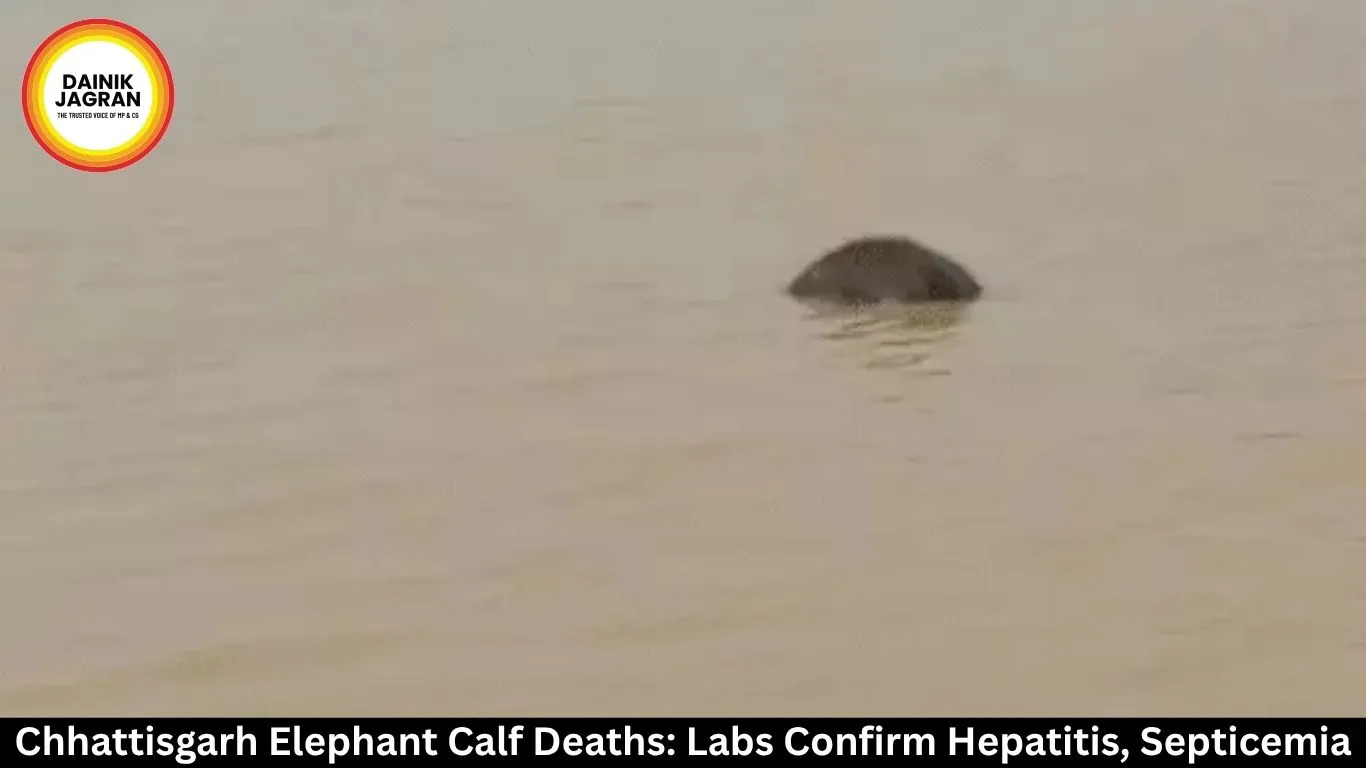
The rapid loss of wildlife has sent shockwaves through the local forest administration. Between May 8 and June 1, a total of four young calves lost their lives within a narrow 25-day window across the Raigarh and Dharamjaigarh forest divisions. Ground teams initially grew alarmed when carcasses began appearing near local water bodies and marshy patches. Just over a week ago, the body of a baby elephant was recovered from a pond in the Chhal forest range, triggering deep concern among conservationists.

Ground reality and maternal grief

The crisis has not just been a statistical loss but a visible tragedy on the ground. Local tracking teams recently witnessed a heartbreaking scene in the Chhal area where a mother elephant spent hours attempting to revive her dead calf. Video footage from the site showed the distressed adult using her trunk and feet to lift the young carcass out of a swampy patch. Field officials noted that the deceased calves belonged to the same resident herd, indicating that an infectious pathogen was likely circulating within the specific group.

Experts huddle for emergency meet

Anxious over the recurring deaths, the forest department convened an emergency two-day technical workshop on Friday to address disease transmission in wild herds. Wildlife scientists, veterinarians, and elephant conservation experts from multiple states traveled to Raigarh to review the autopsy findings. The sessions focused heavily on early symptom identification, sample collection protocols, and immediate field interventions to arrest the spread of internal infections within wild populations.

High-tech surveillance deployed

"The post-mortem examinations were conducted in the presence of senior wildlife scientists to rule out foul play," stated Jitendra Upadhyay, Divisional Forest Officer (DFO). "The reports clearly pinpoint internal medical complications—hepatitis and septicemia. We are now working closely with experts to draft a long-term mitigation strategy."

The forest division currently monitors a sizable population of 137 elephants, which includes 37 tuskers, 62 females, and 35 vulnerable calves.

Intensive tracking on ground

In response to the laboratory confirmations, field monitoring has been scaled up to an unprecedented level. Special tracking teams, alongside local Elephant Mitra squads, are now trailing the affected herd daily to monitor the physical health of the remaining calves. Ground units have begun deploying thermal drones during late-evening and night hours to track movement patterns without disturbing the animals. Forest guards are also using static trap cameras around known watering holes to spot any signs of sluggishness or physical distress among the juveniles early on.


 

--------

๐Ÿšจ Beat the News Rush โ€“ Join Now!

Get breaking alerts, hot exclusives, and game-changing stories instantly on your phone. No delays, no fluff โ€“ just the edge you need. โšก

Tap to join:ย 

๐ŸŸข WhatsApp Channel: Dainik Jagran MP CG

Crave more?

๐Ÿ…• Facebook: Dainik Jagran MP CG English

๐Ÿ…ง Twitter (X): Dainik Jagran MP CG

๐Ÿ…˜ Instagram: Dainik Jagran MP CG

Share the fire โ€“ keep your crew ahead! ๐Ÿ—ž๏ธ๐Ÿ”ฅ

english.dainikjagranmpcg.com
09 Jun 2026 By Abhishek Joshi

Chhattisgarh Elephant Calf Deaths: Hepatitis, Septicemia Confirmed

Digital Desk

Dehradun and Bareilly laboratory reports reveal severe infections caused the deaths of four elephant calves within 25 days in Raigarh.

Deadly infections hit herd

Laboratory test results from premium research facilities in Dehradun and Bareilly have confirmed that severe bacterial and viral infections led to the sudden deaths of elephant calves in Chhattisgarh. According to forest department officials, detailed analysis of tissue samples revealed that one calf succumbed to hepatitis—a debilitating liver infection—while another died of septicemia, a severe bloodstream infection. This follows an earlier confirmation where a third calf from the same region was found to have died from pneumonia.

Short window, multiple casualties

The rapid loss of wildlife has sent shockwaves through the local forest administration. Between May 8 and June 1, a total of four young calves lost their lives within a narrow 25-day window across the Raigarh and Dharamjaigarh forest divisions. Ground teams initially grew alarmed when carcasses began appearing near local water bodies and marshy patches. Just over a week ago, the body of a baby elephant was recovered from a pond in the Chhal forest range, triggering deep concern among conservationists.

Ground reality and maternal grief

The crisis has not just been a statistical loss but a visible tragedy on the ground. Local tracking teams recently witnessed a heartbreaking scene in the Chhal area where a mother elephant spent hours attempting to revive her dead calf. Video footage from the site showed the distressed adult using her trunk and feet to lift the young carcass out of a swampy patch. Field officials noted that the deceased calves belonged to the same resident herd, indicating that an infectious pathogen was likely circulating within the specific group.

Experts huddle for emergency meet

Anxious over the recurring deaths, the forest department convened an emergency two-day technical workshop on Friday to address disease transmission in wild herds. Wildlife scientists, veterinarians, and elephant conservation experts from multiple states traveled to Raigarh to review the autopsy findings. The sessions focused heavily on early symptom identification, sample collection protocols, and immediate field interventions to arrest the spread of internal infections within wild populations.

High-tech surveillance deployed

"The post-mortem examinations were conducted in the presence of senior wildlife scientists to rule out foul play," stated Jitendra Upadhyay, Divisional Forest Officer (DFO). "The reports clearly pinpoint internal medical complications—hepatitis and septicemia. We are now working closely with experts to draft a long-term mitigation strategy."

The forest division currently monitors a sizable population of 137 elephants, which includes 37 tuskers, 62 females, and 35 vulnerable calves.

Intensive tracking on ground

In response to the laboratory confirmations, field monitoring has been scaled up to an unprecedented level. Special tracking teams, alongside local Elephant Mitra squads, are now trailing the affected herd daily to monitor the physical health of the remaining calves. Ground units have begun deploying thermal drones during late-evening and night hours to track movement patterns without disturbing the animals. Forest guards are also using static trap cameras around known watering holes to spot any signs of sluggishness or physical distress among the juveniles early on.

 

https://english.dainikjagranmpcg.com/states/chhattisgarh/chhattisgarh-elephant-calf-deaths-hepatitis-septicemia-confirmed/article-19925

Related Posts

Latest News

Trump Confirms Crew Safe After US Helicopter Crash Near Hormuz Trump Confirms Crew Safe After US Helicopter Crash Near Hormuz
US President Trump says helicopter crew safe after Apache crash near Strait of Hormuz amid West Asia tensions. Israel vows...
50 UK MPs urge action over PoK unrest, 11 dead
Trump approval near record low; 70% disapprove
War Impact: Iranians Buy Bread on EMI as Food Prices Surge
Twin Earthquakes Hit Iran and Cuba, Tremors Felt Across Region
148 Indians Stuck in Bangladesh Jails After Serving Sentences
Southwest Monsoon Reaches 13 States in 5 Days