

Asrani at 85: From Jaipur Dreamer to One of Hindi Cinema’s Most Enduring Faces
Digital Desk
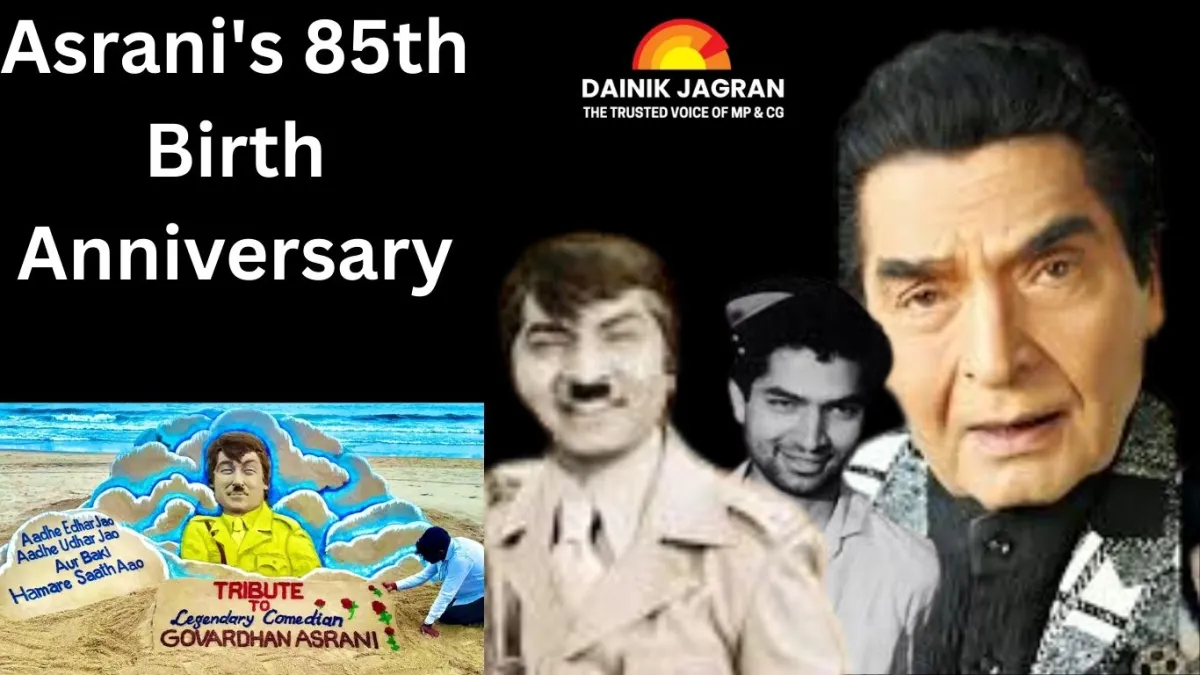
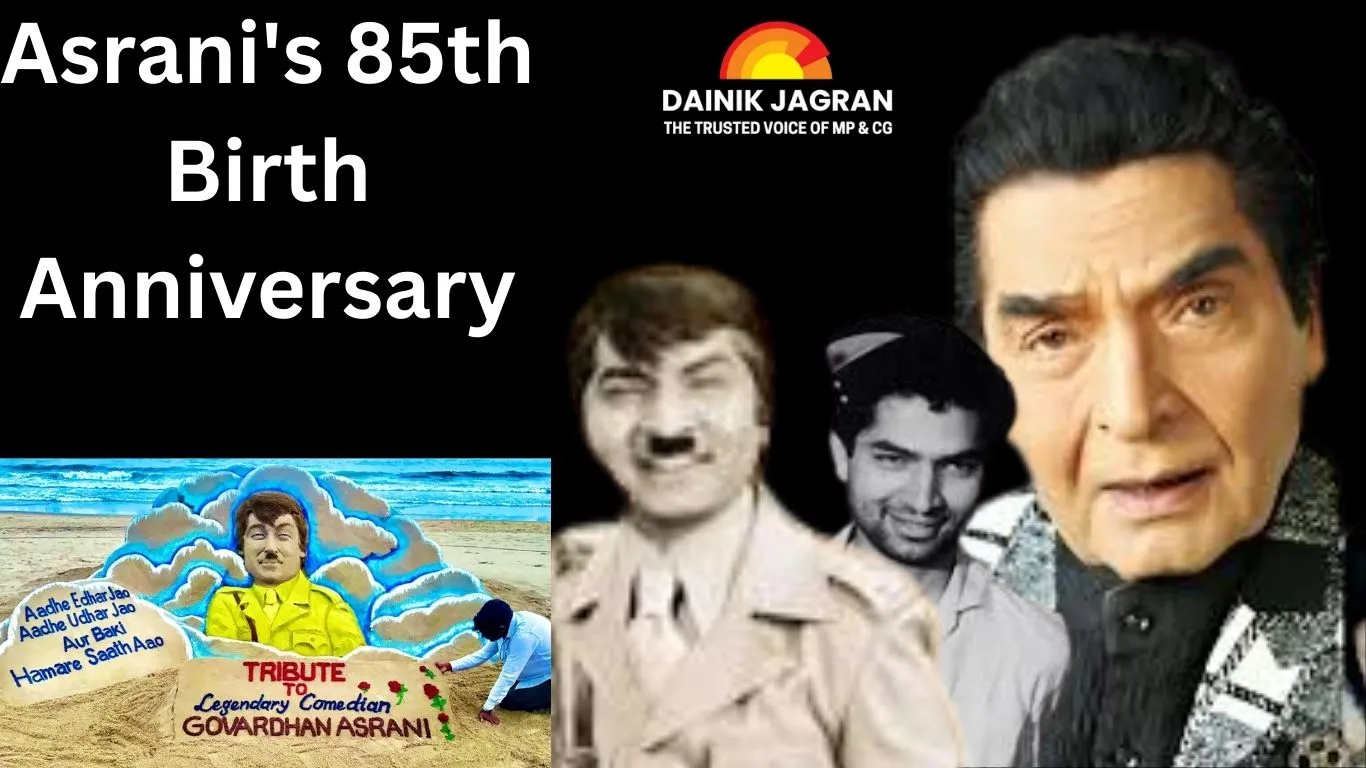
Govardhan Asrani, remembered simply as Asrani, would have turned 85 on January 1. Decades after his rise, the actor remains a familiar presence in India’s collective memory—proof that craft, discipline, and persistence can outlast trends. From his unforgettable jailer in Sholay to nuanced turns in Chupke Chupke and Koshish, Asrani’s career charts the journey of a self-made artiste who shaped popular cinema without relying on lineage.
Born on January 1, 1941, in Jaipur to a Sindhi family, Asrani grew up far from the film industry. His father ran a carpet business and expected him to follow suit. Instead, Asrani gravitated to performance, acting in college plays and working as a voice artist at All India Radio while studying in Jaipur. Encouraged by early praise, he left for Mumbai carrying little more than ambition and a letter of introduction—only to confront rejection and uncertainty.
After an unproductive first stint in the city, Asrani returned home wiser. He later enrolled in the Film and Television Institute of India (FTII), Pune, among its earliest acting batches. The training refined his technique, but opportunities remained scarce. A turning point came when FTII students raised concerns with then Information and Broadcasting Minister Indira Gandhi about the lack of work for trained actors. Soon after, Asrani landed a role in Hrishikesh Mukherjee’s Guddi (1971), opening doors to sustained work.
Over a career spanning more than 300 films, Asrani proved his range. While comedy became his signature, he took on darker roles—most notably in Gulzar’s Koshish—earning respect for restraint and depth. His portrayal of the authoritarian jailer in Sholay (1975) became iconic, surviving initial edits to emerge as one of Hindi cinema’s most quoted performances.
Beyond the screen, Asrani shared close professional bonds. He taught acting at FTII, where Jaya Bhaduri was his student. Their association grew into a lifelong relationship; Asrani was among the four “brothers of the bride” at Jaya and Amitabh Bachchan’s wedding, underscoring the trust he commanded within the industry.
Asrani passed away on October 20, 2025, but his work continues to resonate. Films featuring him are still releasing, reminding audiences of an actor whose dedication and talent made laughter—and credibility—look effortless. On his 85th birth anniversary, the legacy endures as a benchmark for character acting in Indian cinema.
--------
🚨 Beat the News Rush – Join Now!
Get breaking alerts, hot exclusives, and game-changing stories instantly on your phone. No delays, no fluff – just the edge you need. ⚡
Tap to join:
🟢 WhatsApp Channel: Dainik Jagran MP CG
Crave more?
🅕 Facebook: Dainik Jagran MP CG English
🅧 Twitter (X): Dainik Jagran MP CG
🅘 Instagram: Dainik Jagran MP CG
Share the fire – keep your crew ahead! 🗞️🔥
Asrani at 85: From Jaipur Dreamer to One of Hindi Cinema’s Most Enduring Faces
Digital Desk
Born on January 1, 1941, in Jaipur to a Sindhi family, Asrani grew up far from the film industry. His father ran a carpet business and expected him to follow suit. Instead, Asrani gravitated to performance, acting in college plays and working as a voice artist at All India Radio while studying in Jaipur. Encouraged by early praise, he left for Mumbai carrying little more than ambition and a letter of introduction—only to confront rejection and uncertainty.
After an unproductive first stint in the city, Asrani returned home wiser. He later enrolled in the Film and Television Institute of India (FTII), Pune, among its earliest acting batches. The training refined his technique, but opportunities remained scarce. A turning point came when FTII students raised concerns with then Information and Broadcasting Minister Indira Gandhi about the lack of work for trained actors. Soon after, Asrani landed a role in Hrishikesh Mukherjee’s Guddi (1971), opening doors to sustained work.
Over a career spanning more than 300 films, Asrani proved his range. While comedy became his signature, he took on darker roles—most notably in Gulzar’s Koshish—earning respect for restraint and depth. His portrayal of the authoritarian jailer in Sholay (1975) became iconic, surviving initial edits to emerge as one of Hindi cinema’s most quoted performances.
Beyond the screen, Asrani shared close professional bonds. He taught acting at FTII, where Jaya Bhaduri was his student. Their association grew into a lifelong relationship; Asrani was among the four “brothers of the bride” at Jaya and Amitabh Bachchan’s wedding, underscoring the trust he commanded within the industry.
Asrani passed away on October 20, 2025, but his work continues to resonate. Films featuring him are still releasing, reminding audiences of an actor whose dedication and talent made laughter—and credibility—look effortless. On his 85th birth anniversary, the legacy endures as a benchmark for character acting in Indian cinema.


