


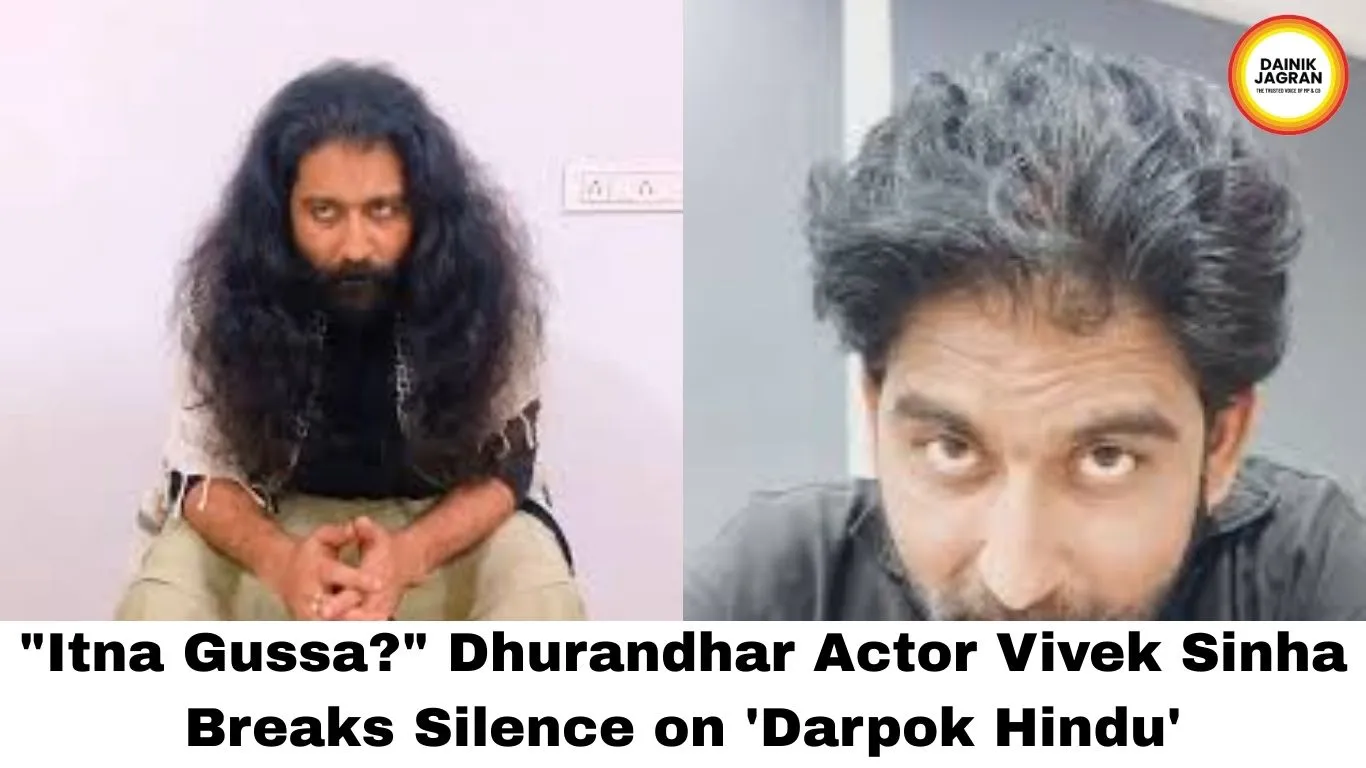
"Itna Gussa?" Dhurandhar Actor Vivek Sinha Breaks Silence on 'Darpok Hindu' Dialogue Backlash, Clarifies Nationality
Digital Desk
In an era where digital content travels faster than ever, a single line of dialogue from a blockbuster film can ignite a firestorm of debate across social media. The latest flashpoint is the Ranveer Singh-starrer Dhurandhar, which has found itself at the center of a heated online controversy months after its record-breaking release. The trigger? A pointed dialogue delivered by actor Vivek Sinha, who played a Pakistani hijacker in the film, has drawn the ire of netizens, forcing the actor to issue a public clarification.
As the discourse around patriotism, cinema, and character portrayal intensifies, Sinha has stepped forward not with a scripted apology, but with a candid video that is now going viral for its unexpected tone.
The Dialogue That Sparked a Digital Uproar
The controversy stems from a scene in Dhurandhar where Sinha's character, Zahoor Mistry, delivers a provocative line: “Hindu ek darpok qaum hai, pados mein hi rehte hai hum, goodebhar ka zor laga lo aur bigaad lo joh bigaad sakte ho.” This dialogue, intended to reflect the antagonist's perspective, was perceived by many viewers as a direct insult, leading to a barrage of hate comments and calls for a boycott targeting the actor personally.
Vivek Sinha's Unfiltered Response
Instead of remaining silent, Vivek Sinha took to his Instagram account to directly address the hate. In a new reel, he expressed genuine surprise at the intensity of the reaction. Holding up his phone to show the flood of comments, he read aloud the threats and abuses: "Teri shakal humein aatankwadi jaisi lag rahi hai," and "Mann kar raha hai ki screen ke andar ghuske maarte hain."
However, his response took an unexpected turn. Rather than anger, Sinha responded with a sense of ironic patriotism. He stated, "Itna achha laga na mujhe ye jo deshbhakti hai na hamare andar, salute hai isko." He appreciated the nationalistic fervor, even when directed at him. Crucially, he felt compelled to clarify a key point of identity amidst the threats: "Main Pakistan ka nahi hoon. Main Bijnor ka rehne wala hoon aur filhaal Mumbai mein rehta hoon."
By revealing he is an Indian from Bijnor, Uttar Pradesh, currently living in Mumbai, the actor aimed to separate himself from his on-screen persona, reminding viewers of the fundamental distinction between an artist and the role they play.
Why This Matters Now: The Blurred Line Between Reel and Real
This incident, involving the Dhurandhar actor, arrives at a critical time for Indian entertainment and digital culture. It underscores a powerful and growing trend where audiences struggle—or refuse—to separate fiction from reality.
-
The Age of Instant Outrage: Social media platforms amplify emotional reactions, turning fleeting moments into major controversies within hours.
-
Patriotism as a Filter: Any content touching upon national identity or symbols is now viewed through an intensely patriotic lens, often leaving little room for narrative nuance or character arcs.
-
The Actor as a Target: As Sinha's experience shows, the actor portraying a negative character frequently bears the brunt of the audience's wrath, a phenomenon that raises questions about digital literacy and online mob mentality.
Expert Perspective: Art, Interpretation, and the Audience
"The reaction to Vivek Sinha's dialogue is a textbook example of the 'intentional fallacy,' where viewers attribute the views of a character directly to the actor," explains cultural commentator and film critic Santanu Das. "A film like Dhurandhar, which deals with complex geopolitical themes, uses its antagonists to drive conflict. The audience's inability to tolerate a villain's dialogue—which is meant to be contemptible—reveals a growing impatience with complex storytelling. Sinha's calm, clarifying response is a masterclass in disarming online hate with patience and a reminder of our shared identity."
Takeaways: Navigating the New Cultural Landscape
What can viewers and netizens learn from the backlash faced by Vivek Sinha?
-
Distinguish Artist from Art: An actor’s primary job is to portray a character, not to endorse their beliefs.
-
Context is Crucial: A dialogue from a villain in a film about espionage and terrorism is written to showcase that character's worldview.
-
Engage, Don't Eject: Instead of immediate calls for boycott, engaging with the film's full narrative can lead to a richer understanding.
In his concluding remarks, Sinha thanked the audience for the attention his performance received, even if negative, and encouraged them to watch Dhurandhar in theaters. His video serves as a compelling snapshot of today's cultural climate—where a film's success is measured not just in box office collections, but in the volume of the conversations, and controversies, it ignites long after the credits roll.
.jpg)




