Palak Tiwari Stars in ‘Rosie’: How a Viral Ghost Story & India’s First Horror Film ‘Mahal’ Reveal Bollywood’s Real-Life Fear Factor
Digital Desk
Palak Tiwari's horror film ‘Rosie’ draws from a viral ghost story. Explore how it connects to India’s first horror movie ‘Mahal’, inspired by a real headless body incident. SEO Keywords: Palak Tiwari Rosie, India first horror movie, Mahal real incident.
From a Headless Corpse to a Viral Ghost: How Real-Life Horror Has Always Haunted Bollywood
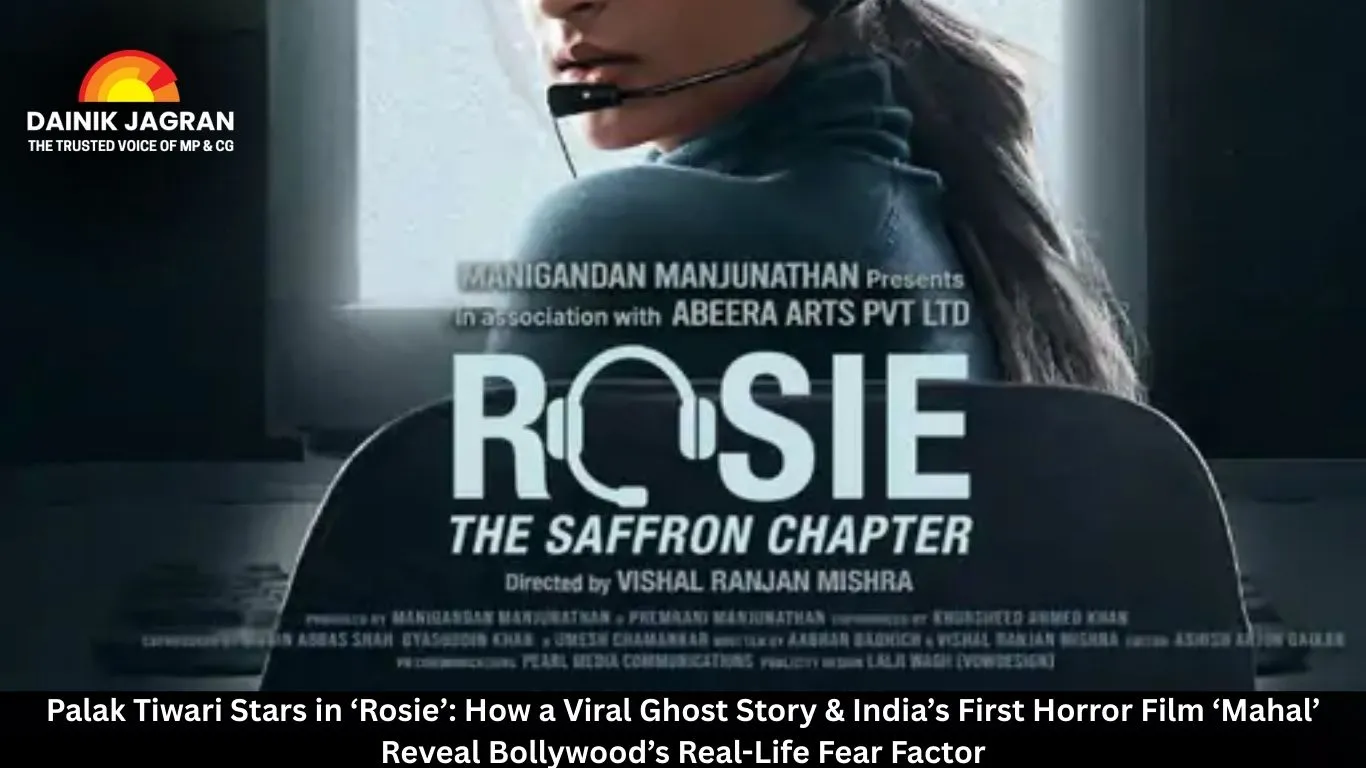
The most chilling stories often whisper, "This really happened." As Palak Tiwari, daughter of actress Shweta Tiwari, gears up for her first lead role in the horror film “Rosie: The Saffron Chapter,” the buzz isn't just about a star kid’s new project. It’s about the film’s foundation in a spooky modern urban legend—a tradition of sourcing fear from real life that dates back to the very dawn of Indian cinema.
Palak Tiwari’s ‘Rosie’ and the Office Ghost That Never Was
Set for release on March 26, 2026, Rosie stars Palak Tiwari alongside Vivek Oberoi. The plot hooks into a viral tale: a quiet, hardworking woman named Rosie vanishes from her office. When her colleagues try to find her, they are met with the impossible revelation that Rosie died years before she ever started working with them. The film explores the terrifying ambiguity of what—or who—her coworkers were interacting with all along.
This move from Palak Tiwari, previously seen in Kisi Ka Bhai Kisi Ki Jaan, into the horror genre is a savvy one. Bollywood has long known that horror rooted in alleged reality—from Ragini MMS to Stree—resonates deeply, tapping into societal superstitions and myths that linger in the collective imagination.
The Original Blueprint: ‘Mahal’ and a Real-Life Headless Horror
But this trend is far from new. To understand its power, one must look back to India’s first horror film, Mahal (1949). This classic wasn’t born from a writer’s pure imagination but from a bone-chilling, real-life experience of its star, Ashok Kumar.
The legend goes that while staying at a hill station, Kumar saw a mysterious woman in a car late at night. To his horror, he spotted a headless body beside her. The woman and the car vanished. When his servants dismissed it as a dream, a visit to the local police unveiled a darker truth: an officer recounted a nearly identical incident from 14 years prior at the same spot, involving a murder and a fatal accident.
Kamal Amrohi, the film’s writer-director, took this eerie anecdote and wove it into Mahal’s Gothic tapestry—a story of a haunted mansion, reincarnation, and a love that defies death. Without relying on gore or high-tech effects, the film used shadow, suspense, and the haunting melody of “Aayega Aanewala” (sung by a young Lata Mangeshkar) to become a monumental hit. It launched legends, cementing Madhubala’s stardom and Amrohi’s own directorial legacy.
Why Real-Life Bones Make the Best Ghost Stories
The thread connecting Palak Tiwari’s Rosie to the first horror movie Mahal is clear: a foundation in "claimed" reality. When a story carries the weight of "this might be true," it bypasses skepticism and taps directly into primal fear. It’s no longer just a movie; it’s a shared cultural whisper.
This approach gives filmmakers a powerful toolkit. The ambiguity allows them to explore psychological terror—the fear of the unknown, the unraveling of perceived reality—which is often far more lasting than any jump-scare monster.
The Verdict: Truth is Scarier Than Fiction
As Palak Tiwari steps into the world of office phantoms with Rosie, she is participating in a venerable Bollywood ritual. From Ashok Kumar’s headless vision in 1949 to today’s viral digital legends, Indian horror has consistently drawn its most potent scares from the shadows of reported reality. These stories remind us that the most persistent ghosts are the ones we half-believe could be real. The success of Rosie will likely hinge on this very same, timeless fear factor.

--------
🚨 Beat the News Rush – Join Now!
Get breaking alerts, hot exclusives, and game-changing stories instantly on your phone. No delays, no fluff – just the edge you need. ⚡
Tap to join:
🟢 WhatsApp Channel: Dainik Jagran MP CG
Crave more?
🅕 Facebook: Dainik Jagran MP CG English
🅧 Twitter (X): Dainik Jagran MP CG
🅘 Instagram: Dainik Jagran MP CG
Share the fire – keep your crew ahead! 🗞️🔥
Palak Tiwari Stars in ‘Rosie’: How a Viral Ghost Story & India’s First Horror Film ‘Mahal’ Reveal Bollywood’s Real-Life Fear Factor
Digital Desk
From a Headless Corpse to a Viral Ghost: How Real-Life Horror Has Always Haunted Bollywood
The most chilling stories often whisper, "This really happened." As Palak Tiwari, daughter of actress Shweta Tiwari, gears up for her first lead role in the horror film “Rosie: The Saffron Chapter,” the buzz isn't just about a star kid’s new project. It’s about the film’s foundation in a spooky modern urban legend—a tradition of sourcing fear from real life that dates back to the very dawn of Indian cinema.
Palak Tiwari’s ‘Rosie’ and the Office Ghost That Never Was
Set for release on March 26, 2026, Rosie stars Palak Tiwari alongside Vivek Oberoi. The plot hooks into a viral tale: a quiet, hardworking woman named Rosie vanishes from her office. When her colleagues try to find her, they are met with the impossible revelation that Rosie died years before she ever started working with them. The film explores the terrifying ambiguity of what—or who—her coworkers were interacting with all along.
This move from Palak Tiwari, previously seen in Kisi Ka Bhai Kisi Ki Jaan, into the horror genre is a savvy one. Bollywood has long known that horror rooted in alleged reality—from Ragini MMS to Stree—resonates deeply, tapping into societal superstitions and myths that linger in the collective imagination.
The Original Blueprint: ‘Mahal’ and a Real-Life Headless Horror
But this trend is far from new. To understand its power, one must look back to India’s first horror film, Mahal (1949). This classic wasn’t born from a writer’s pure imagination but from a bone-chilling, real-life experience of its star, Ashok Kumar.
The legend goes that while staying at a hill station, Kumar saw a mysterious woman in a car late at night. To his horror, he spotted a headless body beside her. The woman and the car vanished. When his servants dismissed it as a dream, a visit to the local police unveiled a darker truth: an officer recounted a nearly identical incident from 14 years prior at the same spot, involving a murder and a fatal accident.
Kamal Amrohi, the film’s writer-director, took this eerie anecdote and wove it into Mahal’s Gothic tapestry—a story of a haunted mansion, reincarnation, and a love that defies death. Without relying on gore or high-tech effects, the film used shadow, suspense, and the haunting melody of “Aayega Aanewala” (sung by a young Lata Mangeshkar) to become a monumental hit. It launched legends, cementing Madhubala’s stardom and Amrohi’s own directorial legacy.
Why Real-Life Bones Make the Best Ghost Stories
The thread connecting Palak Tiwari’s Rosie to the first horror movie Mahal is clear: a foundation in "claimed" reality. When a story carries the weight of "this might be true," it bypasses skepticism and taps directly into primal fear. It’s no longer just a movie; it’s a shared cultural whisper.
This approach gives filmmakers a powerful toolkit. The ambiguity allows them to explore psychological terror—the fear of the unknown, the unraveling of perceived reality—which is often far more lasting than any jump-scare monster.
The Verdict: Truth is Scarier Than Fiction
As Palak Tiwari steps into the world of office phantoms with Rosie, she is participating in a venerable Bollywood ritual. From Ashok Kumar’s headless vision in 1949 to today’s viral digital legends, Indian horror has consistently drawn its most potent scares from the shadows of reported reality. These stories remind us that the most persistent ghosts are the ones we half-believe could be real. The success of Rosie will likely hinge on this very same, timeless fear factor.