

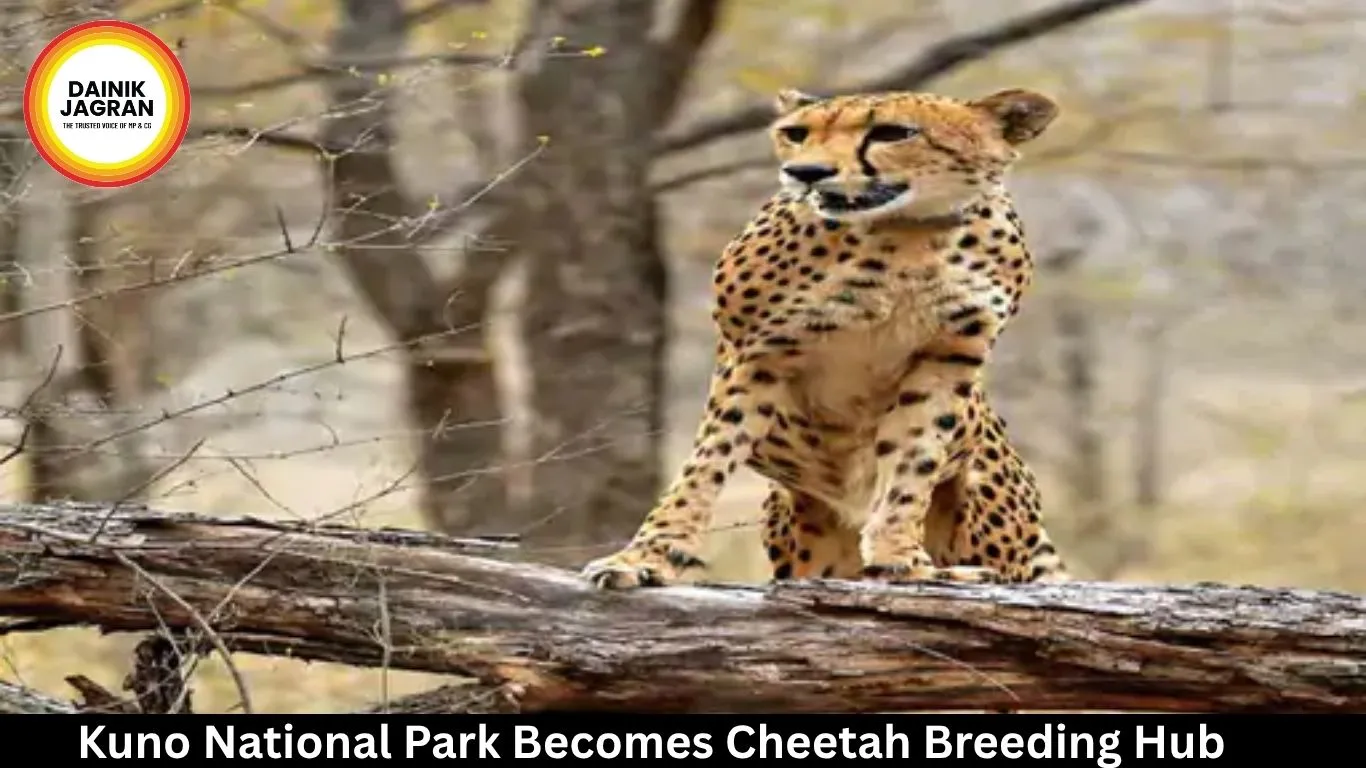
Kuno National Park Becomes Cheetah Breeding Hub
Digital Desk
Kuno National Park emerges as a cheetah breeding hub with rising numbers; plans underway to shift cheetahs to Nauradehi sanctuary.
Kuno National Park Emerges as India’s Cheetah Breeding Hub
Kuno National Park sees rise in cheetah population, plans underway to shift some to Nauradehi as part of expansion strategy
Lead Developments
Kuno National Park has emerged as a key cheetah breeding hub in India, with a steady rise in population over the past three years. According to officials, the park has recorded the birth of 45 cubs, of which 33 have survived, marking a significant milestone in the country’s ambitious cheetah reintroduction programme.
Rising Cheetah Numbers
At present, Kuno National Park houses a total of 50 cheetahs. However, only 12 are currently active in the open forest. A large number of cubs—23 in total—remain inside enclosures with their six mothers, while nine cheetahs are under quarantine as part of routine monitoring and health protocols.
Officials indicate that the population growth has pushed the park towards its carrying capacity, prompting authorities to look at alternative habitats.
Shift to Nauradehi Planned
In response to the growing numbers, preparations are underway to relocate some cheetahs to the Nauradehi Wildlife Sanctuary. In the initial phase, two male and two female cheetahs are likely to be shifted after vaccination, expected around June.
Sources said the final decision will be taken by the Cheetah Steering Committee, which is overseeing the national-level project.
New Habitat Expansion
Nauradehi Wildlife Sanctuary, spread across nearly 5,500 square kilometres, is being developed as a new cheetah habitat. It is the largest wildlife sanctuary in Madhya Pradesh and is being positioned as the third major cheetah reserve in the country.
Over the past two years, authorities have worked on strengthening prey base, surveillance systems, and habitat management. Construction of specialised enclosures is in the final stages.
Government Push
Chief Minister Mohan Yadav has already announced plans to develop Nauradehi as a dedicated cheetah habitat, underlining the state government’s focus on wildlife conservation and eco-tourism.
Officials noted that the relocation process will be carefully timed before the monsoon season to ensure animal safety and smooth transition.
Project Background
India’s cheetah reintroduction programme began with the translocation of African cheetahs to Kuno National Park. The initiative aims to restore the species, declared extinct in India decades ago, and create a sustainable population through managed breeding and habitat expansion.
With the latest births, the total number of cheetahs in the country has reached 53, reflecting gradual progress despite operational challenges.
Ecological Impact
Wildlife experts believe that expanding cheetah habitats will reduce pressure on Kuno and improve long-term survival rates. It will also help maintain ecological balance by restoring a key predator in grassland ecosystems.
The move is being seen as a critical step in scaling up conservation efforts while addressing space constraints.
What Lies Ahead
The coming months will be crucial as authorities prepare for the first phase of relocation. The success of shifting cheetahs to Nauradehi could set the stage for similar expansions in other regions.
As Kuno National Park continues to strengthen its position as a breeding hub, the focus will remain on sustainable growth, habitat management, and ensuring the long-term viability of India’s cheetah population.
--------
🚨 Beat the News Rush – Join Now!
Get breaking alerts, hot exclusives, and game-changing stories instantly on your phone. No delays, no fluff – just the edge you need. ⚡
Tap to join:
🟢 WhatsApp Channel: Dainik Jagran MP CG
Crave more?
🅕 Facebook: Dainik Jagran MP CG English
🅧 Twitter (X): Dainik Jagran MP CG
🅘 Instagram: Dainik Jagran MP CG
Share the fire – keep your crew ahead! 🗞️🔥
Kuno National Park Becomes Cheetah Breeding Hub
Digital Desk
Kuno National Park Emerges as India’s Cheetah Breeding Hub
Kuno National Park sees rise in cheetah population, plans underway to shift some to Nauradehi as part of expansion strategy
Lead Developments
Kuno National Park has emerged as a key cheetah breeding hub in India, with a steady rise in population over the past three years. According to officials, the park has recorded the birth of 45 cubs, of which 33 have survived, marking a significant milestone in the country’s ambitious cheetah reintroduction programme.
Rising Cheetah Numbers
At present, Kuno National Park houses a total of 50 cheetahs. However, only 12 are currently active in the open forest. A large number of cubs—23 in total—remain inside enclosures with their six mothers, while nine cheetahs are under quarantine as part of routine monitoring and health protocols.
Officials indicate that the population growth has pushed the park towards its carrying capacity, prompting authorities to look at alternative habitats.
Shift to Nauradehi Planned
In response to the growing numbers, preparations are underway to relocate some cheetahs to the Nauradehi Wildlife Sanctuary. In the initial phase, two male and two female cheetahs are likely to be shifted after vaccination, expected around June.
Sources said the final decision will be taken by the Cheetah Steering Committee, which is overseeing the national-level project.
New Habitat Expansion
Nauradehi Wildlife Sanctuary, spread across nearly 5,500 square kilometres, is being developed as a new cheetah habitat. It is the largest wildlife sanctuary in Madhya Pradesh and is being positioned as the third major cheetah reserve in the country.
Over the past two years, authorities have worked on strengthening prey base, surveillance systems, and habitat management. Construction of specialised enclosures is in the final stages.
Government Push
Chief Minister Mohan Yadav has already announced plans to develop Nauradehi as a dedicated cheetah habitat, underlining the state government’s focus on wildlife conservation and eco-tourism.
Officials noted that the relocation process will be carefully timed before the monsoon season to ensure animal safety and smooth transition.
Project Background
India’s cheetah reintroduction programme began with the translocation of African cheetahs to Kuno National Park. The initiative aims to restore the species, declared extinct in India decades ago, and create a sustainable population through managed breeding and habitat expansion.
With the latest births, the total number of cheetahs in the country has reached 53, reflecting gradual progress despite operational challenges.
Ecological Impact
Wildlife experts believe that expanding cheetah habitats will reduce pressure on Kuno and improve long-term survival rates. It will also help maintain ecological balance by restoring a key predator in grassland ecosystems.
The move is being seen as a critical step in scaling up conservation efforts while addressing space constraints.
What Lies Ahead
The coming months will be crucial as authorities prepare for the first phase of relocation. The success of shifting cheetahs to Nauradehi could set the stage for similar expansions in other regions.
As Kuno National Park continues to strengthen its position as a breeding hub, the focus will remain on sustainable growth, habitat management, and ensuring the long-term viability of India’s cheetah population.


