


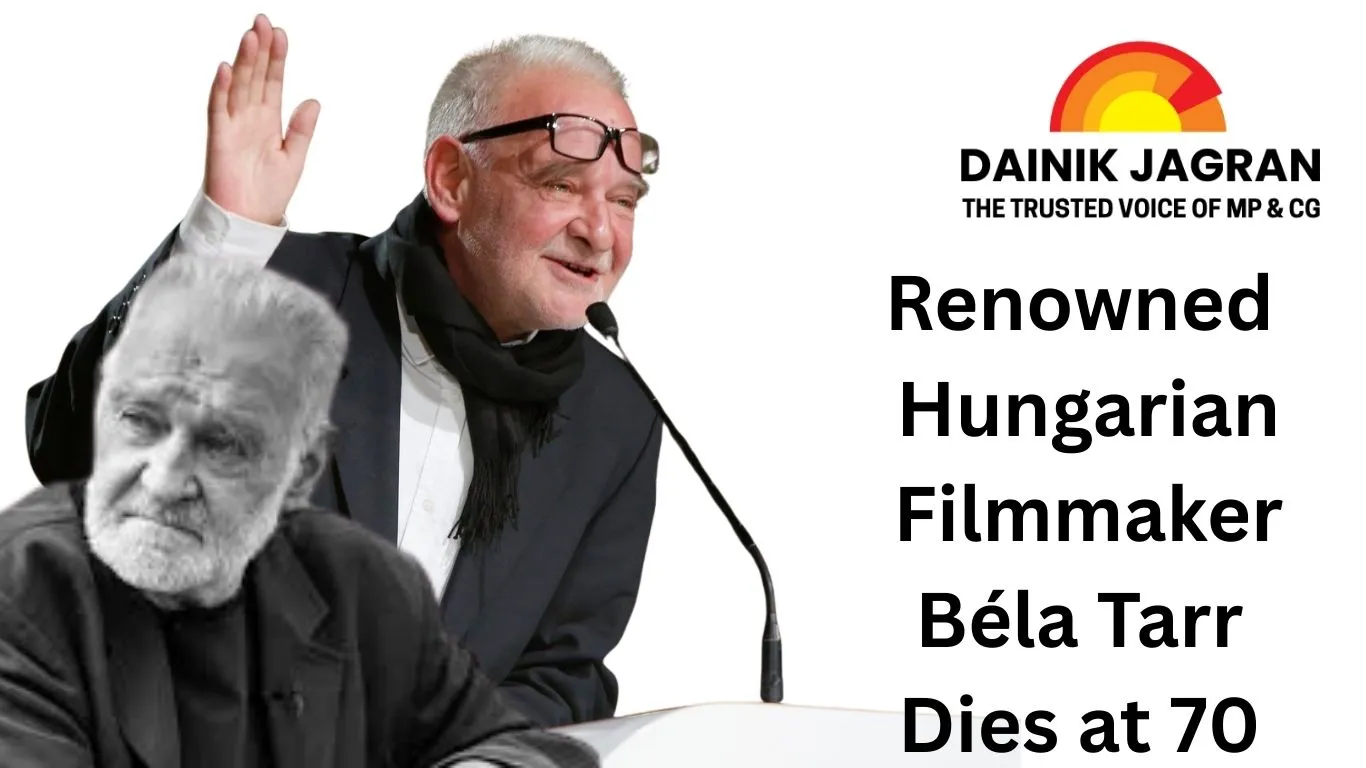
Renowned Hungarian Filmmaker Béla Tarr Dies at 70, Leaves Behind Landmark Legacy in World Cinema
Digital Desk
In a statement, the European Film Academy described Tarr as “an outstanding director and a personality with a strong political voice,” noting that he was deeply respected within the film fraternity and admired by audiences worldwide. The family has requested privacy and asked the media to refrain from seeking comments during the period of mourning.
Born in 1955 in Hungary, Tarr emerged as a filmmaker during the final decades of the communist era, using cinema as a tool to examine social stagnation, moral decay, and human resilience. He began his career at the Balázs Béla Studio and made his feature debut in 1977 with Family Nest, a stark social drama portraying the hardships of a young couple trapped in state-controlled housing. The film announced Tarr as a powerful realist voice focused on the struggles of ordinary people.
Tarr gained international recognition with Damnation (1988), a bleak meditation on obsession and despair set in a Hungarian mining town. The film marked the beginning of his long collaboration with novelist László Krasznahorkai and earned him the Best Young Filmmaker award at the European Film Awards. This partnership later produced Satantango (1994), a seven-hour black-and-white epic that cemented Tarr’s reputation as a radical innovator, and Werckmeister Harmonies (2000), which became one of the most acclaimed European films of its time.
Known for long takes, minimal dialogue, and hypnotic pacing, Tarr rejected commercial cinema in favor of films that confronted social alienation and political disillusionment. He made a total of nine feature films between 1979 and 2011, along with a television adaptation of Macbeth, documentaries, and short films.
After retiring from filmmaking in 2011, Tarr devoted himself to teaching and ran the Film Factory, an international film school based in Sarajevo. He also remained an outspoken public intellectual, openly criticizing nationalism and authoritarian politics. In a 2016 interview, he described former US President Donald Trump as a “disgrace” to the United States.
Béla Tarr’s death has prompted tributes from filmmakers and critics across the world, many hailing him as a director who expanded the moral and aesthetic boundaries of cinema. His films continue to influence generations of filmmakers seeking to explore society’s darkest truths through uncompromising art.
.jpg)




