


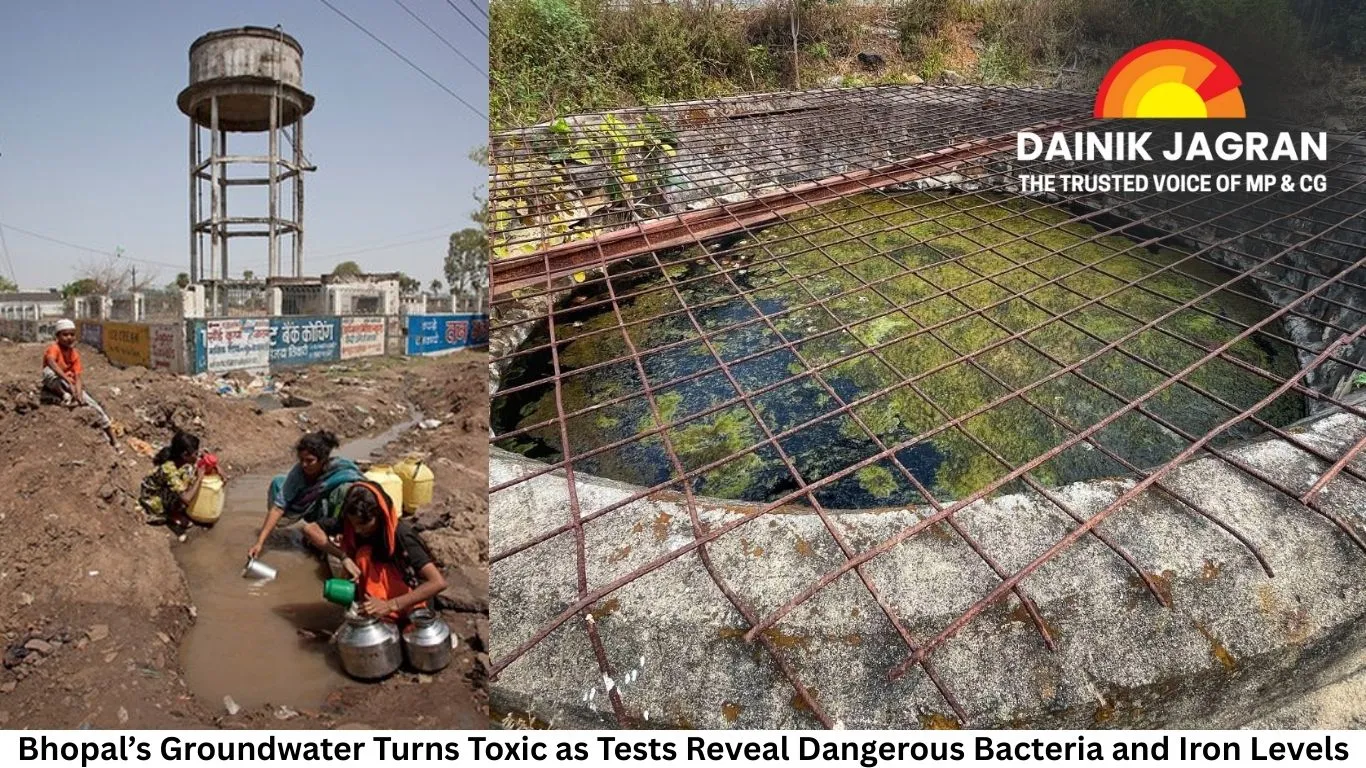
Bhopal’s Groundwater Turns Toxic as Tests Reveal Dangerous Bacteria and Iron Levels Far Above Safety Limits
Digital Desk
According to a report by the Bhopal Municipal Corporation (BMC), groundwater samples collected from handpumps and local sources show E. coli and coliform bacteria, pathogens linked to diseases such as cholera, typhoid and hepatitis-A. Alarmingly, the findings mirror contamination patterns seen recently in Indore’s Bhagirathpura area, where polluted water has been blamed for 20 deaths.
The report further reveals that iron content in groundwater is nearly 100 times higher than safe limits, alongside dangerously high levels of Total Dissolved Solids (TDS), calcium, sulfate and overall hardness. Health experts warn that prolonged consumption of such water can lead to hemochromatosis, organ damage and increased cancer risk. In many households, tap water turns reddish within minutes of storage and emits a strong, foul odour, rendering it unusable even for bathing or washing utensils.
With no safe handpumps left in Padariya, residents have become entirely dependent on water tankers for drinking. Shopkeeper Irfan Mian said the groundwater has remained unusable for nearly a decade. “We don’t drink it. Sometimes we use it only to sprinkle on the ground,” he said, displaying a glass of visibly contaminated water.
The crisis has also affected agriculture. Residents admitted they are compelled to use polluted groundwater for irrigation, contaminating fruits and vegetables that eventually reach Bhopal’s markets. “We know it’s unsafe, but we have no alternative,” said Shanti Nagar resident Mahesh Uike.
Environmental experts have traced the contamination to the Adampur landfill, where Bhopal’s municipal waste has been dumped since 2018. According to environmentalist Dr Subhash Pandey, nearly 1.4 million tonnes of garbage have accumulated at the site, generating toxic leachate that has seeped into groundwater across at least seven villages.
Reports from the Central Pollution Control Board (CPCB) and MP Pollution Control Board (MPCB) confirm elevated levels of iron and chromium, both classified as carcinogenic. A CPCB report submitted to the Supreme Court in August 2025 flagged nine out of 25 water quality parameters as extremely hazardous.
Despite repeated complaints, residents say corrective measures remain inadequate. Public health experts warn that without immediate intervention to contain landfill leakage and provide safe drinking water, the situation could escalate into a full-scale health emergency.
.jpg)




