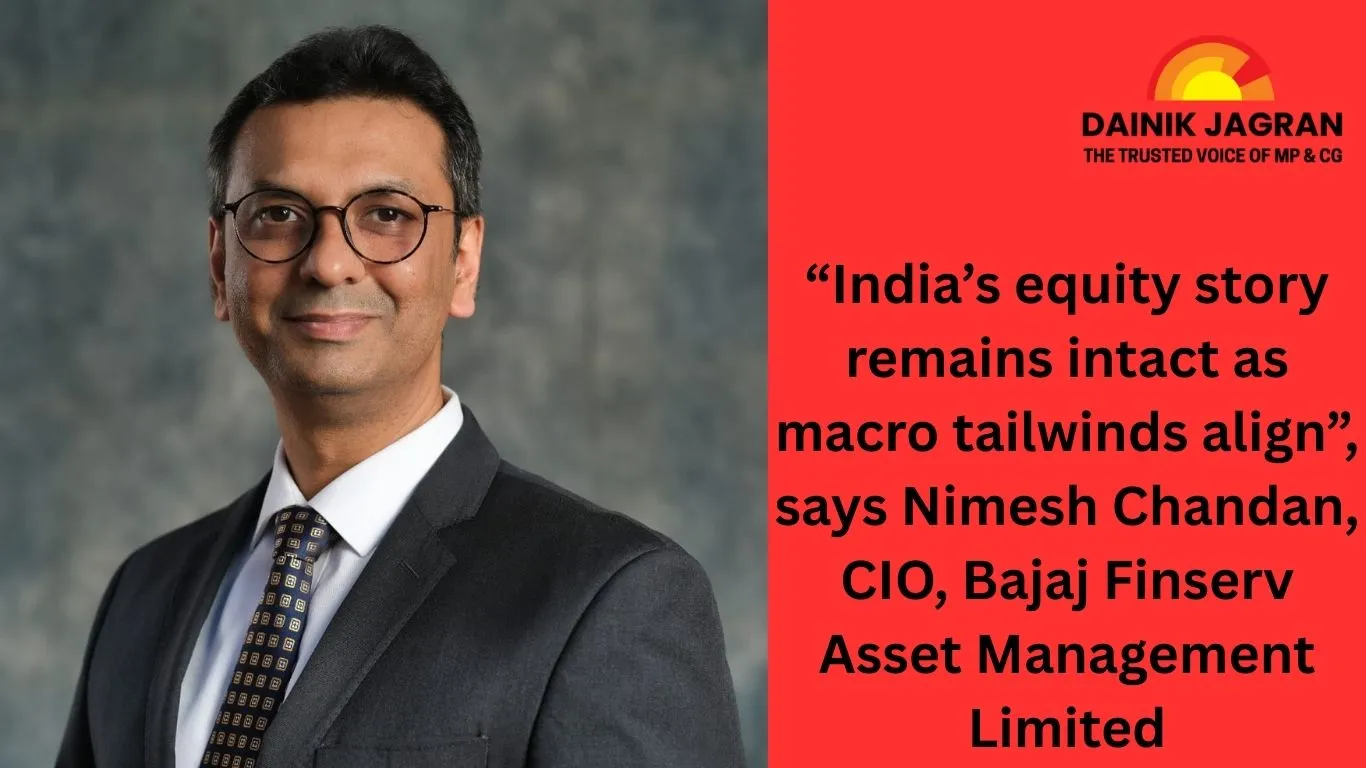
“India’s equity story remains intact as macro tailwinds align”, says Nimesh Chandan, CIO, Bajaj Finserv Asset Management Limited

Digital Desk

“India’s equity story remains intact as macro tailwinds align”, says Nimesh Chandan, CIO, Bajaj Finserv Asset Management Limited

Indian equity markets have demonstrated resilience despite geopolitical tensions, persistent FII outflows, and tariff pressures. Nimesh Chandan, CIO, Bajaj Finserv Asset Management Limited, describes the market as a “coiled spring,” indicating that while large and mid-cap indices have gone up since September, a full-scale “melt-up” is yet to arrive.

Describing the market’s structural strength, Nimesh said, “Imagine when one by one these uncertainties unfold, where the market could be.” He attributed the muted small-cap performance to investor behaviour and selective profit booking, noting that many retail investors exited positions after the post covid rally ahead of another volatile cycle.

Following the recent market correction, Chandan believes that select opportunities within the small-cap segment warrant closer attention. With large caps gaining and small caps correcting, valuations have come at a median- creating a window to revisit small cap investments. However, a disciplined and selective approach is essential to identify the appropriate companies.

Introducing his concept of ‘deworrification’, Nimesh highlights how shifts in investor sentiment can significantly impact market valuations. When concerns dominate, valuations tend to compress despite stable fundamentals. Deworrification drives the valuations higher. Key potential triggers for this in India include progress on trade deals with the US and EU and a moderately depreciated rupee that could enhance export competitiveness.

On artificial intelligence, Chandan positioned the theme as a structural growth driver rather than a speculative excess. According to Nimesh, the comparison of AI with past market bubbles is misplaced, given the underlying quality of businesses operating in this space. “These companies are profitable and earning higher returns than their cost of capital,” he said, adding that while growth disappointments could lead to corrections, that alone would not justify calling it a bubble.

Nimesh notes that India’s role in the AI value chain is of the diversification benefits it offers alongside global exposure. “If AI is the theme, India is the best Diversification”, he said.

On precious metals, Chandan observes that recent price movements in gold have been driven more by cyclical factors than by a fundamental shift in long-term demand. Periods of geopolitical and macroeconomic uncertainty tend to elevate gold’s appeal as a safety asset, leading to temporary premiums in pricing.

“Whenever people are scared or there is uncertainty, there is a certain premium that gold gets,” he added.

Looking ahead to 2026, Nimesh highlighted consumption growth as a key driver for the domestic economy, supported by multiple macro tailwinds including tax relief, lower indirect taxes, easing interest rates and rising household wealth. “This combination creates a compelling environment for selective equity investing,” he concluded.


--------

🚨 Beat the News Rush – Join Now!

Get breaking alerts, hot exclusives, and game-changing stories instantly on your phone. No delays, no fluff – just the edge you need. ⚡

Tap to join: 

🟢 WhatsApp Channel: Dainik Jagran MP CG

Crave more?

🅕 Facebook: Dainik Jagran MP CG English

🅧 Twitter (X): Dainik Jagran MP CG

🅘 Instagram: Dainik Jagran MP CG

Share the fire – keep your crew ahead! 🗞️🔥

english.dainikjagranmpcg.com
03 Jan 2026 By Nitin Trivedi

“India’s equity story remains intact as macro tailwinds align”, says Nimesh Chandan, CIO, Bajaj Finserv Asset Management Limited

Digital Desk

Describing the market’s structural strength, Nimesh said, “Imagine when one by one these uncertainties unfold, where the market could be.” He attributed the muted small-cap performance to investor behaviour and selective profit booking, noting that many retail investors exited positions after the post covid rally ahead of another volatile cycle.

Following the recent market correction, Chandan believes that select opportunities within the small-cap segment warrant closer attention. With large caps gaining and small caps correcting, valuations have come at a median- creating a window to revisit small cap investments. However, a disciplined and selective approach is essential to identify the appropriate companies.

Introducing his concept of ‘deworrification’, Nimesh highlights how shifts in investor sentiment can significantly impact market valuations. When concerns dominate, valuations tend to compress despite stable fundamentals. Deworrification drives the valuations higher. Key potential triggers for this in India include progress on trade deals with the US and EU and a moderately depreciated rupee that could enhance export competitiveness.

On artificial intelligence, Chandan positioned the theme as a structural growth driver rather than a speculative excess. According to Nimesh, the comparison of AI with past market bubbles is misplaced, given the underlying quality of businesses operating in this space. “These companies are profitable and earning higher returns than their cost of capital,” he said, adding that while growth disappointments could lead to corrections, that alone would not justify calling it a bubble.

Nimesh notes that India’s role in the AI value chain is of the diversification benefits it offers alongside global exposure. “If AI is the theme, India is the best Diversification”, he said.

On precious metals, Chandan observes that recent price movements in gold have been driven more by cyclical factors than by a fundamental shift in long-term demand. Periods of geopolitical and macroeconomic uncertainty tend to elevate gold’s appeal as a safety asset, leading to temporary premiums in pricing.

“Whenever people are scared or there is uncertainty, there is a certain premium that gold gets,” he added.

Looking ahead to 2026, Nimesh highlighted consumption growth as a key driver for the domestic economy, supported by multiple macro tailwinds including tax relief, lower indirect taxes, easing interest rates and rising household wealth. “This combination creates a compelling environment for selective equity investing,” he concluded.

https://english.dainikjagranmpcg.com/business/%E2%80%9Cindia%E2%80%99s-equity-story-remains-intact-as-macro-tailwinds-align%E2%80%9D-says/article-11754
Tags:

Trending News