


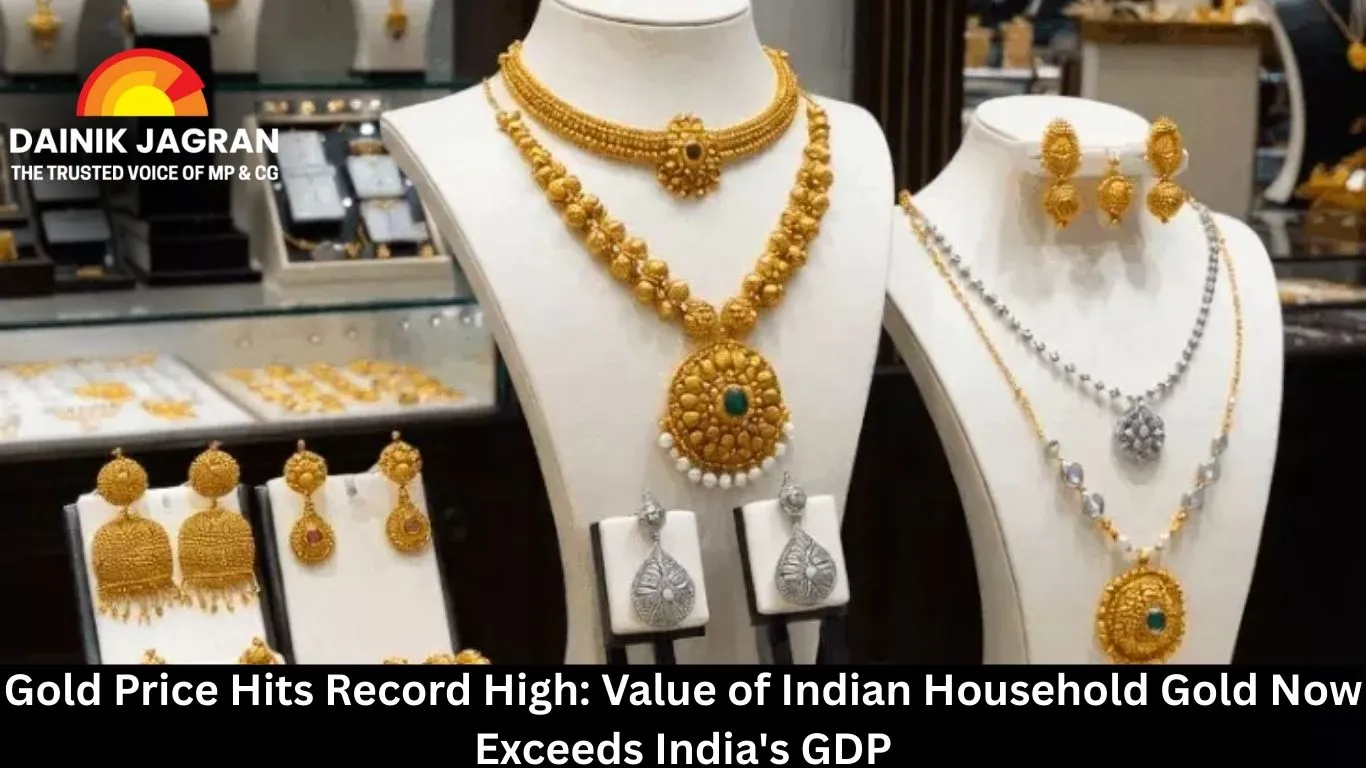
Gold Price Hits Record High: Value of Indian Household Gold Now Exceeds India's GDP
Digital Desk
Gold Price Hits Record High: Value of Indian Household Gold Now Exceeds India's GDP
In a stunning economic revelation, the total value of gold held by Indian families has now surpassed the entire Gross Domestic Product (GDP) of the country. This milestone comes asgold prices and silver rates skyrocketed to unprecedented levels for the fifth consecutive trading day on December 29.
According to the India Bullion and Jewelers Association (IBJA), gold surged by ₹205 to reach ₹1,38,161 per 10 grams. Meanwhile, silver experienced a monumental single-day jump, climbing over ₹15,000 per kg to cross the ₹2.43 lakh mark for the first time.
A Staggering Comparison: Gold Stock vs. Economic Flow
Analysts report that with international prices soaring, the value of gold held in Indian homes has crossed the $5 trillion (approx. ₹450 lakh crore) mark. This figure towers over India's current GDP, which the International Monetary Fund (IMF) estimates at about $4.1 trillion.
M. Sharma, Chief Economist at Infomerics Valuation and Ratings, explains the significance: "GDP is a flow variable, constantly changing, while gold holding is a stock. This comparison underscores the immense cultural, financial, and psychological importance of gold in India. In times of crisis, Indians' trust in gold is absolute."
Why Are Prices Skyrocketing?
Market experts point to heavy institutional buying as a key driver. Central banks globally, notably the People's Bank of China, are aggressively accumulating gold to diversify reserves and hedge against geopolitical risks. The Reserve Bank of India (RBI) has also added 75 tonnes to its reserves since 2024, bringing its total stash to 880 tonnes.
The "Idle" Gold Dilemma and India's Love Affair
Despite record highs, a paradox exists. A report by MK Global notes that 75-80% of Indian gold is held as jewellery—viewed as long-term saving and tradition, not a liquid asset. This means the soaringgold price doesn't necessarily translate into increased consumer spending or a "wealth effect" for daily economics.
This presents a challenge: a vast portion of household wealth remains an "idle asset," generating no income. While the government promotes financial alternatives like Sovereign Gold Bonds (SGBs) and Gold ETFs, the deep-seated cultural preference for physical gold, especially jewellery, remains unshaken. India, the world's second-largest gold consumer, still accounts for 26% of global demand.
What This Means for You
The record-breaking rally highlights gold's enduring role as a safe haven. For investors, it reinforces the importance of strategic allocation. While physical gold offers security, experts suggest considering digital or paper gold for better liquidity and potential earnings.
As prices touch new peaks, the story is clear: in India, gold is much more than an investment—it's a cornerstone of financial identity, now valued more than the nation's entire annual economic output.



.jpg)




