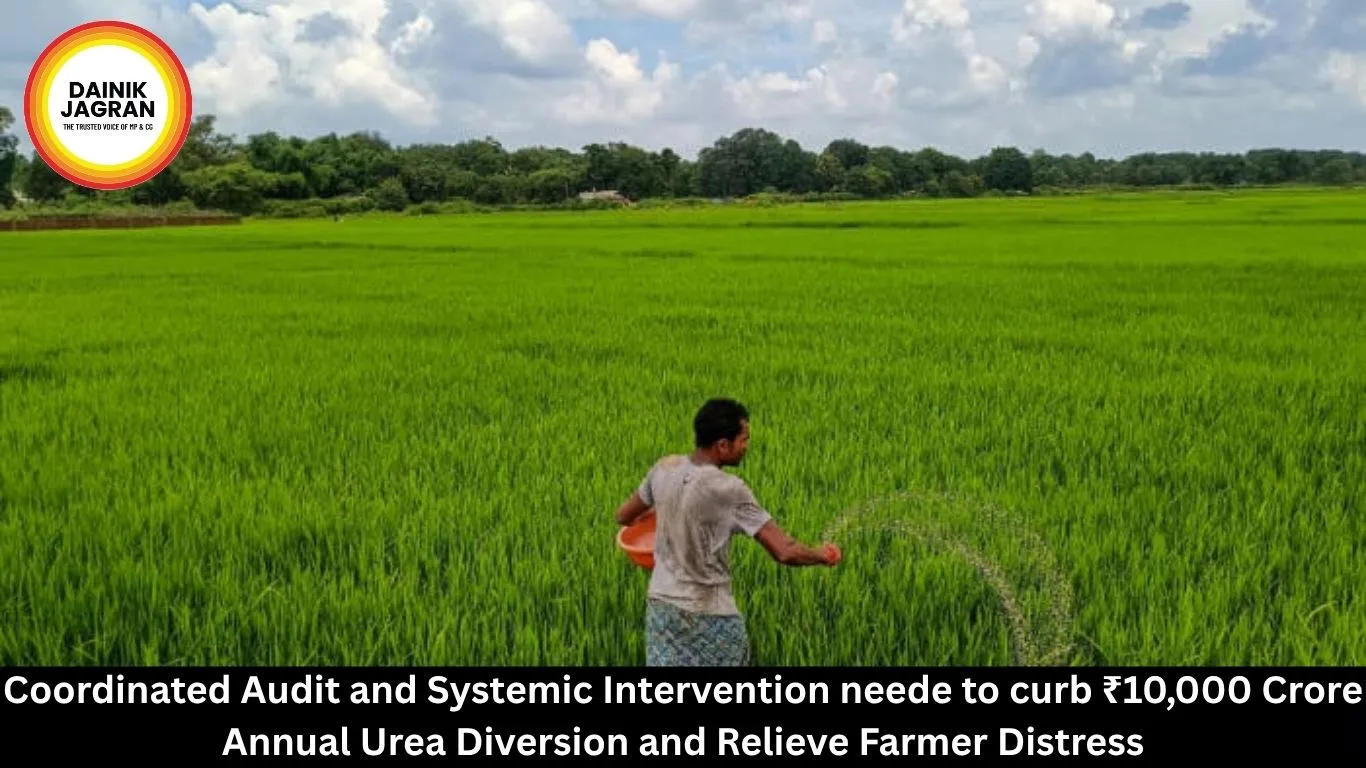
Coordinated Audit and Systemic Intervention neede to curb ₹10,000 Crore Annual Urea Diversion and Relieve Farmer Distress

Digital Desk

Coordinated Audit and Systemic Intervention neede to curb ₹10,000 Crore Annual Urea Diversion and Relieve Farmer Distress

A grave concern regarding the ongoing, large-scale diversion of agriculture-grade urea for industrial purposes. Despite the implementation of 100% Neem Coating, estimates suggest that massive quantities of subsidized urea are being diverted, costing the national exchequer approximately ₹10,000 crore annually. This systematic diversion directly impacts the farming community, resulting in artificial shortages, increased input costs, and declining crop yields during crucial sowing seasons. 

Direct Impact on Farmers due to diversion leads to artificial scarcities, forcing farmers to stand in long queues or pay premium prices to informal lenders. Systematic diversion of subsidized Agricultural Urea in wood panel manufacturing. Estimated 95% of domestic wood panel manufacturers procure illicitly blended Urea-Formaldehyde (UF) resin.


Approximately 10 Lakh Metric Tonnes (MT) of agricultural urea diverted annually. Total quantifiable loss of ₹23,400 Crore per annum across central subsidy and GST revenue. Data-driven, threshold-based compliance mandate targeting manufacturers with turnover > ₹200 Crore.


Financial loss to Government exchequer


There is an ongoing, large-scale diversion of agriculture-grade urea for industrial purposes. Despite the implementation of 100% Neem Coating, estimates suggest that massive quantities of subsidized urea are being diverted, costing the national exchequer approximately ₹10,000 crore annually. 


This systematic diversion directly impacts the farming community, resulting in artificial shortages, increased input costs, and declining crop yields during crucial sowing seasons.  The Scale and Source of Leakage


       Annual Diversion: Approximately 10 lakh tonnes of agriculture-grade urea is estimated to be diverted every year.

       Industrial Misuse: Subsidised urea is often diverted to industries such as plywood, resin, glue, crockery, and cattle feed.

     Cost Disparity: While the market cost of a 45kg bag is around ₹ 4,000 it is sold to farmers at a statutorily notified price of ₹242 (exclusive of taxes), creating a massive incentive for black marketing. 


Direct Impact on Farmers


 Supply Shortages: Diversion leads to artificial scarcities, forcing farmers to stand in long queues or pay premium prices to informal lenders.

Soil Health Degradation: The "ridiculously cheap" price of urea encourages chronic over-application. This has distorted the ideal N:P:K Nitrogen:Phosphorus:Potassium) ratio from 4:2:1 to nearly 10.9:4.1:1.68, leading to acidified soils and declining yields.

 Financial Exclusion: Large portions of the ₹1.9 trillion subsidy (FY26 estimate) are "literally going up in the air," as plants absorb only about 40% of applied urea, while the rest leaches into groundwater. 

An immediate intervention required from Government of India:


Coordinated National Audit: Initiate a high-level, coordinated, and time-bound audit (involving CAG and independent agencies) to track the movement of urea from manufacturers to the final farmer-consumer, specifically identifying diversion points.

Systemic Intervention in Supply Chain: Strengthen the Integrated Fertilizer Management System (iFMS) to provide real-time tracking of POS (Point of Sale) machines to catch anomalous purchases.

Strict Punitive Action: Impose stringent criminal penalties under the Essential Commodities Act on dealers and industrial units involved in the black marketing of subsidized urea.

Strengthening Direct Benefit Transfer (DBT): Accelerate the transition to a direct subsidy transfer model to farmers, eliminating the middleman who facilitates the diversion. 



--------

🚨 Beat the News Rush – Join Now!

Get breaking alerts, hot exclusives, and game-changing stories instantly on your phone. No delays, no fluff – just the edge you need. ⚡

Tap to join: 

🟢 WhatsApp Channel: Dainik Jagran MP CG

Crave more?

🅕 Facebook: Dainik Jagran MP CG English

🅧 Twitter (X): Dainik Jagran MP CG

🅘 Instagram: Dainik Jagran MP CG

Share the fire – keep your crew ahead! 🗞️🔥

english.dainikjagranmpcg.com
25 May 2026 By Abhishek Joshi

Coordinated Audit and Systemic Intervention neede to curb ₹10,000 Crore Annual Urea Diversion and Relieve Farmer Distress

Digital Desk

Direct Impact on Farmers due to diversion leads to artificial scarcities, forcing farmers to stand in long queues or pay premium prices to informal lenders. Systematic diversion of subsidized Agricultural Urea in wood panel manufacturing. Estimated 95% of domestic wood panel manufacturers procure illicitly blended Urea-Formaldehyde (UF) resin.


Approximately 10 Lakh Metric Tonnes (MT) of agricultural urea diverted annually. Total quantifiable loss of ₹23,400 Crore per annum across central subsidy and GST revenue. Data-driven, threshold-based compliance mandate targeting manufacturers with turnover > ₹200 Crore.


Financial loss to Government exchequer


There is an ongoing, large-scale diversion of agriculture-grade urea for industrial purposes. Despite the implementation of 100% Neem Coating, estimates suggest that massive quantities of subsidized urea are being diverted, costing the national exchequer approximately ₹10,000 crore annually. 


This systematic diversion directly impacts the farming community, resulting in artificial shortages, increased input costs, and declining crop yields during crucial sowing seasons.  The Scale and Source of Leakage


       Annual Diversion: Approximately 10 lakh tonnes of agriculture-grade urea is estimated to be diverted every year.

       Industrial Misuse: Subsidised urea is often diverted to industries such as plywood, resin, glue, crockery, and cattle feed.

     Cost Disparity: While the market cost of a 45kg bag is around ₹ 4,000 it is sold to farmers at a statutorily notified price of ₹242 (exclusive of taxes), creating a massive incentive for black marketing. 


Direct Impact on Farmers


 Supply Shortages: Diversion leads to artificial scarcities, forcing farmers to stand in long queues or pay premium prices to informal lenders.

Soil Health Degradation: The "ridiculously cheap" price of urea encourages chronic over-application. This has distorted the ideal N:P:K Nitrogen:Phosphorus:Potassium) ratio from 4:2:1 to nearly 10.9:4.1:1.68, leading to acidified soils and declining yields.

 Financial Exclusion: Large portions of the ₹1.9 trillion subsidy (FY26 estimate) are "literally going up in the air," as plants absorb only about 40% of applied urea, while the rest leaches into groundwater. 

An immediate intervention required from Government of India:


Coordinated National Audit: Initiate a high-level, coordinated, and time-bound audit (involving CAG and independent agencies) to track the movement of urea from manufacturers to the final farmer-consumer, specifically identifying diversion points.

Systemic Intervention in Supply Chain: Strengthen the Integrated Fertilizer Management System (iFMS) to provide real-time tracking of POS (Point of Sale) machines to catch anomalous purchases.

Strict Punitive Action: Impose stringent criminal penalties under the Essential Commodities Act on dealers and industrial units involved in the black marketing of subsidized urea.

Strengthening Direct Benefit Transfer (DBT): Accelerate the transition to a direct subsidy transfer model to farmers, eliminating the middleman who facilitates the diversion. 



https://english.dainikjagranmpcg.com/business/coordinated-audit-and-systemic-intervention-neede-to-curb-%E2%82%B910000-crore/article-19212
Tags:

Latest News