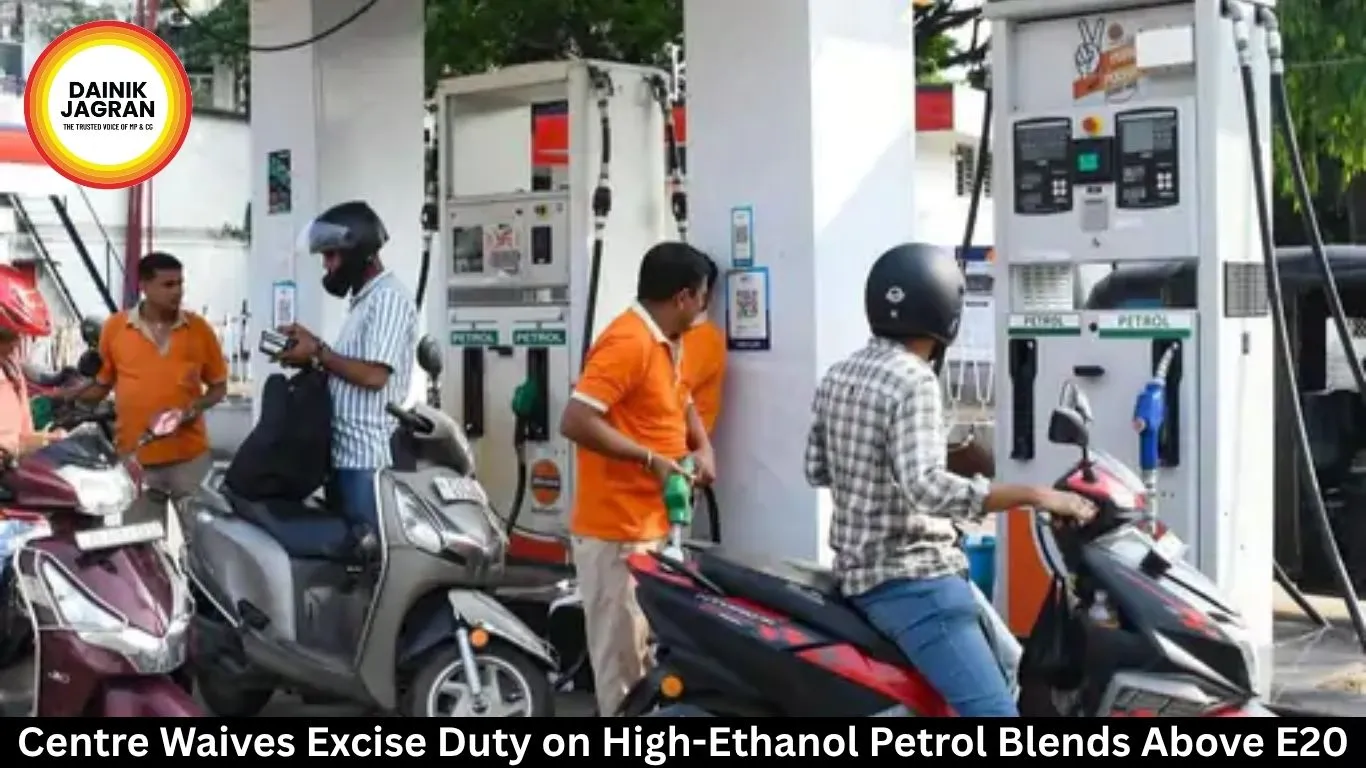
Excise Duty Waived on High-Ethanol Petrol Blends Above E20

Digital Desk

Excise Duty Waived on High-Ethanol Petrol Blends Above E20

Government exempts E22 to E30 ethanol petrol blends from excise duty to reduce crude oil imports and promote cleaner fuel adoption in India.


The excise duty exemption on high-ethanol petrol blends ranging from E22 to E30 is aimed at reducing crude oil imports and accelerating India’s clean energy transition.

India has taken another step towards expanding the use of biofuels, with the Centre announcing a complete excise duty exemption on petrol blended with 22% to 30% ethanol. The move is expected to encourage oil marketing companies to adopt higher ethanol blending levels beyond the current E20 standard and support the government’s broader goal of reducing dependence on imported crude oil.

The exemption applies to new fuel variants including E22, E25, E27 and E30. However, the widely available E20 fuel, which contains 20% ethanol, will not receive any additional tax relief under the latest notification.

Push For Higher Blending

The decision comes as India seeks to cut its reliance on imported crude oil, which currently accounts for a significant share of the country’s energy requirements. Officials say incentivising higher ethanol blending can help reduce foreign exchange outflows while promoting cleaner-burning fuels.

The excise duty waiver is being viewed as a fiscal incentive designed to encourage fuel retailers and refiners to gradually move towards higher ethanol-content petrol. Industry observers note that this is the first major tax-related support announced specifically for ethanol blends above E20.

What Is Ethanol?

Ethanol is an alcohol-based biofuel produced through the fermentation of sugar and starch-rich agricultural feedstocks. In India, sugarcane remains the primary source of ethanol production, though maize, damaged potatoes, cassava and certain agricultural residues are also used.

First-generation ethanol is typically derived from sugarcane juice, sweet sorghum, maize and similar crops. Second-generation ethanol is produced from agricultural waste such as rice straw, wheat straw, corn cobs and bamboo. Research is also underway globally on third-generation biofuels made from algae.

Standards Already In Place

The tax exemption follows recent regulatory groundwork. The Bureau of Indian Standards (BIS) had earlier notified fuel quality standards for E22, E25, E27 and E30 petrol blends.

Under the standard designated as IS 19850:2026, which came into effect on May 15, 2026, specifications related to ethanol content, octane ratings, sulphur limits, testing procedures and safety requirements have already been laid down. With both technical standards and fiscal incentives now in place, the pathway for introducing higher ethanol blends has become clearer.

Ethanol Programme Gains Momentum

India’s ethanol blending programme has progressed faster than originally planned. Under the amended National Policy on Biofuels, the target of achieving 20% ethanol blending in petrol was advanced from 2030 to the Ethanol Supply Year (ESY) 2025-26.

Government-owned oil companies had achieved the 10% blending milestone ahead of schedule in 2022, signalling strong growth in ethanol supply and infrastructure. The latest policy move indicates that authorities are now preparing for the next phase of the programme.

Concerns Over Vehicles

The expansion of ethanol blending has not been without debate. As E20 fuel became more widely available, some vehicle owners raised concerns regarding fuel efficiency, engine compatibility and wear on older vehicle components.

The issue also reached the courts. In 2025, the Supreme Court dismissed a petition challenging the nationwide rollout of E20 fuel. The government argued that the policy had been implemented after extensive evaluation and would benefit both energy security and agricultural stakeholders, particularly sugarcane farmers.

Mileage And Pricing Questions

Automobile manufacturers have acknowledged that some older vehicles may experience a slight reduction in mileage when operating on higher ethanol blends. However, industry bodies have maintained that approved ethanol blends do not pose safety concerns for compatible vehicles.

At the same time, consumers expecting cheaper fuel prices may not see immediate benefits. Government data indicates that ethanol procurement costs have, in some cases, exceeded the cost of refined petrol. As a result, higher ethanol blending does not automatically translate into lower retail fuel prices.

The latest excise duty exemption is therefore expected to serve primarily as a long-term energy and environmental policy measure rather than a direct fuel-price relief initiative. As India expands its ethanol blending programme, the success of higher-ethanol petrol blends will depend on fuel availability, vehicle compatibility and sustained domestic ethanol production.


 

--------

๐Ÿšจ Beat the News Rush โ€“ Join Now!

Get breaking alerts, hot exclusives, and game-changing stories instantly on your phone. No delays, no fluff โ€“ just the edge you need. โšก

Tap to join:ย 

๐ŸŸข WhatsApp Channel: Dainik Jagran MP CG

Crave more?

๐Ÿ…• Facebook: Dainik Jagran MP CG English

๐Ÿ…ง Twitter (X): Dainik Jagran MP CG

๐Ÿ…˜ Instagram: Dainik Jagran MP CG

Share the fire โ€“ keep your crew ahead! ๐Ÿ—ž๏ธ๐Ÿ”ฅ

english.dainikjagranmpcg.com
11 Jun 2026 By Abhishek Joshi

Excise Duty Waived on High-Ethanol Petrol Blends Above E20

Digital Desk

The excise duty exemption on high-ethanol petrol blends ranging from E22 to E30 is aimed at reducing crude oil imports and accelerating India’s clean energy transition.

India has taken another step towards expanding the use of biofuels, with the Centre announcing a complete excise duty exemption on petrol blended with 22% to 30% ethanol. The move is expected to encourage oil marketing companies to adopt higher ethanol blending levels beyond the current E20 standard and support the government’s broader goal of reducing dependence on imported crude oil.

The exemption applies to new fuel variants including E22, E25, E27 and E30. However, the widely available E20 fuel, which contains 20% ethanol, will not receive any additional tax relief under the latest notification.

Push For Higher Blending

The decision comes as India seeks to cut its reliance on imported crude oil, which currently accounts for a significant share of the country’s energy requirements. Officials say incentivising higher ethanol blending can help reduce foreign exchange outflows while promoting cleaner-burning fuels.

The excise duty waiver is being viewed as a fiscal incentive designed to encourage fuel retailers and refiners to gradually move towards higher ethanol-content petrol. Industry observers note that this is the first major tax-related support announced specifically for ethanol blends above E20.

What Is Ethanol?

Ethanol is an alcohol-based biofuel produced through the fermentation of sugar and starch-rich agricultural feedstocks. In India, sugarcane remains the primary source of ethanol production, though maize, damaged potatoes, cassava and certain agricultural residues are also used.

First-generation ethanol is typically derived from sugarcane juice, sweet sorghum, maize and similar crops. Second-generation ethanol is produced from agricultural waste such as rice straw, wheat straw, corn cobs and bamboo. Research is also underway globally on third-generation biofuels made from algae.

Standards Already In Place

The tax exemption follows recent regulatory groundwork. The Bureau of Indian Standards (BIS) had earlier notified fuel quality standards for E22, E25, E27 and E30 petrol blends.

Under the standard designated as IS 19850:2026, which came into effect on May 15, 2026, specifications related to ethanol content, octane ratings, sulphur limits, testing procedures and safety requirements have already been laid down. With both technical standards and fiscal incentives now in place, the pathway for introducing higher ethanol blends has become clearer.

Ethanol Programme Gains Momentum

India’s ethanol blending programme has progressed faster than originally planned. Under the amended National Policy on Biofuels, the target of achieving 20% ethanol blending in petrol was advanced from 2030 to the Ethanol Supply Year (ESY) 2025-26.

Government-owned oil companies had achieved the 10% blending milestone ahead of schedule in 2022, signalling strong growth in ethanol supply and infrastructure. The latest policy move indicates that authorities are now preparing for the next phase of the programme.

Concerns Over Vehicles

The expansion of ethanol blending has not been without debate. As E20 fuel became more widely available, some vehicle owners raised concerns regarding fuel efficiency, engine compatibility and wear on older vehicle components.

The issue also reached the courts. In 2025, the Supreme Court dismissed a petition challenging the nationwide rollout of E20 fuel. The government argued that the policy had been implemented after extensive evaluation and would benefit both energy security and agricultural stakeholders, particularly sugarcane farmers.

Mileage And Pricing Questions

Automobile manufacturers have acknowledged that some older vehicles may experience a slight reduction in mileage when operating on higher ethanol blends. However, industry bodies have maintained that approved ethanol blends do not pose safety concerns for compatible vehicles.

At the same time, consumers expecting cheaper fuel prices may not see immediate benefits. Government data indicates that ethanol procurement costs have, in some cases, exceeded the cost of refined petrol. As a result, higher ethanol blending does not automatically translate into lower retail fuel prices.

The latest excise duty exemption is therefore expected to serve primarily as a long-term energy and environmental policy measure rather than a direct fuel-price relief initiative. As India expands its ethanol blending programme, the success of higher-ethanol petrol blends will depend on fuel availability, vehicle compatibility and sustained domestic ethanol production.

 

https://english.dainikjagranmpcg.com/business/excise-duty-waived-on-high-ethanol-petrol-blends-above-e20/article-20005

Related Posts

Latest News