


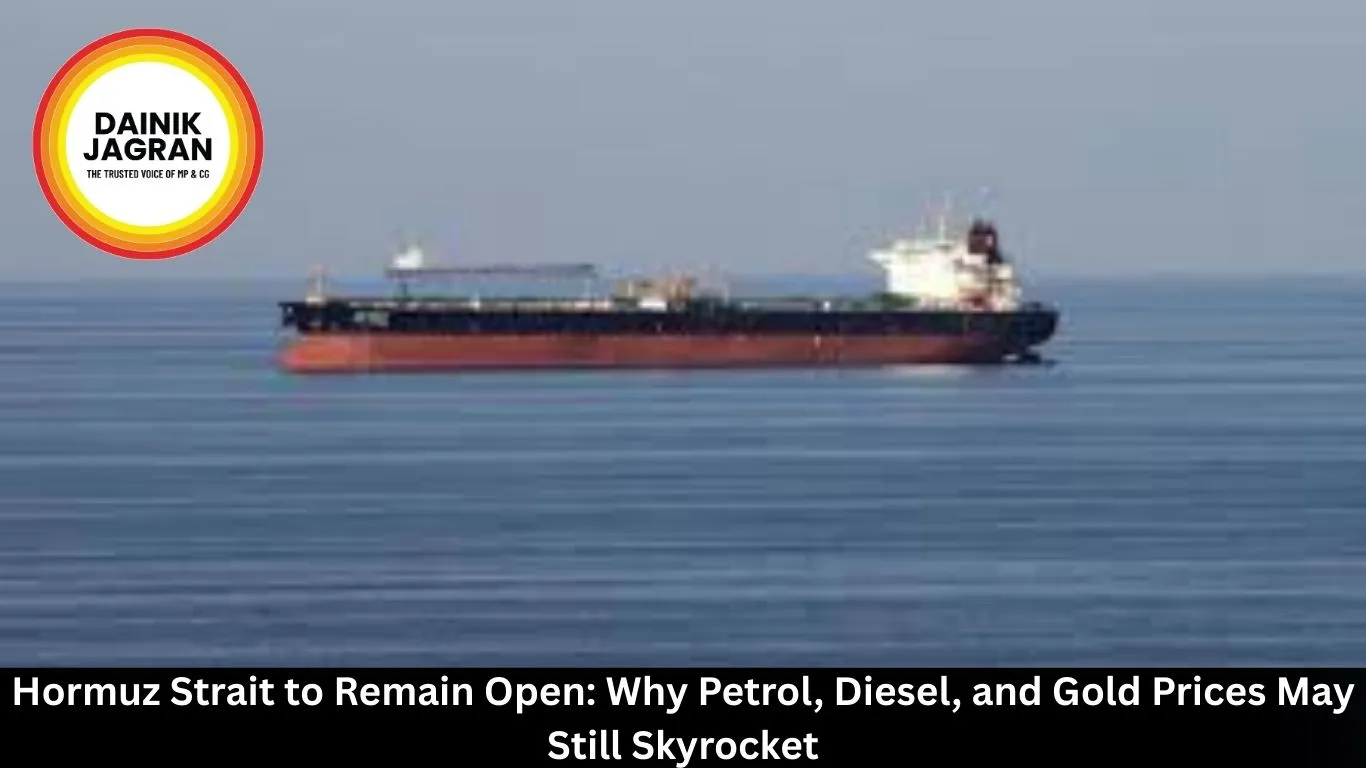
Hormuz Strait to Remain Open: Why Petrol, Diesel, and Gold Prices May Still Skyrocket
Digital Desk
The global energy market breathed a cautious sigh of relief today after Iran’s Foreign Minister, Abbas Araghchi, confirmed that Tehran currently has no intention of closing the Hormuz Strait. This statement comes at a moment of extreme geopolitical fragility, following the death of Iran’s Supreme Leader in a US-led attack.
While the "nuclear option" of blocking the world’s most vital oil artery is off the table for now, the ripple effects of the conflict are already reaching Indian households. Experts warn that even with an open waterway, a significant hike in petrol, diesel, and gold prices is looming on the horizon.
The Crude Reality: Why Oil Prices Remain Volatile
The Hormuz Strait is a narrow 167 km waterway through which nearly 20% of the world’s petroleum passes. For India, the stakes are even higher; 80% of our oil is imported, with half of that volume traversing this specific route.
Even without an official blockade, three factors are driving crude oil toward the $100 per barrel mark:
-
Shadow Attacks on Tankers: Recent strikes on three vessels near the Persian Gulf have spooked shipping giants. If tankers continue to avoid the route due to safety concerns, the supply chain breaks just as effectively as a physical blockade.
-
Skyrocketing Insurance Costs: "War risk insurance" and freight charges have surged. These "hidden" costs are passed directly to the consumer at the pump.
-
Market Sentiment: Markets trade on fear. As long as tensions between Iran, Israel, and the US remain high, crude prices will maintain a "war premium."
Impact on Your Pocket: Petrol and Diesel Forecast
In cities like Delhi, the current stability of fuel prices is under threat. If crude oil sustains its climb toward $100, analysts predict a jump of ₹4 to ₹5 per litre in domestic fuel rates.
| City (Example) | Current Price (Approx.) | Potential New Price |
| Petrol (Delhi) | ₹95 | ₹100 |
| Diesel (Delhi) | ₹88 | ₹92 |
While oil marketing companies (OMCs) technically have the freedom to revise prices daily, the final burden on the public often depends on whether the central government chooses to slash excise duties to absorb the shock.
Gold as a Safe Haven: Prices Heading Toward ₹1.90 Lakh?
In times of military escalation, investors flee the volatile stock market and seek refuge in "safe-haven" assets. Commodity expert Ajay Kedia suggests that gold could see an unprecedented rally.
Current projections indicate gold could rise from ₹1.60 lakh to ₹1.90 lakh per 10 grams, while silver could touch a staggering ₹3.50 lakh per kilo. For Indian households, this turns jewelry and gold investments into high-value assets but makes new purchases significantly more expensive.
Why Iran is Hesitant to Close the Strait
Closing the Hormuz Strait is a double-edged sword. Doing so would effectively cripple Iran’s own economy by halting its 1.7 million barrels of daily exports. Furthermore, it would alienate China—Iran's largest oil buyer.
To mitigate the risk, countries like Saudi Arabia are pivoting to the "East-West Pipeline," which bypasses the Strait to reach the Red Sea. Similarly, India is diversifying its suppliers and preparing to tap into its Strategic Petroleum Reserves (SPR) to ensure energy security during these turbulent times.
.jpg)




