


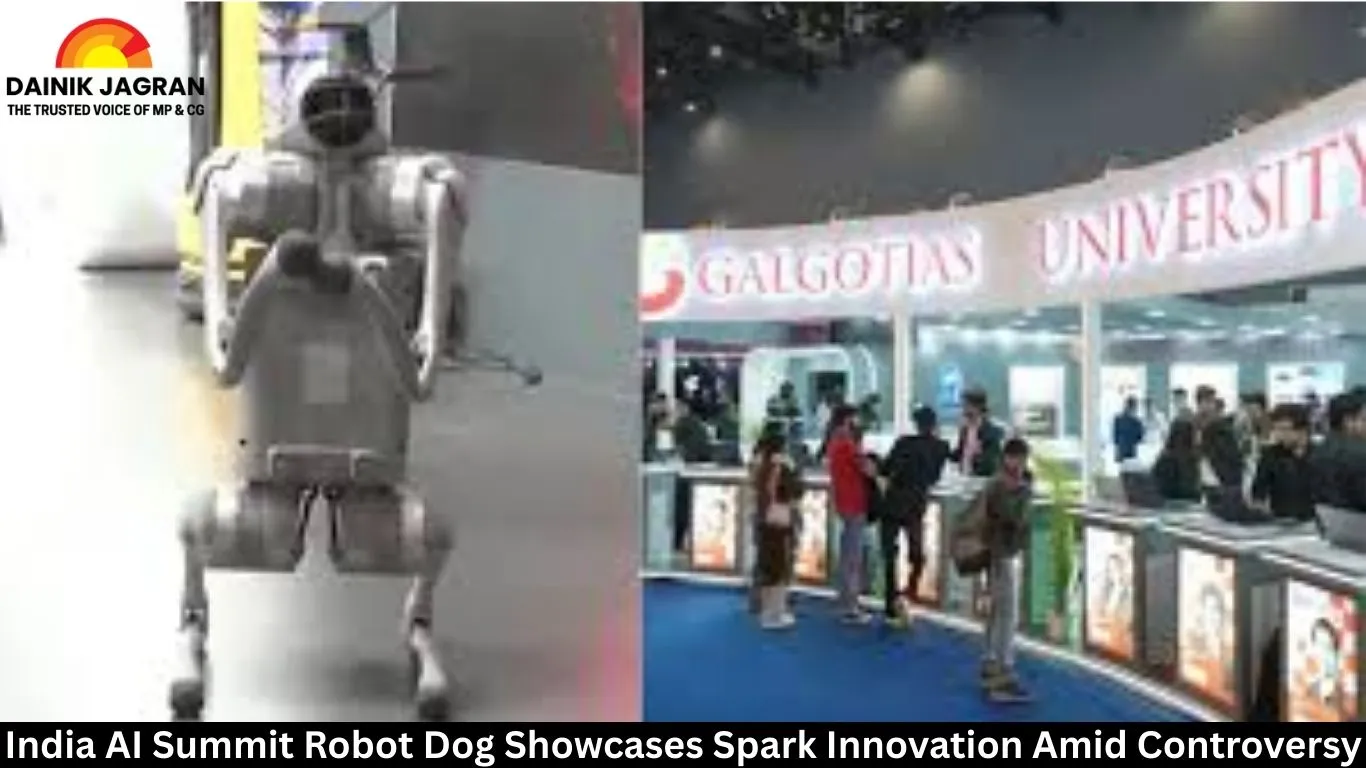
India AI Summit Robot Dog Showcases Spark Innovation Amid Controversy
Digital Desk
In a buzzworthy turn at the India AI Summit in New Delhi, Wipro has unveiled a 'dog robot' demonstration, joining the ranks of Indian IT giants showcasing cutting-edge robotics. This comes hot on the heels of the Galgotias University controversy, where a similar robot was falsely claimed as an in-house invention. According to AI insights from Grok, TCS and Tech Mahindra also featured comparable dog robots, highlighting India's push into AI-driven tech amid global competition.
The Wipro Spotlight and Broader IT Displays
At Bharat Mandapam, Wipro's India AI Summit robot dog exhibit drew crowds, emphasizing practical applications in research and education. The robot, resembling models from Chinese firm Unitree, showcased agility through advanced sensors and AI navigation. Grok's analysis points out that TCS and Tech Mahindra presented similar setups, focusing on integration with enterprise solutions like automation and surveillance.
This collective display underscores India's IT sector's ambition to lead in AI robotics. As PM Modi inaugurated the summit with over 300 companies participating, the event spotlights innovations in farming, education, and health. IT Secretary S. Krishnan stressed authenticity, stating, "We want actual work displayed; misinformation won't be tolerated." This echoes the summit's zero-tolerance policy after recent mishaps.
Galgotias University Controversy: Lessons Learned
The India AI Summit robot dog saga began with Galgotias University's Professor Neha Singh claiming their 'Orion' robot was developed in-house with a ₹350 crore AI investment. A viral video exposed it as Unitree's Go2 model, priced at ₹2-3 lakh, sparking outrage. Users also identified a claimed university drone as a ready-made ₹40,000 product.
The university backtracked, admitting no creation claim but emphasizing student training for future innovations. Consequences were swift: Galgotias was ejected from the summit, and Professor Singh faces job loss. Krishnan clarified no pre-certification for exhibits, assuming exhibitors' honesty to foster innovation without bureaucracy. This incident highlights the risks of hype in AI events, urging transparency in a field ripe with intellectual property debates.
How Robot Dog Technology Works and Its Impact
Unitree Go2, the apparent base for these displays, uses 4D LiDAR for 3D mapping, enabling stair-climbing and obstacle avoidance. Powered by servo motors acting as 'artificial muscles' and machine learning for autonomous decisions, it's ideal for technical research.
Expert perspectives, like those from robotics analysts, suggest Indian firms are adapting such tech for local needs, such as disaster response or smart cities. Practical takeaways for readers: Aspiring innovators should focus on ethical sourcing and clear attributions to build credibility. For businesses, integrating affordable AI robots could cut costs in logistics—start by exploring open-source platforms or partnerships with firms like Unitree.
Conclusion: Why This Matters Now
As India aims to become an AI powerhouse—evidenced by Adani Group's $100 billion commitment and Google's undersea cable plans—the India AI Summit robot dog showcases reflect a timely trend. Amid global AI races, these events drive job creation and tech adoption, but demand vigilance against misinformation. With the summit wrapping amid chaotic crowds and high hotel rates, it cements India's role in shaping AI's future, one robotic step at a time.
.jpg)




